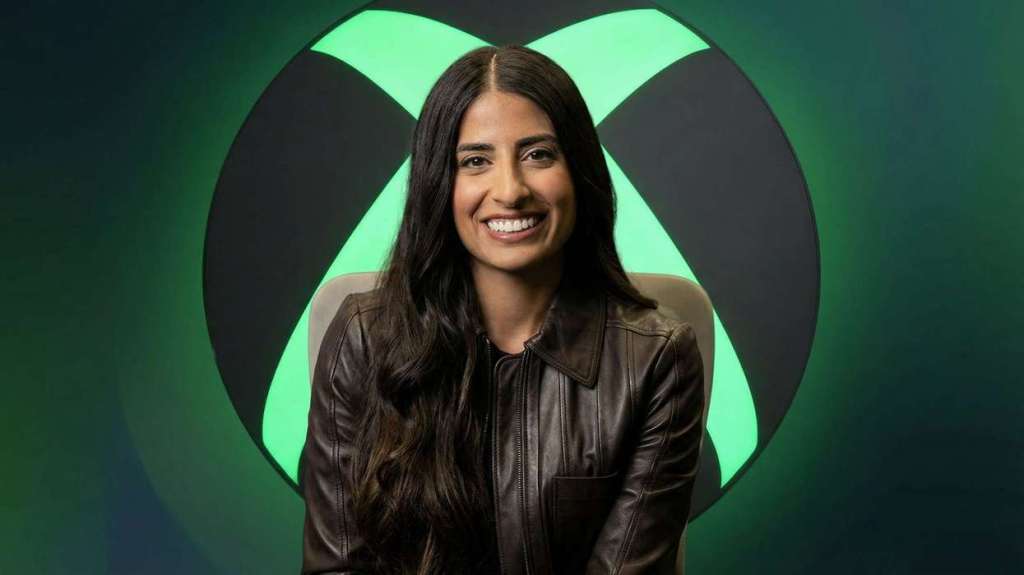
When Xbox CEO Asha Sharma told employees and investors that the gaming division expects to return to growth by the end of fiscal year 2027, the statement was intended to project confidence during an otherwise disappointing earnings report. Predictably, much of the conversation that followed focused on assigning blame; some argued the results still reflected the final consequences of Phil Spencer’s leadership, while others insisted it was too early to judge Sharma’s tenure. I believe that entire framing misses the point. Earlier this year, I wrote that “Xbox’s problems are Xbox’s responsibility to fix,” and I think that principle remains the correct lens through which to evaluate these earnings. Leadership changes matter, but the financial realities facing Xbox today are institutional, not personal. The business must ultimately be judged by its execution rather than by whichever executive occupies the corner office.
One of the recurring themes in Xbox discourse is the tendency to externalize responsibility. When hardware sales decline, we’re told the console market is shrinking. When software underperforms, we’re reminded that game development has become more expensive. When restructuring occurs, we’re told the entire industry is facing headwinds. All of those statements contain elements of truth, yet they often become convenient explanations rather than meaningful analysis. Nintendo, PlayStation, and every major publisher operate under the same macroeconomic conditions. They contend with AI-driven component shortages, inflationary manufacturing costs, higher labor expenses, and increasing development budgets. Those pressures are real, but they do not explain why Xbox consistently underperforms relative to its own objectives. Xbox’s challenges are, first and foremost, the responsibility of Xbox to solve.
That distinction becomes especially important when evaluating Sharma’s forecast of returning to growth by the end of FY27. Looking strictly at the evidence available today, I struggle to see a path that supports such a rapid turnaround.
Xbox finished the fiscal year with declining revenue, continued deterioration in hardware performance, and a content and services segment that has now posted multiple consecutive quarters of contraction. At the same time, the division has undergone sweeping layoffs, studio closures, project cancellations, and divestitures that inevitably reduce near-term development capacity. Optimism is an important leadership quality, but optimism is not itself evidence. Before accepting projections of renewed growth, investors should reasonably expect to understand where that growth will originate.
The announced software lineup does little to alleviate those concerns. Halo: Combat Evolved has failed to generate the commercial momentum expected of one of Microsoft’s flagship franchises, while community reception has been mixed. Gears of War: E-Day returns to another legacy property that has struggled for years to meaningfully expand its audience. Clockwork Revolution appears destined to launch primarily into Xbox’s comparatively small console install base, immediately limiting its addressable market. Fable may represent the company’s strongest commercial opportunity thanks to its broader platform strategy, but it enters an increasingly crowded release calendar filled with heavyweight competition. Even if every one of these titles performs respectably, it is difficult to envision them collectively generating the kind of revenue acceleration required to reverse the division’s broader financial trajectory within a single fiscal year.
- Tomb Raider: Legacy of Atlantis – February 12, 2027 (PC, PS5, Xbox Series X/S, Switch 2
- God of War Laufey – February 16, 2027 (PS5)
- Persona 4 Revival – February 18, 2027 (PC, PS5, Xbox Series X/S)
- Fable – February 23, 2027 (PC, PS5, Xbox Series X/S — Day One on Game Pass)
- Metro 2039 – Expected sometime in February 2027 (PC, PS5, Xbox Series X/S)

Part of the problem, in my view, is that Xbox continues to evaluate success through metrics that often obscure the underlying economics. Sharma highlighted hundreds of millions of new Xbox players joining the ecosystem over the past year. On its surface, that sounds impressive. Yet those reported gains occurred alongside declining overall revenue and weakening content and services performance. If player counts increase while revenue falls, then the average economic value generated by each player necessarily declines. Whether those users represent entirely new customers, churn replacement, or broader engagement across Microsoft’s ecosystem matters less than one simple question: are they spending more money? Thus far, the financial statements suggest the answer is no.
That same disconnect appears when discussing Game Pass. Xbox leadership has repeatedly described the subscription service as profitable, but profitability depends entirely upon the accounting framework being applied. Public financial reporting measures one thing; internal total-cost accounting (TCA) measures something very different. A subscription service can generate positive operating income while simultaneously reducing the lifetime profitability of first-party software by cannibalizing full-price purchases. Every player who experiences a major first-party release through Game Pass instead of purchasing it outright represents an opportunity cost that rarely enters public discussion. Outside observers cannot quantify that figure with precision because Microsoft’s internal cost accounting remains confidential. However, assuming that opportunity cost is zero would be equally indefensible. The truth almost certainly lies somewhere between those extremes, and it deserves far more attention than it currently receives.
The strategic adjustments Microsoft has already made suggest the company understands these pressures. Game Pass has become increasingly segmented through higher-priced tiers, lower-cost plans with reduced benefits, and changes to day-one access for major releases.

Call of Duty’s altered availability and the migration of premium features toward more expensive subscription tiers resemble a series of incremental experiments designed to improve monetization. I would not be surprised if future first-party releases spend longer periods outside the subscription service before arriving on Game Pass. If that occurs, it would not represent a philosophical reversal so much as an acknowledgement that sustainable subscription economics require greater balance between accessibility and direct software sales.
Where I believe the discussion should become more uncomfortable for Xbox is in its operational governance. This has been a recurring theme in my analysis for years. One of the defining characteristics of Phil Spencer’s tenure was the apparent absence of disciplined program governance across Xbox Game Studios. Software engineering, aerospace, defense, and virtually every other large-scale project management discipline relies upon structured milestone reviews, schedule variance analysis, budget oversight, earned-value reporting, and clearly defined decision gates. Projects that drift off course are expected to present recovery plans—what many organizations simply call a “return to green.” Throughout Spencer’s leadership, we repeatedly saw projects disappear for years, consume enormous budgets, miss release targets, or ultimately face cancellation without any public indication that meaningful governance intervention had occurred. Whether those conversations happened privately or not, the outcomes strongly suggest a governance model that failed to identify and correct problems early enough.

That weakness becomes even more apparent when contrasted with the practices employed elsewhere in the industry. PlayStation has demonstrated that studios can be granted creative freedom while still operating within a disciplined portfolio management framework.
Projects are regularly reviewed against schedule, budget, technical progress, and strategic objectives. Delays are not automatically fatal so long as developers can clearly articulate why they occurred and how the project returns to acceptable performance. Nintendo has similarly built a culture that emphasizes long-term stewardship of talent rather than reacting to every temporary financial fluctuation with wholesale restructuring. Neither company is immune from failure, but both have generally demonstrated stronger institutional discipline in balancing creative ambition with operational accountability. That difference matters because great creative work still requires great management.
Ironically, the restructuring undertaken under Sharma may ultimately represent an acknowledgement of those governance failures. Studio divestitures, workforce reductions, and project cancellations are painful, but they also reduce organizational complexity. Whether these actions become the foundation of a healthier Xbox or merely another round of cost-cutting depends entirely upon what replaces the old operating model. If the same governance practices remain in place, then smaller organizational charts alone will not produce better outcomes. Sustainable improvement requires more than reducing expenses—it requires fundamentally improving how projects are selected, supervised, and delivered.
For Xbox players, the implications are sobering. Subscribers who remain in the ecosystem primarily because of Game Pass should prepare for continued evolution of the service, including additional feature segmentation, higher-value premium tiers, and further experimentation around day-one releases.

Hardware enthusiasts should temper expectations regarding Microsoft’s next-generation console strategy, as economic realities may force compromises on previously rumored capabilities, storefront integration, and pricing. Perhaps most importantly, fans should prepare for another period in which first-party output becomes increasingly dependent upon downloadable content, remasters, and live-service updates while the effects of recent restructuring ripple through the development pipeline. Large AAA studios cannot lose projects, leadership, and thousands of employees without creating downstream consequences.
None of this means Xbox cannot recover. History is filled with companies that reinvented themselves after periods of profound strategic failure. But successful turnarounds are not built upon optimistic messaging alone; they are built upon measurable operational improvement. Over the next twelve months, I will be watching for evidence that Xbox has embraced stronger governance, stabilized its software pipeline, improved monetization without eroding consumer trust, and begun translating player engagement into durable financial performance. Until those indicators begin moving together, I remain unconvinced that a return to meaningful growth by the end of FY27 is supported by the evidence currently available. Hope is an important leadership quality. Execution is what ultimately appears on the balance sheet.

