For the longest time, open-world games treated the space between missions as a necessary inconvenience. Moving from point A to point B was the tax you paid to get to the actual gameplay. You held down a sprint button, followed a mini-map waypoint, and waited to arrive. Then, in 2018, Insomniac Games demonstrated with Marvel’s Spider-Man that traversal could be more than transportation; it could be the most rewarding part of the experience. The difference wasn’t simply that Spider-Man moved faster than the protagonists of other open-world games. It was that swinging through Manhattan became something I wanted to do even when I didn’t have anywhere to go. Before Spider-Man, I think we largely judged an open world by what was in the world. Spider-Man made me start judging it by how good it felt to move through the world. That shift helped kick-off what I would call a golden age of traversal, where momentum, vertical freedom, and the physical relationship between the player and the environment became central design considerations rather than conveniences layered on top of a map.
What Insomniac solved was the friction problem. You’re controlling a superhero, but the game doesn’t make you fight the controller to feel like one. Spider-Man’s traversal looks physics-based, but it is actually an extraordinarily curated experience, using carefully designed systems and physics cheats to create the feeling of mastering movement without requiring the player to master a genuine simulation. That balance between accessibility and perceived mastery is a significant part of the game’s success. And while 2018 represented a breakthrough in how naturally those ideas came together, Insomniac had already been developing the underlying philosophy in Sunset Overdrive. The studio’s experience with responsive traversal helped inform Spider-Man, where the movement system became inseparable from the design of Manhattan itself. Building heights, street widths, and the placement of the city’s architecture had to support swinging as a core gameplay loop. Every building became a potential gameplay object, and the skyline transformed from scenery into Spider-Man’s racetrack. It’s also why the game’s relationship with fast travel is so interesting. I’ve always thought open-world games have had a strange relationship with fast-travel: we build an enormous world and then apologize for making the player cross it. In Spider-Man, I sometimes deliberately avoided fast travel because getting there was the reward.
Once developers recognize that getting somewhere can be gameplay in its own right, the implications extend far beyond a superhero swinging between skyscrapers. Dying Light 2 Stay Human approached the idea by turning rooftops into highways, forcing the city to be understood through verticality, parkour, and the relationship between narrow streets and elevated routes.
Forspoken took the philosophy in a different direction, making high-speed, gravity-defying magical movement a major part of the fantasy it was selling. Both games demonstrate the possibilities of traversal as a centerpiece, but they also expose an important limitation: faster movement isn’t automatically better movement. There is a point where traversal becomes so frictionless that a world can start feeling smaller because you’re consuming it too quickly. Ghostrunner provides an interesting contrast because it demonstrates that the underlying philosophy isn’t inherently tied to open-world design. Its momentum-driven movement works within a more linear structure, proving that traversal can be gameplay without requiring a massive map. Meanwhile, Marvel’s Spider-Man 2 evolved Insomniac’s original premise by introducing web wings, adding another layer of movement and new decisions rather than simply making swinging faster. The evolution matters because meaningful traversal design isn’t necessarily about increasing speed; it’s about giving players more interesting ways to interact with the spaces they inhabit.
The most interesting part of this legacy isn’t whether every subsequent game directly copied Spider-Man. It’s that the impact has been for the expansion of that singular philosophy to spread across the game design landscape; developers appear to have absorbed the same design lesson: movement deserves the same level of attention that we traditionally give combat. We’re seeing that philosophy appear in franchises that once treated traversal primarily as transportation, including Assassin’s Creed Shadows and Borderlands 4, while games such as Halo Infinite, Star Wars Jedi: Survivor, Avatar: Frontiers of Pandora, Resonance: A Plague Tale Legacy, and The Blood of Dawnwalker demonstrate different ways that mobility and environmental interaction can shape an experience. The question now is where the next meaningful advancement comes from. Spider-Man showed us that traversal could become a game rather than an obstacle between games. The next generation of systems may need to go further, introducing new forms of decision-making, environmental interaction, and mastery that make today’s familiar movement mechanics feel as dated as holding down sprint and following a waypoint once did. The real legacy of Marvel’s Spider-Man isn’t simply web-swinging. It’s the recognition that the way we move through a game world deserves to be designed with as much care as what we do when we arrive.
Sometimes a shift in gaming history doesn’t arrive with a press conference or a new console. Sometimes it arrives with a pistol bang. In retrospect, I think 2009’s Red Faction: Guerrilla may have been that pistol bang for the open-world revolution that would explode into the mainstream in 2010. I didn’t actually play Guerrilla when it originally released. My experience with the original Red Faction was great, but Red Faction II hadn’t left me particularly impressed. At the time I wasn’t especially sold on open-world games either. Open world had developed a bit of a stigma for me, much as games-as-a-service would later develop one. It was only years later, after playing Red Faction: Guerrilla Re-Mars-tered, that I finally understood what Volition had accomplished. Looking at it through the lens of the Ubisoft open-world games I eventually came to love, particularly Far Cry 5 and Assassin’s Creed Origins, Odyssey and Valhalla, I could suddenly see how much of that design language was already present in Guerrilla. Its destruction technology was certainly a hallmark of Red Faction, but the larger achievement was its systemic sandbox: a world populated with objectives and activities in which the player had considerable latitude in deciding how to engage with them. Guerrilla didn’t invent the open world, but it demonstrated that the sandbox could be much more than simply a big map.
The more important evolution, however, wasn’t simply making the world bigger. It was figuring out what to put inside that world and why the player should care about exploring it. The open-world action-adventure games that followed increasingly borrowed ideas that had traditionally belonged to RPGs: character progression, builds, crafting, upgrading, loot and experience points. At the same time, developers developed increasingly sophisticated ways of communicating these enormous spaces to players through maps, icons, objectives and activities. These systems eventually became tightly interconnected. Exploration could uncover materials. Materials could improve equipment. Equipment could change a character’s capabilities. Side quests could provide experience, while random encounters could produce rewards. The world stopped being merely the place where the game happened and increasingly became the environment in which an entire system of interconnected mechanics operated.
But there was still a major problem to solve. How do you combine that freedom with the cinematic storytelling that made action-adventure games so popular in the first place? RPGs had more latitude because their traditions were already built around statistics, systems and player-driven progression. Action-adventure games were different. Their appeal was often rooted in strong authored stories, and stories generally require some degree of directed progression. The challenge was therefore not simply creating a bigger sandbox. It was figuring out how to preserve player agency while still delivering the characters, cinematics and narrative progression audiences expected from a blockbuster game.
That’s where I think 2010 becomes the real turning point. The industry began producing games that weren’t merely putting a story inside a large map, but were experimenting with ways for the world itself to become part of the player’s experience. And suddenly, several very different games were approaching that problem from very different directions.
What happened next would help define the blockbuster game for the better part of the next decade—and, looking back now, I don’t think it was an accident that so many of the pieces came together in 2010.
Please join me this Saturday, September 12th, 2026, on the Rounding Off Infinity gaming channel on YouTube, where we’ll delve deeper into this historical breakdown, and discuss the evolution and progression of open-world games.
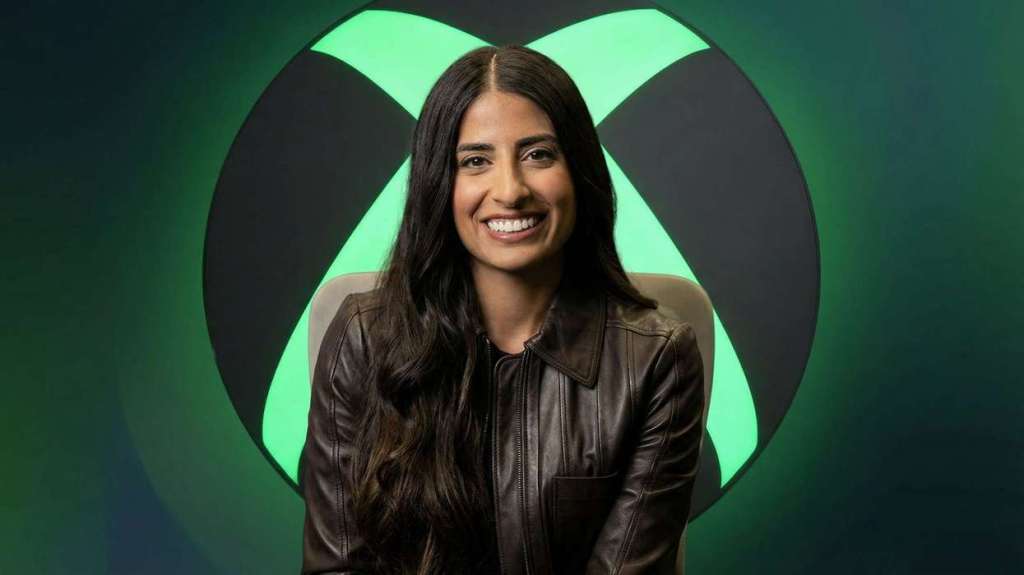
When Xbox CEO Asha Sharma told employees and investors that the gaming division expects to return to growth by the end of fiscal year 2027, the statement was intended to project confidence during an otherwise disappointing earnings report. Predictably, much of the conversation that followed focused on assigning blame; some argued the results still reflected the final consequences of Phil Spencer’s leadership, while others insisted it was too early to judge Sharma’s tenure. I believe that entire framing misses the point. Earlier this year, I wrote that “Xbox’s problems are Xbox’s responsibility to fix,” and I think that principle remains the correct lens through which to evaluate these earnings. Leadership changes matter, but the financial realities facing Xbox today are institutional, not personal. The business must ultimately be judged by its execution rather than by whichever executive occupies the corner office.
One of the recurring themes in Xbox discourse is the tendency to externalize responsibility. When hardware sales decline, we’re told the console market is shrinking. When software underperforms, we’re reminded that game development has become more expensive. When restructuring occurs, we’re told the entire industry is facing headwinds. All of those statements contain elements of truth, yet they often become convenient explanations rather than meaningful analysis. Nintendo, PlayStation, and every major publisher operate under the same macroeconomic conditions. They contend with AI-driven component shortages, inflationary manufacturing costs, higher labor expenses, and increasing development budgets. Those pressures are real, but they do not explain why Xbox consistently underperforms relative to its own objectives. Xbox’s challenges are, first and foremost, the responsibility of Xbox to solve.
That distinction becomes especially important when evaluating Sharma’s forecast of returning to growth by the end of FY27. Looking strictly at the evidence available today, I struggle to see a path that supports such a rapid turnaround.
Xbox finished the fiscal year with declining revenue, continued deterioration in hardware performance, and a content and services segment that has now posted multiple consecutive quarters of contraction. At the same time, the division has undergone sweeping layoffs, studio closures, project cancellations, and divestitures that inevitably reduce near-term development capacity. Optimism is an important leadership quality, but optimism is not itself evidence. Before accepting projections of renewed growth, investors should reasonably expect to understand where that growth will originate.
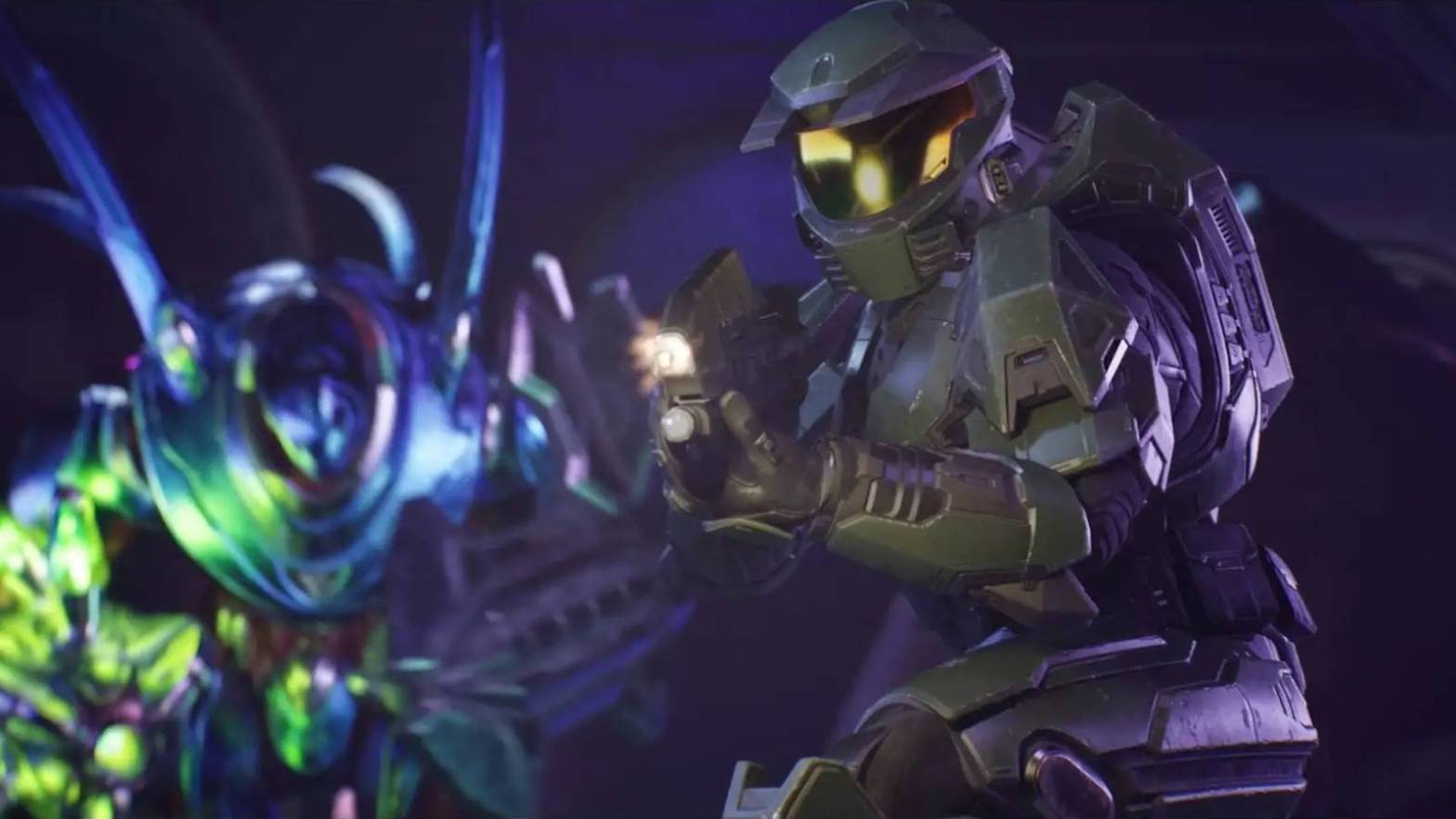
The announced software lineup does little to alleviate those concerns. Halo: Combat Evolved has failed to generate the commercial momentum expected of one of Microsoft’s flagship franchises, while community reception has been mixed. Gears of War: E-Day returns to another legacy property that has struggled for years to meaningfully expand its audience. Clockwork Revolution appears destined to launch primarily into Xbox’s comparatively small console install base, immediately limiting its addressable market. Fable may represent the company’s strongest commercial opportunity thanks to its broader platform strategy, but it enters an increasingly crowded release calendar filled with heavyweight competition. Even if every one of these titles performs respectably, it is difficult to envision them collectively generating the kind of revenue acceleration required to reverse the division’s broader financial trajectory within a single fiscal year.
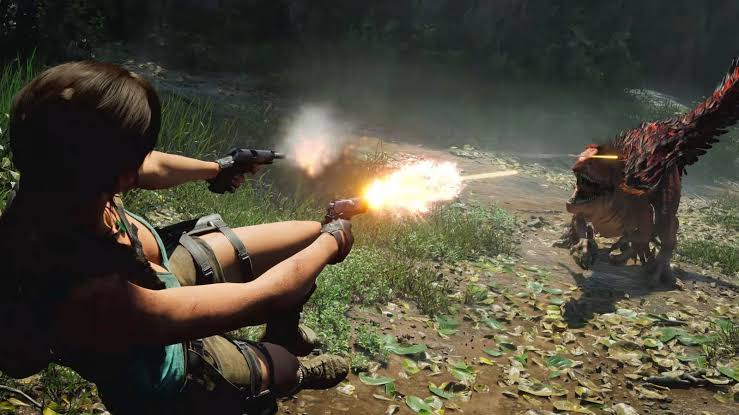
Tomb Raider: Legacy of Atlantis – February 12, 2027 (PC, PS5, Xbox Series X/S, Switch 2
God of War Laufey – February 16, 2027 (PS5)
Persona 4 Revival – February 18, 2027 (PC, PS5, Xbox Series X/S)
Fable – February 23, 2027 (PC, PS5, Xbox Series X/S — Day One on Game Pass)
Metro 2039 – Expected sometime in February 2027 (PC, PS5, Xbox Series X/S)
Part of the problem, in my view, is that Xbox continues to evaluate success through metrics that often obscure the underlying economics. Sharma highlighted hundreds of millions of new Xbox players joining the ecosystem over the past year. On its surface, that sounds impressive. Yet those reported gains occurred alongside declining overall revenue and weakening content and services performance. If player counts increase while revenue falls, then the average economic value generated by each player necessarily declines. Whether those users represent entirely new customers, churn replacement, or broader engagement across Microsoft’s ecosystem matters less than one simple question: are they spending more money? Thus far, the financial statements suggest the answer is no.
That same disconnect appears when discussing Game Pass. Xbox leadership has repeatedly described the subscription service as profitable, but profitability depends entirely upon the accounting framework being applied. Public financial reporting measures one thing; internal total-cost accounting (TCA) measures something very different. A subscription service can generate positive operating income while simultaneously reducing the lifetime profitability of first-party software by cannibalizing full-price purchases. Every player who experiences a major first-party release through Game Pass instead of purchasing it outright represents an opportunity cost that rarely enters public discussion. Outside observers cannot quantify that figure with precision because Microsoft’s internal cost accounting remains confidential. However, assuming that opportunity cost is zero would be equally indefensible. The truth almost certainly lies somewhere between those extremes, and it deserves far more attention than it currently receives.
The strategic adjustments Microsoft has already made suggest the company understands these pressures. Game Pass has become increasingly segmented through higher-priced tiers, lower-cost plans with reduced benefits, and changes to day-one access for major releases.
Call of Duty’s altered availability and the migration of premium features toward more expensive subscription tiers resemble a series of incremental experiments designed to improve monetization. I would not be surprised if future first-party releases spend longer periods outside the subscription service before arriving on Game Pass. If that occurs, it would not represent a philosophical reversal so much as an acknowledgement that sustainable subscription economics require greater balance between accessibility and direct software sales.
Where I believe the discussion should become more uncomfortable for Xbox is in its operational governance. This has been a recurring theme in my analysis for years. One of the defining characteristics of Phil Spencer’s tenure was the apparent absence of disciplined program governance across Xbox Game Studios. Software engineering, aerospace, defense, and virtually every other large-scale project management discipline relies upon structured milestone reviews, schedule variance analysis, budget oversight, earned-value reporting, and clearly defined decision gates. Projects that drift off course are expected to present recovery plans—what many organizations simply call a “return to green.” Throughout Spencer’s leadership, we repeatedly saw projects disappear for years, consume enormous budgets, miss release targets, or ultimately face cancellation without any public indication that meaningful governance intervention had occurred. Whether those conversations happened privately or not, the outcomes strongly suggest a governance model that failed to identify and correct problems early enough.
That weakness becomes even more apparent when contrasted with the practices employed elsewhere in the industry. PlayStation has demonstrated that studios can be granted creative freedom while still operating within a disciplined portfolio management framework.
Projects are regularly reviewed against schedule, budget, technical progress, and strategic objectives. Delays are not automatically fatal so long as developers can clearly articulate why they occurred and how the project returns to acceptable performance. Nintendo has similarly built a culture that emphasizes long-term stewardship of talent rather than reacting to every temporary financial fluctuation with wholesale restructuring. Neither company is immune from failure, but both have generally demonstrated stronger institutional discipline in balancing creative ambition with operational accountability. That difference matters because great creative work still requires great management.
Ironically, the restructuring undertaken under Sharma may ultimately represent an acknowledgement of those governance failures. Studio divestitures, workforce reductions, and project cancellations are painful, but they also reduce organizational complexity. Whether these actions become the foundation of a healthier Xbox or merely another round of cost-cutting depends entirely upon what replaces the old operating model. If the same governance practices remain in place, then smaller organizational charts alone will not produce better outcomes. Sustainable improvement requires more than reducing expenses—it requires fundamentally improving how projects are selected, supervised, and delivered.
For Xbox players, the implications are sobering. Subscribers who remain in the ecosystem primarily because of Game Pass should prepare for continued evolution of the service, including additional feature segmentation, higher-value premium tiers, and further experimentation around day-one releases.
Hardware enthusiasts should temper expectations regarding Microsoft’s next-generation console strategy, as economic realities may force compromises on previously rumored capabilities, storefront integration, and pricing. Perhaps most importantly, fans should prepare for another period in which first-party output becomes increasingly dependent upon downloadable content, remasters, and live-service updates while the effects of recent restructuring ripple through the development pipeline. Large AAA studios cannot lose projects, leadership, and thousands of employees without creating downstream consequences.
None of this means Xbox cannot recover. History is filled with companies that reinvented themselves after periods of profound strategic failure. But successful turnarounds are not built upon optimistic messaging alone; they are built upon measurable operational improvement. Over the next twelve months, I will be watching for evidence that Xbox has embraced stronger governance, stabilized its software pipeline, improved monetization without eroding consumer trust, and begun translating player engagement into durable financial performance. Until those indicators begin moving together, I remain unconvinced that a return to meaningful growth by the end of FY27 is supported by the evidence currently available. Hope is an important leadership quality. Execution is what ultimately appears on the balance sheet.
Double Fine’s decision to lay off 23 employees only weeks after regaining its independence from Xbox should surprise no one who has been paying attention to the state of the games industry. When Microsoft began spinning studios out instead of simply closing them, many observers celebrated the move as a compassionate alternative. I argued at the time that it merely sent these studios out into one of the most hostile funding environments the industry has seen in years. Independence may sound appealing, but it also means leaving behind the financial security of a platform holder and entering a market where venture capital has largely dried up, publishers have become increasingly risk-averse, and even critically acclaimed games are no guarantee of survival.
This outcome is the product of several converging forces. Microsoft’s stewardship of Xbox Game Studios under Phil Spencer demonstrated an alarming lack of disciplined project governance, with studios seemingly allowed to operate for years without the structured milestone reviews, budget oversight, and schedule accountability that are standard practice throughout much of the software industry. At the same time, Double Fine now faces the harsh realities of independence, where every payroll, every lease, and every piece of development equipment must be justified against an uncertain funding pipeline. Those pressures exist across the industry, but they are not universal. Other platform holders have demonstrated that creative studios can flourish within larger organizations when expectations are clearly defined, projects are actively governed, and leadership works collaboratively with developers to keep troubled productions on track instead of allowing problems to compound over years.
I also believe Tim Schafer when he says these layoffs were necessary. Throughout his career, Schafer has consistently been candid about the stress of securing funding and the burden that business responsibilities place on creative leadership. In fact, one of the reasons he welcomed Microsoft’s acquisition of Double Fine was because it allowed him to focus on making games instead of constantly pitching publishers and investors. That history makes his latest statement all the more credible. Rather than viewing these layoffs as a public relations exercise, I see them as an indication that Double Fine has not yet secured its next major funding agreement.
Reducing headcount buys the studio something incredibly valuable: time. Time to build a compelling prototype, prepare a strong pitch, and convince a publisher that its next project deserves investment.
Unfortunately, I don’t believe independence offers Double Fine a healthier long-term future by itself. Without a stable publishing partner, the studio will likely find itself living project to project, constantly balancing creative ambition against financial survival. Today’s publishers are far quicker to cancel projects than they were a decade ago, often writing off investments rather than committing additional funding to games that drift off schedule or exceed budget. That means Double Fine cannot afford prolonged development cycles or expensive missteps. The studio would be well served by becoming even leaner, focusing on smaller games with roughly two-year development timelines, and modernizing its production pipeline so it can deliver higher production values without proportionally increasing cost. Just as importantly, I believe the company should actively pursue partnerships—or even acquisition—by publishers such as Devolver Digital or Annapurna, organizations that have repeatedly demonstrated a willingness to nurture creative, unconventional studios.
Ultimately, this story is not really about Double Fine alone. It is about the difficult transition from the safety of first-party ownership into an industry that has become increasingly unforgiving. Microsoft may have preserved these studios by granting them independence instead of shutting them down outright, but independence is not the same as security. The real challenge begins after the headlines fade, when founders must once again spend their days chasing funding instead of building games. I sincerely hope Double Fine succeeds. Few studios have contributed as much creativity and personality to the medium over the past two decades.
But today’s layoffs are a reminder that creative talent alone is no longer enough. In the current games industry, survival requires disciplined execution, financial resilience, and a partner willing to invest for the long term.
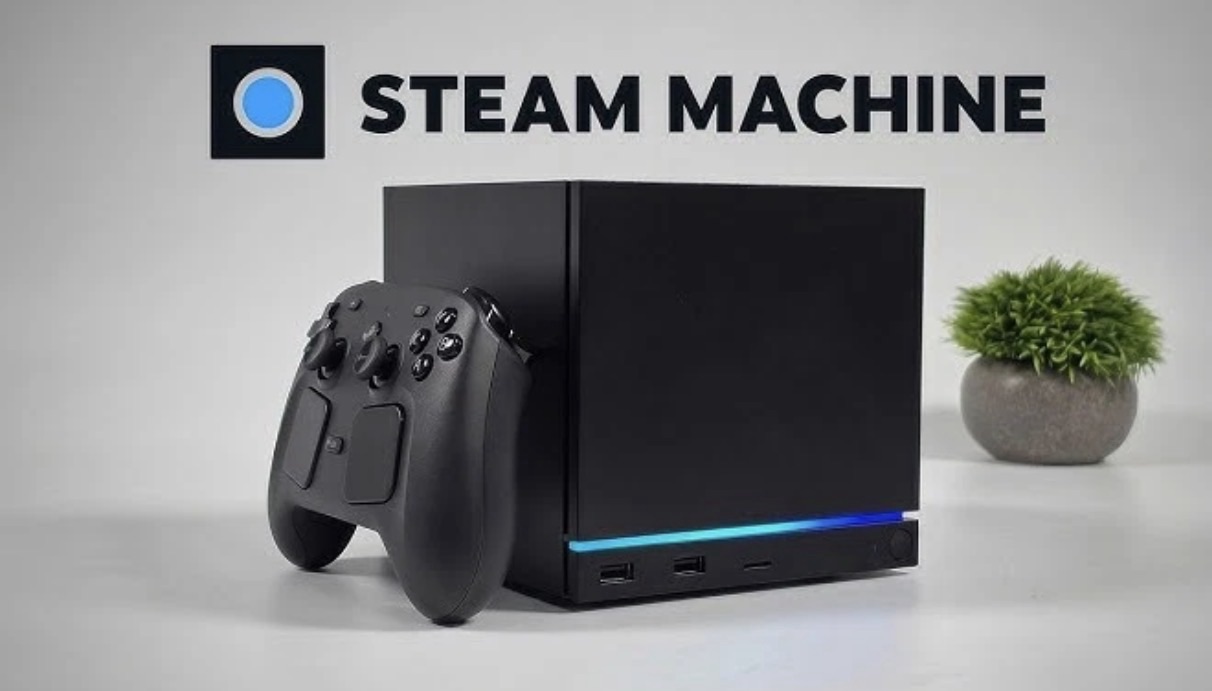
Valve’s latest update on the Steam Machine is being framed as good news: the company now expects to fulfill all current reservations by the end of 2026 while continuing to ramp production. On its face, that sounds like evidence of overwhelming demand, but I’m not convinced the reservation queue tells the whole story. A reservation is a low-cost expression of interest, not a purchase commitment. Some people joined simply to watch how the process unfolds, others are waiting to see whether pricing changes, and the existence of Steam Machines already appearing for resale above MSRP strongly suggests that scalpers are participating as well. That doesn’t mean demand isn’t real; it simply means the reservation queue is an imperfect measure of genuine consumer demand.
The pricing reinforces that skepticism. Unlike the Steam Deck, which was priced to attract a broad audience, the Steam Machine occupies a much narrower niche. At well over a thousand dollars, it isn’t an impulse purchase or an easy recommendation for the average gamer. In fact, I still believe market demand is well below the optimistic projections some enthusiasts have floated and likely below the demand profile the Steam Deck enjoyed. Today’s buyers are far more likely to be Linux enthusiasts, PC hardware aficionados, or gamers with a very specific interest in SteamOS than casual players looking for an alternative to an Xbox or PlayStation. That doesn’t make the product unsuccessful; it simply defines the limits of the audience Valve is serving today.
Ironically, the long reservation queue may become more meaningful if the broader PC hardware market shifts. As GPU prices continue to rise and memory and storage remain under pressure from AI-driven demand, a prebuilt Steam Machine could become a more attractive alternative for some gamers than assembling a new gaming PC. While I expect a number of reservation holders will ultimately decline to purchase when their place in line arrives, those units are unlikely to sit idle. If demand for premium gaming hardware remains healthy, other buyers, including resellers hoping to capitalize on limited availability (scalpers), will almost certainly absorb much of that excess inventory.
The more important story, however, has very little to do with reservation counts. Valve has already put its foot in the door with SteamOS hardware, and backing away now would send exactly the wrong signal. The company needs to demonstrate consistency, commitment, and confidence; not simply to consumers, but to potential hardware partners. SteamOS will only become a mainstream platform if major OEMs such as ASUS, Acer, Dell, HP, Lenovo, Samsung, and others believe Valve is committed to supporting it for the long haul. Those manufacturers possess purchasing power and supply-chain advantages that Valve simply doesn’t have, allowing them to build SteamOS-powered systems at more competitive prices once they believe the ecosystem has staying power.
In that sense, Valve’s promise to fulfill reservations by the end of the year is less about selling every Steam Machine itself and more about proving that SteamOS is a platform worth investing in. The company’s decision to release the Steam Machine’s enclosure CAD files under a Creative Commons license reinforces that philosophy by encouraging community involvement while signaling that SteamOS is intended to be an open ecosystem rather than another closed console. If Valve can maintain that commitment, convince OEMs to build compelling SteamOS hardware, and capitalize on the still underdeveloped mini-PC market, today’s relatively niche product could become the foundation for something much larger tomorrow. The Steam Machine itself may never dominate the gaming market, but it doesn’t have to. Its greatest success may be proving that SteamOS deserves a permanent place in the PC hardware landscape.
Microsoft has responded to reports that some Xbox players were unable to launch even physical disc-based games during a recent Xbox Live outage, acknowledging that this behavior was unintended. According to the company, consoles should have relied on locally cached licensing entitlements instead of requiring an online validation check, and Xbox says it is investigating the issue while preparing a software update to prevent it from happening again. What’s particularly interesting, however, is that this is the second time in roughly the last three years that Microsoft has pointed to cached entitlement handling as part of the root cause for a major outage. That raises legitimate questions about the complexity of Xbox’s licensing architecture, even if the immediate bug is ultimately straightforward to correct.
What struck me most about the reaction to this story wasn’t Microsoft’s explanation, it was the familiar chorus claiming that this somehow proves physical media is inherently superior to digital distribution. That conclusion simply doesn’t hold up. People continue to conflate three completely different concepts: the storage medium, the delivery mechanism, and the licensing system. A Blu-ray disc, a downloaded game stored on an SSD, and virtually every other modern game installation are all just data written to physical storage. The real question isn’t whether the installation files arrived on a disc or over the internet. The question is whether the game depends on online entitlement validation or server-side functionality to operate. If a game requires a “hello world” check-in with a licensing service, or worse, relies on live server infrastructure for gameplay, even a physical disc cannot insulate you from a network outage.
This is why I think discussions surrounding both the recent Xbox outage and earlier PlayStation Network outages have missed the point. Modern gaming ecosystems are deeply integrated with online identity management, entitlement services, cloud infrastructure, and, in some cases, server-hosted gameplay systems. Ubisoft’s The Division 2 is a perfect example: even if you’re playing alone, portions of the game’s functionality still rely on server-side systems.
Whether you purchased that game digitally or on a physical disc becomes largely irrelevant once the game’s architecture depends on online services. The same principle applies to platform licensing. When cached entitlements work correctly, offline play should continue uninterrupted for games that don’t require server-side functionality. When they don’t, both digital purchases and physical discs can be affected in exactly the same way.
None of this excuses Microsoft. If anything, the recurrence of cached entitlement issues suggests that Xbox’s licensing infrastructure may be more complicated & fragile than many people realize, likely reflecting the company’s extensive integration with Azure-based identity and entitlement systems. At the same time, I think the public conversation often exaggerates the scale of these outages. Over the last several years, we’ve seen only a handful of significant incidents measured against thousands of days of service. Five-nines reliability still allows for occasional failures, and no cloud service offers 100 percent uptime. Rather than promising perfection, Microsoft, and Sony, for that matter, would serve players better by demonstrating continuous investment in reliability. Quarterly engineering updates highlighting infrastructure improvements, capital investments, regional capacity expansions, DevOps / SRE initiatives, or resiliency enhancements would do far more to build confidence than only communicating after an outage has already occurred.
Ultimately, I don’t believe this incident strengthens the argument for physical media nearly as much as some commentators suggest. Instead, it highlights a broader reality about modern gaming: ownership, licensing, authentication, and online infrastructure are now tightly intertwined regardless of how the software was delivered.
Physical discs are no longer a guarantee of complete independence from network services, just as digital purchases are not automatically at risk every time an outage occurs. The lesson from this outage isn’t that discs are the future or that digital distribution is broken. It’s that platform holders must continue investing in resilient entitlement systems, transparent engineering practices, and robust offline functionality so that the rare network outage remains exactly what it should be: a temporary inconvenience rather than a defining characteristic of modern gaming.
I bought the first Xbox on Day 1. My first run of the Halo campaign was in co-op with a buddy of mine who was out on the West Coast over Thanksgiving. Bought the 360 right before moving and took it on the road with me. Bought a little 20″ Polaroid 1080i TV so I could play in my apartment while I waited for my stuff to be delivered. On the launch of the Scorpio, I had three launch day units because I’d ordered from 2 different vendors on Amazon, and another one from Best Buy. I’ve had a Series S and a Series X. PC has been my preferred platform overall for almost 30 years, but Xbox was my preferred console for gens 6, 7, and 8.
As a kid, and before I was multiplat, I was Sega. Had the Master System, Genesis, Saturn, & Dreamcast. I lived through their exit of HW. I lived through the vanishing of the gaming market in North America from 1983 – 1985. I’ve seen Atari, Intellivision, Colecovision, Magnavox, Neo Geo, 3DO, TurboGrafx, Phillips CD-i, and probably others come & go.
I’ve spent money on Xbox for almost 3 decades. But Xbox is responsible for making Xbox go. And since 2020, they have tried to make Xbox go on influencers and content creators and a lot of distraction rounds & decoys and it has not changed with this new regime. If Xbox had raised Game Pass Ultimate to $30, dropped it to $23, paywalled Day & Date, and pulled CoD, I would have said the same thing about it I do when PlayStation does stuff. “That’s just business and consumers will decide if it is acceptable or not”.
But they tried a lot of smoke & mirrors and fired a lot of decoy & distraction rounds in doing all of that, which is what the past 6 years have been. I have umbrage because Xbox has been on this pogrom of pandering, placation, and appeasement. Trying to play the good-guy routine in order to get a pass on its deliverables. PlayStation and other vendors tend to just say “This is the product, here is my price” and listen to how the market responds or doesn’t with money. It’s not a reality TV show like it is with Xbox.
I do not care about Game Pass, Play Anywhere, This is an Xbox / Everything is an Xbox, Cloud, Smart Buy, Cross Buy, Velocity Architecture, Xbox FanFest, FanFest World Tour, logos and boot-up screens. Because what goes hand-in-hand with that is all of the “exclusives are antiquated”, now “we need exclusives”, “you might need to upgrade your PC” to play Starfield, “Redfall is a miss but we’re seeing good engagement in Game Pass so how big a miss is it?” and other Greatest Hits of their PR and marketing. IMO Xbox needs to STFU and focus on providing me great games, and I have not played a Great Xbox game since last gen. I loved Avowed, and South of Midnight, but those things did not shake the earth.
Fable is the first thing of that ilk IMO in a long time. I am not here for XBox stuff that they have been doing for 2.5 decades re-dressed. Zero interest in Gears E-Day. Zero interest in Halo: Combat Evolved. I’ve played that campaign a half-dozen times.
For me they need to move the needle and the art forward. I only care about exclusives if they allow teams to code close to the metal, keep the dev cycle tight and minimize defects, extract the max from the singular HW set, & use the spare capacity to move the art & design forward. And focus on great performances. I, personally, do not see that in E-Day. Or Combat Evolved.
You have Ashley Johnson moving everyone to tears on the Naughty Dog set, making everyone have to take ten after the Joel scene on the mocap set for TLOU2. That’s what I am looking for from Xbox. They have the resources. There is no excuse.
If there is one thing that is true about internet gamers, it’s that they have a hard time minding their own business. There is way too much commentary on not understanding how or why other gamers game the way that they do. It doesn’t matter if someone likes revisiting the same 5 games that are their favorites, or whether they have a backlog that they glamorize like Gollum and the One Ring. It doesn’t matter if they can’t stand 30fps, love racing games, like GAAS games, open-world Assassin’s Creed games, play on PC, only want to play on console, or whatever else their chosen creed is.
While the platform-wars have established tell-the signs of someone being messy, others who consider themselves above the platform-war skirmishes are frequently equally as judgmental. There is this thing where in many ways online social media discourse about gaming is very centric to only the story-driven narrative stuff. And then they do not understand why a vast majority of the revenue generated on the market is from GAAS games. Or why certain genres have rabidly loyal communities. I think that it is because in their descent into being judgmental, they missed the ability to recognize the dynamics that motivate gamers other than ones that fall in their specific lane.
News flash. It’s not up to any individual gamer to need to “get” what motivates other gamers. And if you are a content creator, it’s fine that you don’t. But if you are trying to understand the market, then you really need to get out of your own way and try. And if you can’t do that, then, as Colin Moriarty says, it’s not necessary as a content creator for you to have an opinion on everything. It’s ok for you to sometimes just STFU and mind your own business and leave people TF alone.
There’s too many content creators who never come out of review mode. Like, when I am playing a multiplayer game, I don’t need your rolling commentary on why you want to give the game an IGN 7. I’m literally actively engaged in trying to have fun playing the game. And when I mention that I am playing a game, I also don’t need your opinion that you don’t think very highly of the game. Or that the game didn’t hold your interest. That you bounced off it. Maybe it wouldn’t pain you to do like we do on E2KG (shameless plug) and be curious about what the other person finds interesting about the game.
Maybe the truth is that content creators make great mutuals, but aren’t the best gaming friends.
Xbox lowered the price of Game Pass today. But the truth behind the facade is different than some will be lead to believe. While Call of Duty comes out of the service for the first year of any new version (by which time it will be value-less as the multiplayer community will have moved on to the next version), as the ostensible reason the price can be lowered, plenty of other useless content remains.
Do you still need:
Fortnite Crew
Ubisoft+ Classics (these games are frequently on sale for $4.99)
Benefits for CoD Warzone (when the cross-rewards earnable, Battle Pass, & store MTX are for the version of CoD that is now not in Game Pass)
They raised the price by $10, then reduced it by $7, and are voicetracking it as a good deal, as a means to obfuscate that they are keeping the extra $3 in their pocket. In order to spin it that they are the good guys.
This is because they were losing too much money by putting CoD in Game Pass. If it was really about GP having become too expensive for Gamers, they would have dropped the price to $20, and left a CoD tier that you could add as a kicker with an extra $5 to $6, and maybe added access to a WoW subscription or something else.
A thing that has not been talked about or given much specificity by the gaming media: as the COO at Instacart, one of Sharma’s major “accomplishments” at Instacart was dynamic pricing that tested to see how much people would be willing to pay for grocery items, and would set the price at the higher price people were willing to pay. Eversight, the AI company whose technology powered this strategy was acquired by Instacart in 2022. Asha Sharma’s tenure as COO was February 2021 to February 2024. Her specific purview included the implementation of this strategy, via her oversight of Instacart Marketplace, the consumer app, logistics, and engineering. Her specific mandate: guiding the company through its IPO and towards profitability. The settlement with the FTC found the following predatory practices:
Algorithmic “Smart Rounding” and A/B Testing
Price Disparity (75% of items with 23% price variance)
Targeted Markups for least price-sensitive items using “dynamically optimized pricing”
Hidden pricing deltas to specifically raise retailer revenue & profits
surveillance pricing
Not dynamic discounts, but actually setting higher prices. Costing a family of 4 as much as an additional $1200 per year. Of course, by the time of the investigation and hearings, she has already departed Instacart. But productization time and implementation of these functions, given the amount of time they would have taken to roll out to production and seen real returns at retailers, means the efforts would have had to have started during her tenure and within her purview. She was part of the leadership that pursued the Eversight acquisition to power the strategy, which Instacart had already started before. So a lot of what she talks about in using AI, while not for content-slop, her past history here shows how she believes in using it.
This is an incremental test to see how mcuh people are willing to pay. If the response of people coming back is not enough, more stuff will come out.
Additional case in point: Call of Duty went into the service in 2024 with no Game Pass price increase. When the sign-ups to Game Pass were not enough, and they could tell by summer of 2025 (after their financial year closed out and they’d collected all the data), then they raised GP prices as a result of the tepid response.
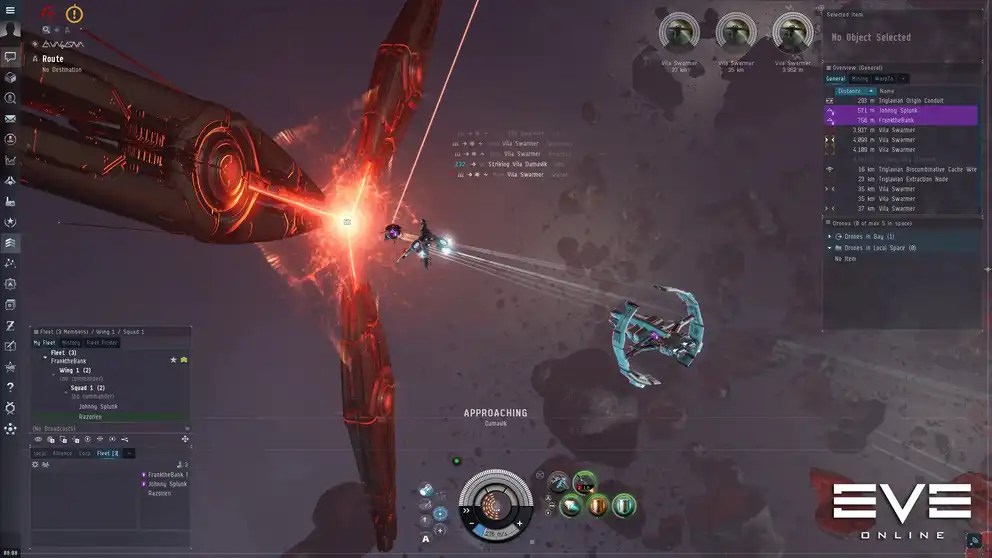
Seal-clubbing is a time honored tradition. It is the online digital gaming equivalent of hazing; of putting newbs on the frat pledge line and putting them through the ringer. In truth, it is much less “congenial” than that, if I can use that term even in reference to frat hazing (which tells you just how far down the rabbit-hole we are). It’s way more toxic than that. It is an “end justifies the means” approach of attacking newcomer players in a MMORPG who break out of the training zone (ganking). In the training zone, or security zone…each game calls it something different…there are typically steep penalties for attacking other players, if attacking other players is even allowed. Once that training period is over and players cruise beyond that mystical barrier, it’s no-holds-barred, falls count anywhere in the building. And players who have accrued better gear will pounce on any junior players foolish enough to travel alone. This has been a key element to the gameplay loop of EVE OnLine. And the result has been for the EVE community to form its own corporations, gangs, tribes, family businesses, etc, often with complex relationships and chains-of-command. But the main thing is that in exchange for pledging loyalty and the house taking it cut of any spoils, you gain mutual defense.
On April 14th, CCP Games launched EVE Online Exordium. A paraphrase of the blog post follows:
“Exordium is a new dedicated starter region aimed at improving the new player experience. Instead of spawning across scattered systems, all new players will…
…begin in this single 53-system region, making it easier to meet others, play with friends, and engage with corporations early on. The region is structured around a central hub system and dynamically assigns players to starter systems to keep populations balanced. It’s designed to reduce the confusion and isolation new players often feel, while also encouraging mentorship and social interaction between rookies and veteran players.
Exordium is intentionally a safe, low-risk learning environment where PvP is completely disabled, allowing newcomers to learn mechanics without fear of attack. To preserve balance, it features restricted content, lower rewards, higher taxes, and limits on advanced systems like player-owned structures. Activities are curated and scaled for beginners, with simplified resources and adjusted rewards to match early progression. Over time, players are expected to “graduate” out of Exordium into the wider, more dangerous universe, ensuring the region acts as a structured onboarding space rather than a permanent destination.”
While this is a great baby bottle to ease players in, my concern is that it doesn’t matter to the end result: that you need to join a larger corpo with greater resources so that you can have worthwhile defenders looking out for you. And the crimp that puts on people is that you have to make a commitment to the game that a lot of people won’t want to because they want to play more than just one game. This is a great improvement for those looking for that one main social community; or even just one amongst two or three tentpoles. But it does not hugely change the value prop for someone looking to add a new game to the rotation of 2 or 3 other games and does not want any one of them to be a full-time commitment.