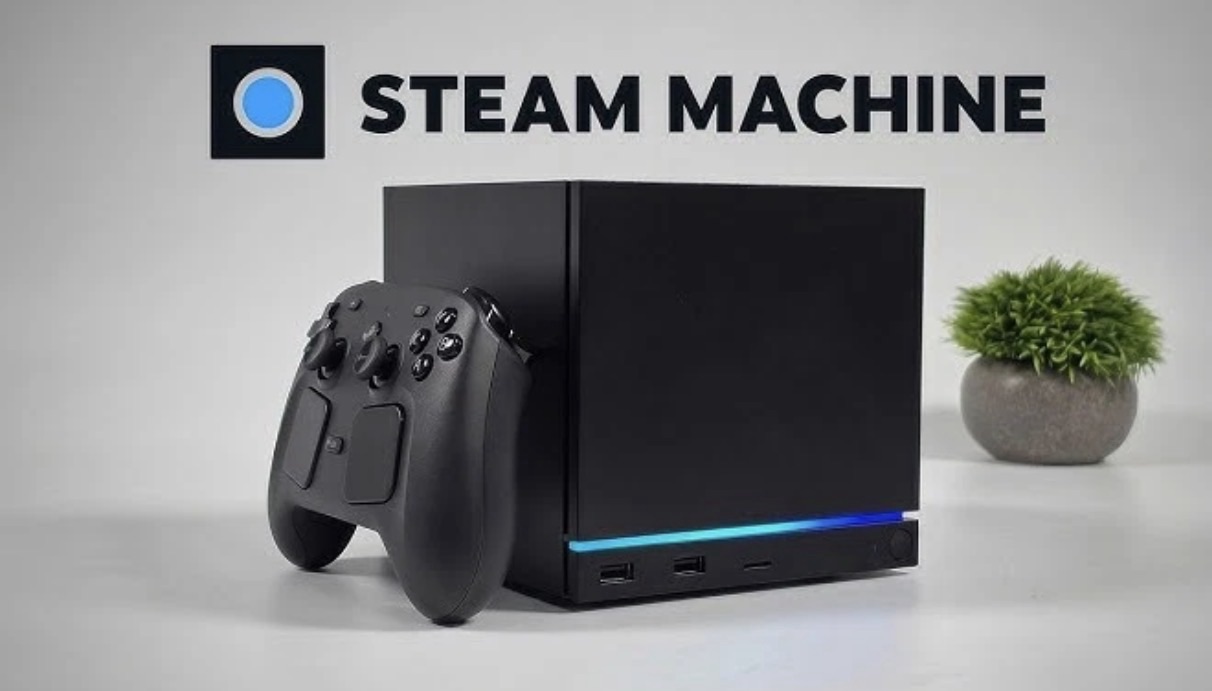
Valve’s latest update on the Steam Machine is being framed as good news: the company now expects to fulfill all current reservations by the end of 2026 while continuing to ramp production. On its face, that sounds like evidence of overwhelming demand, but I’m not convinced the reservation queue tells the whole story. A reservation is a low-cost expression of interest, not a purchase commitment. Some people joined simply to watch how the process unfolds, others are waiting to see whether pricing changes, and the existence of Steam Machines already appearing for resale above MSRP strongly suggests that scalpers are participating as well. That doesn’t mean demand isn’t real; it simply means the reservation queue is an imperfect measure of genuine consumer demand.
The pricing reinforces that skepticism. Unlike the Steam Deck, which was priced to attract a broad audience, the Steam Machine occupies a much narrower niche. At well over a thousand dollars, it isn’t an impulse purchase or an easy recommendation for the average gamer. In fact, I still believe market demand is well below the optimistic projections some enthusiasts have floated and likely below the demand profile the Steam Deck enjoyed. Today’s buyers are far more likely to be Linux enthusiasts, PC hardware aficionados, or gamers with a very specific interest in SteamOS than casual players looking for an alternative to an Xbox or PlayStation. That doesn’t make the product unsuccessful; it simply defines the limits of the audience Valve is serving today.
Ironically, the long reservation queue may become more meaningful if the broader PC hardware market shifts. As GPU prices continue to rise and memory and storage remain under pressure from AI-driven demand, a prebuilt Steam Machine could become a more attractive alternative for some gamers than assembling a new gaming PC. While I expect a number of reservation holders will ultimately decline to purchase when their place in line arrives, those units are unlikely to sit idle. If demand for premium gaming hardware remains healthy, other buyers, including resellers hoping to capitalize on limited availability (scalpers), will almost certainly absorb much of that excess inventory.
The more important story, however, has very little to do with reservation counts. Valve has already put its foot in the door with SteamOS hardware, and backing away now would send exactly the wrong signal. The company needs to demonstrate consistency, commitment, and confidence; not simply to consumers, but to potential hardware partners. SteamOS will only become a mainstream platform if major OEMs such as ASUS, Acer, Dell, HP, Lenovo, Samsung, and others believe Valve is committed to supporting it for the long haul. Those manufacturers possess purchasing power and supply-chain advantages that Valve simply doesn’t have, allowing them to build SteamOS-powered systems at more competitive prices once they believe the ecosystem has staying power.
In that sense, Valve’s promise to fulfill reservations by the end of the year is less about selling every Steam Machine itself and more about proving that SteamOS is a platform worth investing in. The company’s decision to release the Steam Machine’s enclosure CAD files under a Creative Commons license reinforces that philosophy by encouraging community involvement while signaling that SteamOS is intended to be an open ecosystem rather than another closed console. If Valve can maintain that commitment, convince OEMs to build compelling SteamOS hardware, and capitalize on the still underdeveloped mini-PC market, today’s relatively niche product could become the foundation for something much larger tomorrow. The Steam Machine itself may never dominate the gaming market, but it doesn’t have to. Its greatest success may be proving that SteamOS deserves a permanent place in the PC hardware landscape.

