I only buy two brands of sneakers. Jordan’s. And New Balance. I have a lot of them. But only those two types. My approach to most things in my regular life is pretty simple. Not so much so in my digital life. As I sit here and type this out on a Chuwi Gemibook that shipped with Windows on it but I have since wiped and installed Ubuntu. The phone here within arms reach is a Samsung Galaxy Z Fold5. The nearby tablet also a Samsung, the Galaxy Tab S7. But an iPad lies nearby. As well as a Kindle. There are PCs, mp3 players, headphones and all sorts of other gadgetry within this 10′ by 10′ cube. All of multiple makes, brands, and models. Nothing like my approach to sneakers.
But I recently decided that I would get my digital life much more like my clothing one. I’ve decided that I am only going to play games on PC and have since gotten rid of all of my consoles. 3 of 4 are now gone, with only the XBox Series X left to take flight. I’ve settled on using Sennheiser as my brand for wired headphones. And today, I made probably one of the more significant down-selects that were on my list of down-selects.
I made moves in the direction of getting Android out of my life for good. I don’t say this with malice. It’s not like I’ve been thoroughly disappointed with Android. Years ago, while the iPhone was only on AT&T and I was a Verizon customer, I went with the Motorola Droid. And I’ve stuck with Android ever since. Oh, I’ve owned iPhones. Five different models. But that pales in comparison to all of the Android handsets I’ve owned. Mind you, a lot of this came out of the stint I did as a smartphone & tablet reviewer. And then from the years after said stint that I continued living my life as if I was still a smartphone & tablet reviewer.
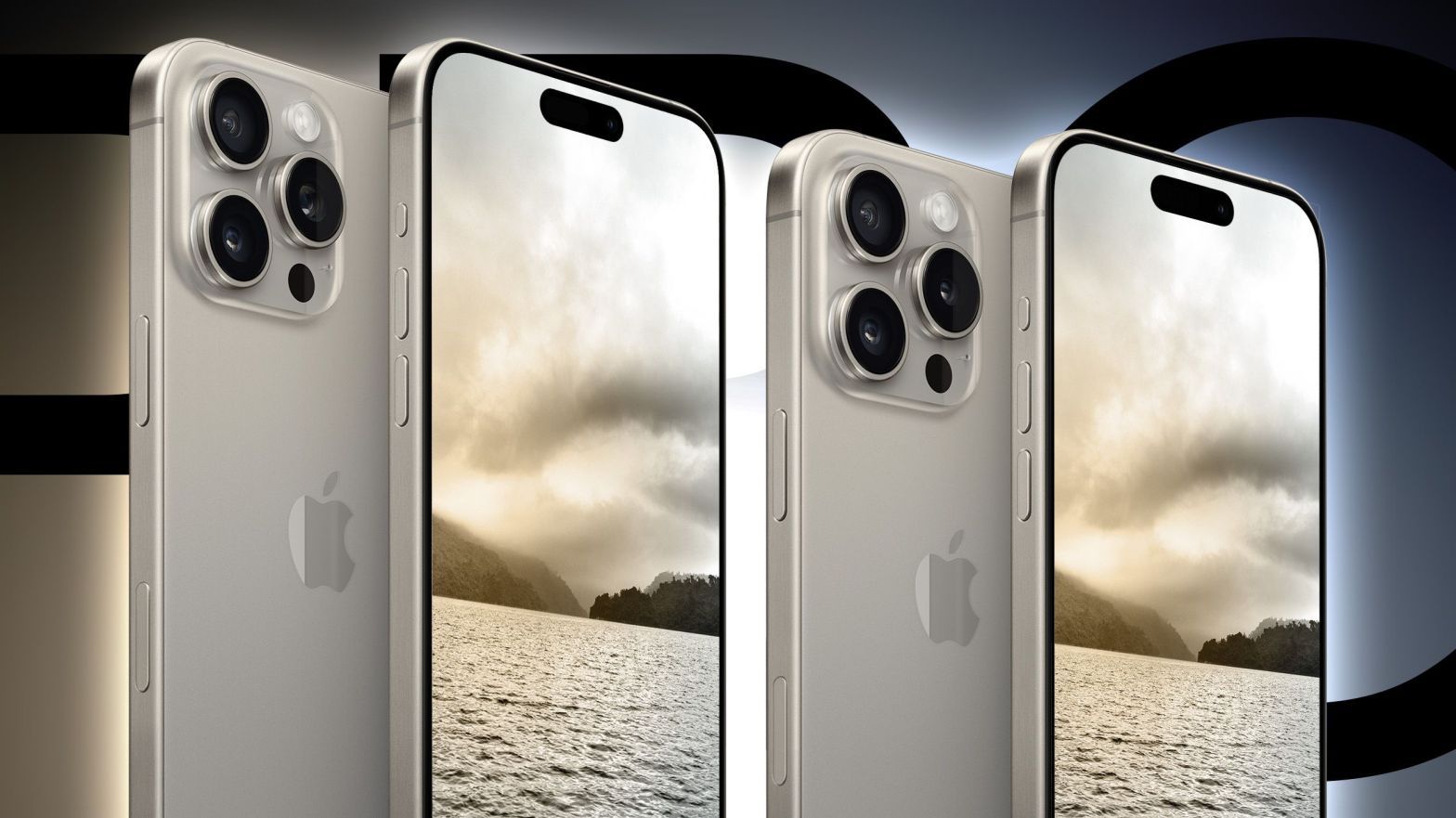
A lot of this stems from my decision to go PC-only with gaming. I thought “Why stop there?”. And I was originally planning on keeping Android around. I was going to use iPads as my choice of tablet, Android for phones. Then I started haranguing myself for not just picking one of either iOS or Android for both. As I thought more and more about pulling the trigger on a tablet upgrade, and looked only at the Galaxy Tab as it was really the only viable option for high-end, I felt limited. The iPad had more options at better price-points. The increased demand for the iPads over the Samsung Tabs just allows them to get down to a lower price. I felt like it gave me more options. And so I broke. While I am still vacillating over a Mini, Air, or Pro, I went ahead and pulled the trigger on an iPhone Pro Max and an iPhone Pro; one for me, one for the job.
And an Apple Watch Series 10. It’s funny when I think about this being my last weekend with any Android devices for a long time. I was buying Android tablets before Google even made Android support for the tablet form-factor official. I was there for the Xoom. I eyed ChromeOS as the younger brother Momma’s Boy that got all of the doting and attention even though it was the older brother Android that protected the younger one and made sure he got through school. While I look forward to my new life with a simplified set of digital options, I take no pride in bidding Android, XBox, PlayStation, and Nintendo adieu. Or the myriad others that are soon to be shuffled off this mortal coil. It’s been a great ride. And I wish these brands the best of luck in their endeavors.
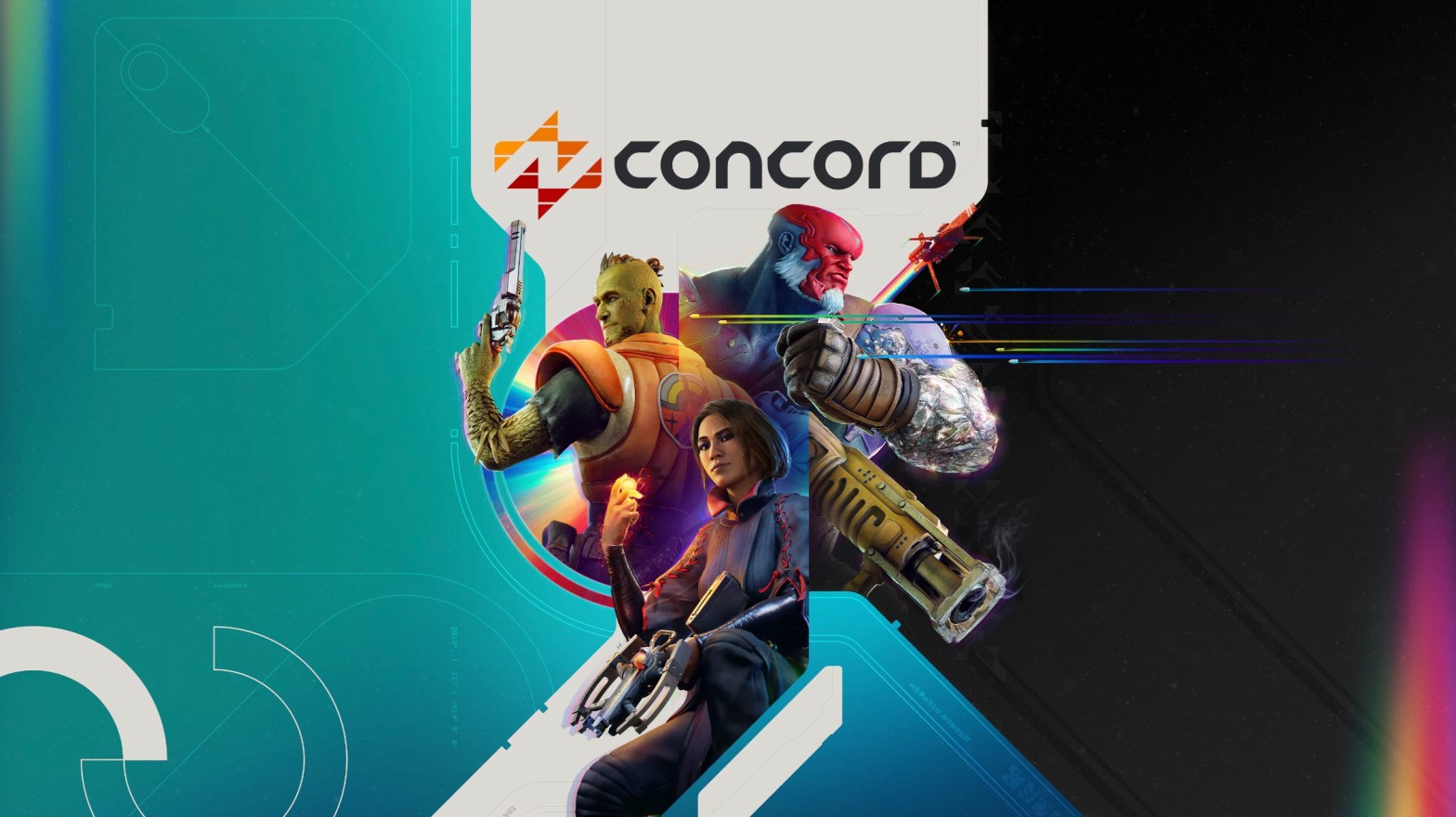
It is no consumers job to make sure that Concord is a good video game. And it is not up to any gamer to speak well of Concord. It’s not my job to “find at least one good thing to say about every game”. Anyone who has spent some time listening to me knows that one of my clichés is “Make your game, test your game, put your game up for sale on the market. If it sticks the landing, garners good buzz, then I’ll gladly pay to check your game out. I get paid to test software. I am not going to pay you to test your game for you.”
But, the opposite is also the case. It is no one’s job…no one elected any influencer…YouTuber, Live-Streamer, Twitter account…to tell you that you should be disinterested in a game because, by their oh-so-wizened analysis, they predict Concord will be a failure. So don’t even bother. Going so far as to say “I’m having a great time playing this game; not gonna pay for it though”. And so here is the case on why everyone who is in that end of the pool is wrong nine ways to Sunday.
Concord is not going to do Fortnite, Warzone, and Overwatch numbers. That statement is not the gotcha moment everyone thinks it is. Concord is not a flagship title. It does not occupy that position of prestige within the PlayStation portfolio. That development team is ~170 people.
People talk as if the entire fate of the PlayStation brand rests on the shoulders of Concord. It doesn’t. PlayStation’s portfolio outlook is that if Concord fails, it will be 1 of the 12 live-service titles that they have in development that does not work out. That’s WHY they have 12 of them in development. They expect that some of them will not catch fire. And success for those titles is not expected to be Fortnite, Warzone, Overwatch. The dev team is roughly twice the size of Battlestate Games. And Escape From Tarkov has a player-base of about 2 million players. Concord is only going to the PlayStation 5 on console. That and PC. The monthly active player count for Overwatch 2 is just now cresting close to 7mn, after years spent languishing between 1.6 and 3 million. I would say that if Concord captures and retains a player-count of 4 – 6 million active players, across both PC and PS5, it will be ok. Because that means that at an asking price of $40, the game will have made $160 – 240 million. And with a team that size there is no way it is even a $200 million budget game. And if it doesn’t do that, then the other 11 games that are in active development (including the ongoing work on Helldivers 2) will have a case-study to learn from. Which is another reason why businesses will sometimes take risks, prototype, launch new product lines, and see what there is to be learned.
The game should be free-to-play. Weird to me that they didn’t have that same energy for Palworld and Helldivers 2. Here we have two examples this year of games that asked for their money up front. And both have, to-date, been bonga successes that no one predicted. No one saw coming. In fact, many of the pundits who are projecting the failure of Concord were also equally pessimistic of Helldivers 2. But in the wake of that, most sane people agree that both of these games have achieved a level of success that must be acknowledged, even if it only lasts for a couple of years. Huh. By the way, also funny that the people who yammer on about how Helldivers 2 should be multi-platform (“Who does it help?”) have not also kept that same energy for Palworld . More on that later when we swing back to visit the causality of all of this Concord Sturm und Drang.
Regardless, the game should be free-to-play. Overwatch was. No, Overwatch wasn’t. In fact, Overwatch was a paid title that launched at $40 on PC, $60 on console. And then there was a Collector’s Edition for $130. And it remained paid until 2022. Overwatch was retired, Overwatch 2 took over, and THAT game is free-to-play.
Under the paid regime of 2016 – 2022, Overwatch had a player-base of as much as 40 million worldwide. And an active player count in excess of 10 million monthly. Overwatch had earned $1 billion by 2017. They made that money by not only selling you the game up-front, but by also selling you loot-boxes. Remember those? You pay money, you get something random back in return, with no idea if it would be valuable or not. But…I know. That was then, this is now. Free-to-play is the way to go. Overwatch 2, under the free-to-play regime has struggled to retain favorable metrics and KPIs. Blizzard employees on the Overwatch 2 team have had their bonuses slashed, the game no longer occupies as prominent a place in the Activision portfolio. In its Q2 2023 earnings report, Overwatch 2 was referred to as being “not financially material for the company, with its emphasis and focus in investment then turning to ‘executing on the content roadmaps for larger core titles.’ (Active.io)
The Beta Player Counts were low. Therefore the game will be a failure. Maybe? Helldivers 2 didn’t have a beta and it did just fine. While here can be some corollary drawn between games with high player counts in beta, there is no clear negative corollary. In other words, it is not always the case that when a game has low player beta numbers it is not successful, which is the square the detractors are standing on. Neither Titanfall 2 or Gears of War 4 had beta player numbers that put them in the leading beta numbers for that year. And yet they charted at 18th and 20th of the best-selling games for that year in the US.
My argument here is not a proclamation that the game will be “successful”. But that people are applying their own notion of success to what the game has to do. And doing so on the basis of revisionist history at best, and at worst on things that are just plain wrong, false, and made-up. Concord does not need to be a bonga success. It does not need to be Helldivers 2, which no one expected. It does not need to be Destiny 2; the dev team is 1/3 of the size of the Destiny 2 dev team at peak, and that’s a very deferential percentage for those taking the opposing side of this argument. Concord needs to grab the attention of a core player-base and hold on to that, growing it slightly over the next few years. I’m also not arguing that it won’t ever go free-to-play. But it’s a stretch to assert that the game HAS to be free-to-play at launch off of the argument that everyone else in the market is. Because Rainbow Six Siege, the very definition of a hero shooter, is STILL charging a cover-charge, 9 years since its release.
There are hundreds of successful games that never get into the Game of the Year discussion. And never do bonga numbers the likes of Fortnite, Warzone, and Overwatch. And they are fine; they bring some money in, expend some via further dewvelopment investment, and the studio remains financially solvent. There is one reason that Concord is getting the Sour-Patch treatment on social media, and that is because it is PlayStation 1st party. Because if this game were 3rd party, we would not be having this discussion. And maybe that’s appropriate. Part of it is driven by PlayStation being mostly quiet on 1st party for a very long time. But it is also true that the result of their derived causality is that people are just talking to talk…to fill the air left empty . And their incorrect weighting of the importance of Concord and where it sits in the PlayStation portfolio will likely lead to incorrect predictions.
Let me end with an additional suggestion that we have to look at what Concord is trying to do in its appeal to the PlayStation install base . Knowing that there is a percentage of that demographic that finds story, creative narrative, and character evolution as a big get, Firewalk’s effort is to target that base. It’s week-to-week unfolding of an ongoing plot, reinforced by short video content, will harken the PlayStation user-base to pay attention to yet another franchise narrative that is evolving; that will lead to them falling in love with the game’s effort towards world-building. Only time will tell if this effort to use deep story to encapsulate a hero shooter and hope that it captures the tastes of the PlayStation user-base is successful or not.
Editor’s note: I did not have time to proof-read and do much editing, as I’m running to get to a podcast. I’ll swing back and do another once-over later
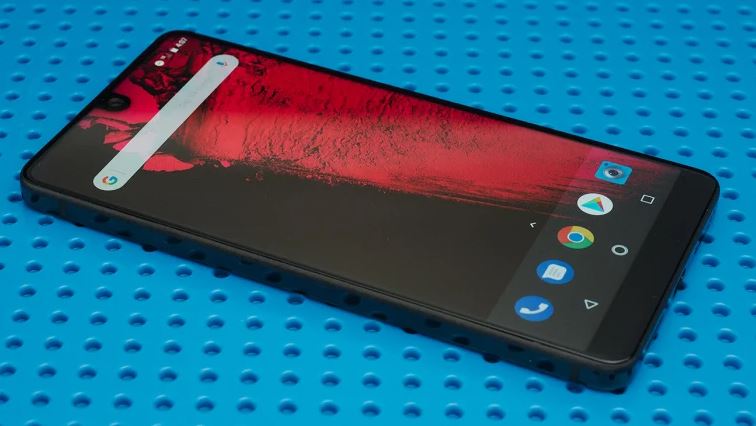
On Friday, Extreme Tech reported that “Someone Found Essential’s Super-Skinny Canceled Android Phone on eBay”, and it reminded me of a conversation we had just had on the most recent episode of the Basement Radio Arcade Podcast. We were discussing market consolidation, and the difficulties in the notion of taking mainstream gaming…FPS’s, RTS’, JRPGs….and moving them big-time to phones and tablets or mobile devices in general. I mentioned, having been a smartphone and tablet reviewer for some number of years, how much the market had consolidated since the mid-2000-teens. Essential is one of those competitors that has gone by the wayside. I had an Essential Phone, the PH-1. It’s still around here I am pretty sure in the old smartphone box. Yeah, it was actually, interestingly enough, right on top.
It was such a great phone and represented an apex of time for the Android faithful. It was the time when the market allowed for the mid-priced flagship. A time that has since faded into nothing but memory, partially fueled by Google dropping the Nexus program and moving its own first-party phone up-market. It was a time when you could score a $500 phone with the latest specs…the latest Qualcomm SnapDragon flagship chip. Better RAM amounts than the stingy big corpos would give you with their carrier-branded and aligned phones. You might not get all of the software bells and whistles. The camera might not be the best at launch, because, ya know, those phones didn’t have to compete head-to-head with the iPhone and latest Samsung Galaxy.
The Essential was just such as phone. Circa 2017, the phone provided 128GB of RAM with no microSD card slot, a 5.71″ screen at 1312 X 2560 pixels, a 13MP 4K camera, and 4GB of RAM along with the Snapdragon 835 processor. Its 3040 mAh battery provided just north of 8 hours of battery life.
It was one of the first mainstream dual-antennae phones in the US, able to run on both AT&T and T-Mobile (GSM networks), as well as Sprint and Verizon (CDMA networks). The screen resolution and size combined for a 504ppi pixel density plastered on its IPS LCD screen. It already had a USB-C port for charging. And its fingerprint reader was located on the central backplane axis, about 1/4 of the way down the phone from the top edge.
The phone in many ways was ahead of its time, and launched at a price of $699 in the US off-contract. But that price was quickly discounted to $499 and could easily be found wide and often discounted even further. It was an amazing time when an Android user could afford to just buy a phone at full price rather than have it subsidized through the carrier. It’s sad day today when in the US we pretty much only have the iPhone and a few Galaxy variants to choose from. I fondly remember the HTC, Windows Phones, Blackberry, LG, Nokia, Motorola, Palm Treo 650 and Pre handsets…yes, I know those are a mix of manufacturers and OS’s. But even within Android, we have seen a drop-off in the availability of Asus flagship phones, Sony Xperia, ZTE, Huawei, and so forth. But the point remains that we used to have a bevy of choices in the US and the carriers have slowly squeezed that freedom out of the market. It used to be fun to be a phone reviewer. But these days it is quite honestly boring AF.
OK. Not all of it can be entirely attributed to the carriers. Some of it was natural market attrition. Some of it has been the enforcement of regulatory policies by government, backed by the allusion to threats to their national security. Some of it was Andy Rubin and Essential themselves.
But there is no question that the carriers and imperialist capitalism played their part in it. And unlike the Europeans and other peoples of the world, our carriers and our tariff regime do not support us getting a hold of Honor, Oppo, Poco, and Xiaomi phones.
There’s little for me to do other than lament this heyday as a time gone past. It was great. It was exciting. It was interesting. It allowed for a subject that could be dove into deep for the technically curious. Now it is not much more interesting than the next Lego set. It’s sad. And proof that consolidation does stifle innovation. Let’s hope this time comes back. And let’s hope we don’t allow it to happen in other spaces, such as video games.
A lot of ado has been making the rounds about how a significant chunk of the CD Projekt Red’s dev team on CyberPunk 2 is made up of former mod makers. Developers who got their start diving deep into the underbelly of the tools and sometimes the code itself of their favorite loves in gaming. And discovered via that path a route into actually making games for a living. And despite all of the hallelujah’s that the PC platform curates for its flexibility in accommodating modifications of games…tailoring those experiences or in some cases expanding on them…I personally find mods uninteresting.
As much of a PC main as I am, people often assume that I am in on the mod culture. How could anyone who shouts the values of the PC regime, with its winning characteristic being choice and the power in that freedom that it grants to its users, possibly be uninterested in mods? Most people think that I am one of these gaming blacksmiths whose install of a given Bethesda or CD Projeckt Red title takes hours to install and configure b/c it is packed with dozens of mods. I see people living that gaming lifestyle and I put them in the same category as the people who can’t sleep at night without meticulously hiding every single cable in their case. Like the nuts who used to put sound-absorbing foam in their cases to reduce noise. All that stuff is way overly.
Don’t get me wrong. I render no judgement on those people who gain joy from aligning with that ilk. But it’s not in my interest-lane. One, I do not finish a lot of games. So I am unlikely to be so inclined to do a second run-through in the first place. That also makes it unlikely for me to expend the effort figuring out what the best mods are to incorporate into an install.
Regardless of the fact that it takes me forever when I do finish a game, I am insistent, in one of my vectors of OCD, to play it as originally intended by the creators. Much like I am always most enamored with a song the way it was recorded, not the way the artist performs it live with a variant arrangement order and riff. And how the movies I am in love with I fell in love with as the theatrical release, not the extended version. And not the one Lucas come back and put his fingers all back through the dough that had already been kneaded.
I do use ModStation on World of Warships. It is almost a necessity to bring the UI up from being anything less than barebones. For some legacy games, I have also used patches / mods that just made them playable and stable. I did that with Falcon 4.0 and the original Max Payne, once it had past on from prime time. I’ve never been enamored with UGC, either. I can’t be bothered to go out of my way and spelunk Forge maps in Halo the MCC or Infinite. I’m only going to play those maps because 343 inserts them directly into the Team Slayer playlist or some other mode. I guess when you consider packs made by other developers…such as aircraft and airports for Microsoft Flight Simulator…those things are on the menu. Mainly, I am just not one to spend a lot of time trying to separate the wheat from the chaff when it comes to UGC. It needs to be curated, and I am more prone to trust something I pay for.
Still, I am very happy that millions of gamers have come to love the mod lifestyle. And I’ll never say never. Eventually I’ll get down to playing fewer games. And eventually just a handful total. Maybe that will be the time to go beyond retail and what the original devs provide.
But until then, I’ll stick with stock mostly, with a small group of exceptions.
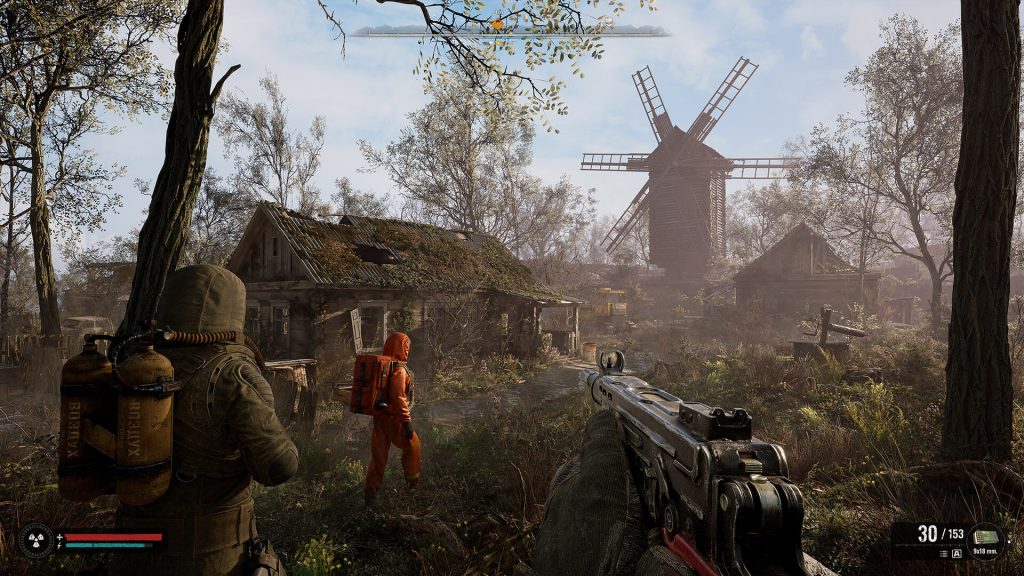
One of my most anticipated games from the XBox SGF Showcase, Stalker 2 looks fit to launch on September 5th, 2024. It’ll be a busy release slate that it pops its heads out for, being preceded by the Labor Day weekend release of Ubisoft’s Star Wars: Outlaws. Will it be enough to capture the limelight, or will Massive Entertainment’s game, supported by the breadth, width, and depth of the Star Wars license, still have the gaming market in a chokehold?
I’m not sure. Massive Entertainment is one of my top 5 favorite studios. But the Stalker IP and the history of GSC Game World holds a special place in my heart. I won’t go into that whole history, as I’ve written and podcasted about it multiple times over the past few years. If you need a refresher, one of the best articles written on the topic is Polygon’s bit from 2013 found here. So, with only 61 days left to (fingers crossed) the release date, let’s get caught up.
There have been playable builds of S.T.A.L.K.E.R. 2: Heart of Chornobyl both at Gamescom last year and again at Summer Game Fest this year. Reports from those hands-on sessions with the game have been positive. You can catch one of the two trailers released by GSC Game World from last month below:
The game is being built on Unreal Engine 5, which has been the basis for games that have experienced highs and lows in their critical reception. But Digital Foundry thinks that the tech and game industry developers’ handling of it may be starting to hit it’s stride
GSC Game World, despite the adversity it has been experiencing in working throughout the War on Ukraine, also managed to port S.T.A.L.K.E.R.: Legends of the Zone Trilogy to both gen 8 and gen 9 XBox and PlayStation consoles this March. The collection, which features S.T.A.L.K.E.R.: Shadow of Chernobyl, S.T.A.L.K.E.R.: Clear Sky and S.T.A.L.K.E.R.: Call of Pripyat (the titles are also sold separately) , was released on March 6th, and sells in both stores for $40 currently. It marks the first time those titles have come to console. And it is no small feat that the studio pulled this off while working on the new title.
S.T.A.L.K.E.R. 2: Heart of Chornobyl has experienced an amazing number of controversies and multiple weird-doms have surrounded GSC Game World itself. This includes the studio in its original incarnation being shuttered by its owner with no notice and no explanation in 2011, the exodus of the studio devs to multiple points of expatriation around the industry, former devs trying to pull a scam on Kickstarter based on the Stalker pedigree, and the aforementioned war itself. The name of the new game (as well as various points of reference in the port of the legacy collection) has been changed to reflect the Ukrainian spelling, vice the Russian. An additional shaking of the fist in that direction and an assertion of ownership over the studio’s identity.
While the game is launching on XBox Game Pass, and is an XBox console exclusive (it is also releasing on PC), that exclusivity is timed, as revealed in court documents from 2021 in the Epic vs Apple hearing. Those deals showed a three-month exclusivity window.
While I would not get my hopes up about the game landing on the PlayStation 5, and not at all about it being on PS4 (it is only coming to gen 9 Xbox consoles), it is something to consider as a possibility.
GSC Game World had about 400 developers as of 5 months ago. But it’s unclear to me if they were all relocated to Prague; 170 of them were still left in Ukraine when the rest evacuated, and some have been killed. It is nothing less than a feat of amazing will, determination, and perseverance that this game will complete its development. It will be enough for me to see it land on XBox and PC. After that, this team deserves a rest.
While multiplayer was announced to come in a post-launch update, that was back in 2021, when the game was still targeting a 2022 release. I have not see any further updates since then, and believe at a minimum it would be much later, if ever. For now, here’s a second trailer that was also released as an update from last month:
Day one of the summer vacation. Admittedly, one that should have started in earnest much sooner, but a sports injury had me laid up and on lock down for the bulk of what summer there has been so far.
But it’s been a good amount of time to get some earnest hard-work done on gaming. A good chunk of that has been spent in Vanilla Software’s Unicorn Overlord. It is first and foremost a game that has caught me by surprise in its JRPG roots not causing me to do an immediate nope. But further than that, I have also been pleasantly surprised that it has proven to be a capable and intelligent strategy game. I was at first skeptical of its auto-battler nature, and was ready to walk right the eff away based on that. But the depth of the game…it is not anything if not a game of strategic theatre maneuvere. It evokes images of kings and generals and nobility pushing statuettes around on room-sized strategic maps on the floor of a castle. The game starts basic and scales quite well, neither overwhelming the player but also not letting them get a pass by routinely employing the same strategies on maps over and over. The gameplay lends itself well to taking various strategic approaches….chokepoint management, rear-echelon defense, covering a unit’s retreat, amassing overwhelming force…the battle maps are truly your playground. And while, yes, I would prefer a keyboard and mouse, I cannot find much fault with how well Vanillaware has done with implementing game controller input.
In and amongst these sessions, I have also been playing World of Warships and War Thunder. I won’t go into detail tonight. But I will say that I was very anxious in expecting during this playlist that I would forget things I had learned or re-learned (in War Thunder I am playing Naval Battles) and have to knock cobwebs off each time I left one for a couple of days and then came back. I have been away from World of Warships for a while, but have 137 hours in that game. I have like 1.5 hours in War Thunder, and did not originally onboard in Naval Battles; I was trying the aircraft the one time I’d checked into the game. That all being said, I acclimated quickly and have been having a blast going back and forth between the two.
I watched Justice League: Crisis on Two Earths. That DC Animated 75th Anniversary Collection continues to never disappoint. Finally bit the bullet and started my round of upgrading my tablets. Started at the low end by picking up the iPad 10th Gen 256GB since Apple dropped the price in the last round of iPad announcements.
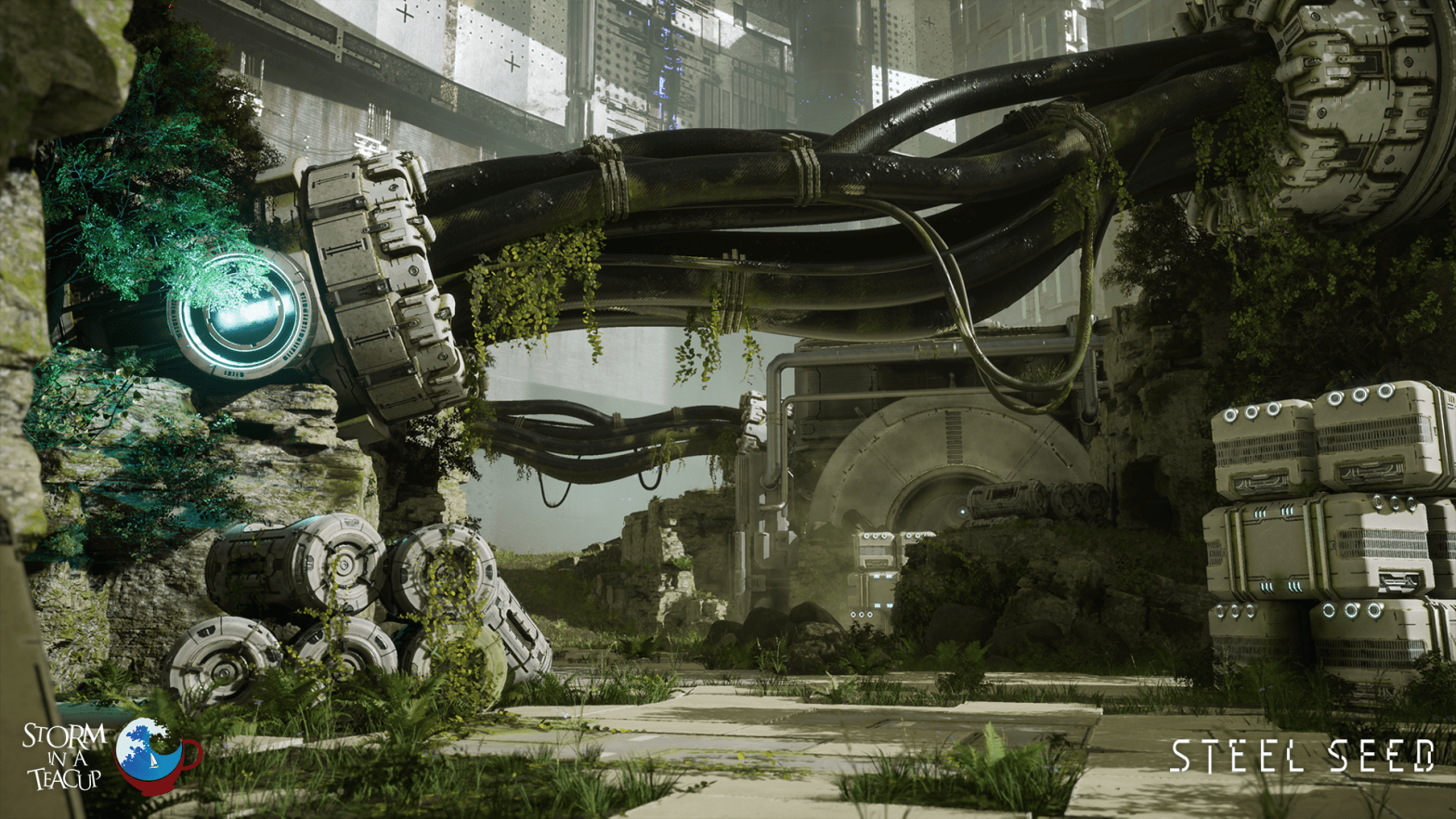
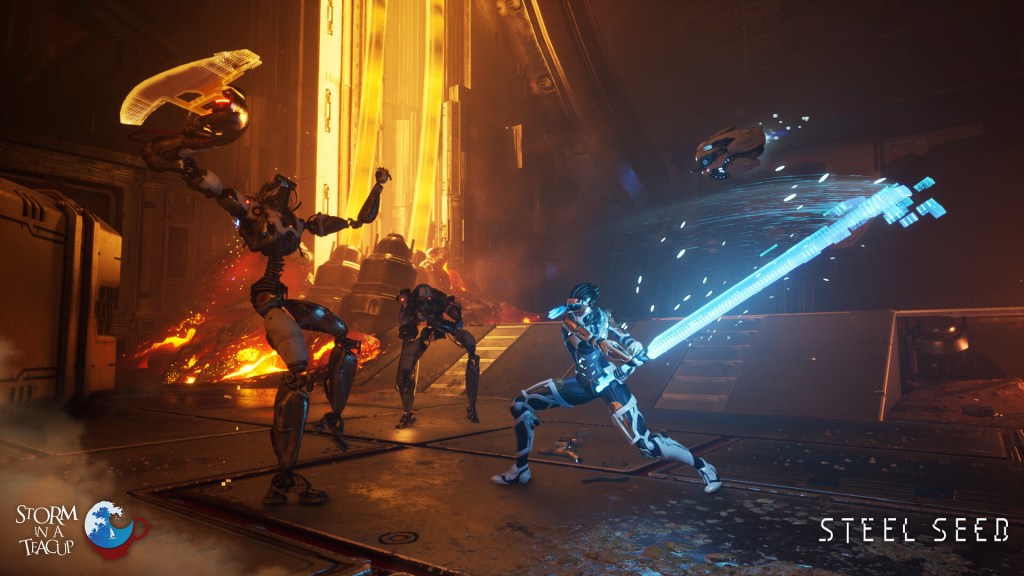
Steel Seed caught a lot of people’s eyes from the 2024 PC Gaming Show due to its traversal and combat mechanics, which remind many of a mix between Jedi Fallen Order/Survivor and Uncharted. But what got my attention was the level design. Clips we have seen have protagonist Zoe traversing through a hulking steamworks facility that features a parkour gamer’s playground of slides, wall climbs, runs…it all comes off as a bit reminiscent of TitanFall in fact.
You can check out the trailer shown during the June 9th event, which aired after the XBox showcase, below
Ad copy from the Epic Games Store (EGS) and Steam let us know much of what there is on the street about the title:
“Steel Seed is a single-player stealth-action adventure game set in a dark sci-fi world. Join Zoe and her flying drone companion, Koby, as they navigate a hostile underground facility run by AIs. Experience the immersive narrative, agile parkour movements, and stealth-based techniques inspired by games like Star Wars Jedi: Fallen Order. Steel Seed is developed by Storm in a Teacup and published by ESDigital Games, set to release in 2024. Discover the key to humanity’s survival in this gripping adventure!”
and
“Developer Storm in a Teacup’s Steel Seed blends stealth and action, and the new PC Gaming Show trailer gave us a good look at its bleak sci-fi setting. The game stars Zoe and her flying drone KOBY, as they explore an underground facility overrun by troublesome robots. The blend of action and stealth allows Zoe to engage directly or avoid some fights altogether as she explores deeper and saves humanity—while hopefully retaining her own.”
The script was worked on and edited by BAFTA-winning writer Martin Korda, although he is not credited as the original writer. He has worked on the FIFA game campaign stories, Destiny 2 and Destiny: the Taken King, as well as Need for Speed: Rivals, and No Man’s Sky, and his work helped The Movies, the business simulation game from Peter Molyneaux and Lionhead Studios, win a BAFTA.
There is a demo for the game that appears to still be available via EGS. While it is spoken about on the main Steam listing for the game, the demo did not still appear to be available for download there, although I may have missed it. The game is slated to launch this year on Steam, Epic, PS5, and XBox Series X|S, although nothing tighter for a release date has been given other than 2024. I did not get to play the demo, but there is video of the gameplay posted here:
The game’s development studio, Storm in a Teacup, or STC, was founded in 2013 by its current CEO, Carlo Ivo Alimo Bianchi. Bianchi is a former CG Artist and Lighting Lead at Ubisoft and IO Interactive and has worked on Crysis 3 and Batman: Arkham Origins. The team works out of an old Roman Villa, called Stormville, near the western coast of Rome.
Most of STCs earlier games were only met with lukewarm reception, but their latest, Close to the Sun, has slightly better but still mixed results across the landscape, with a 66 overall Metascore, but 75% on Steam from a small pool of players.
Based on information I could find, my guess is that the team may be about 20 – 25 developers.
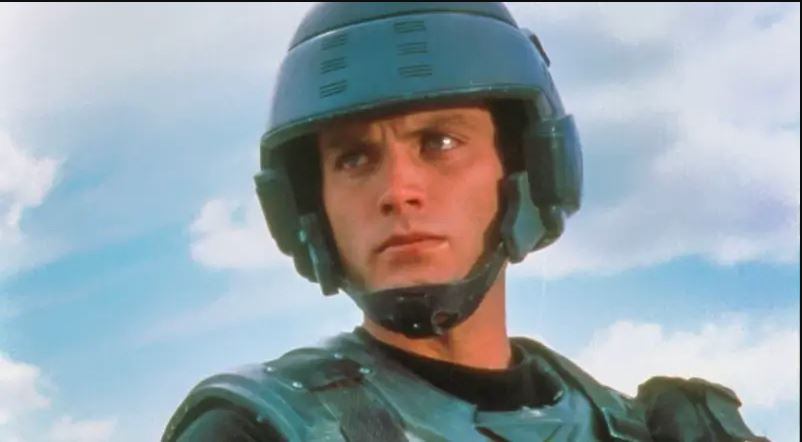
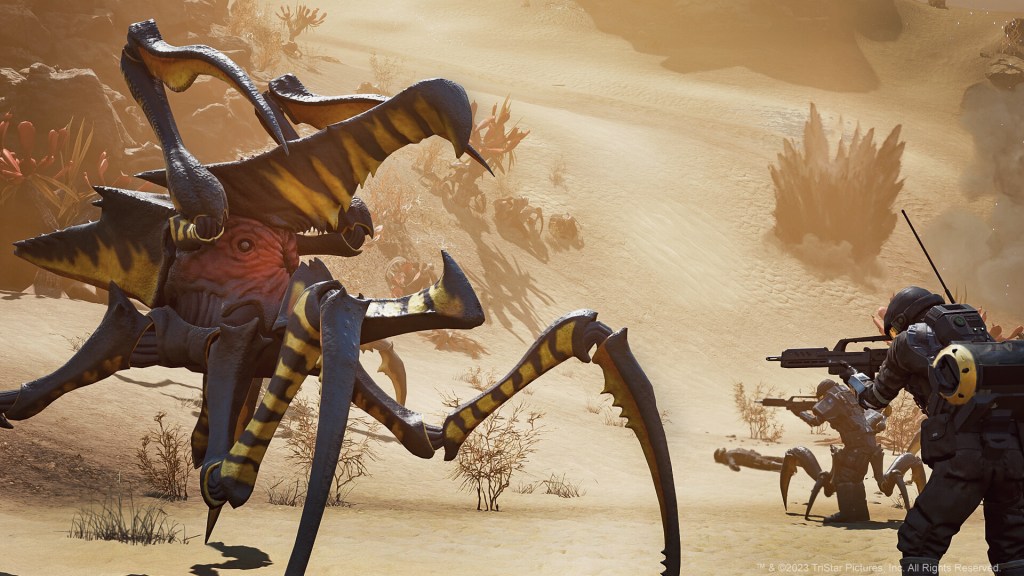
I added Starship Troopers: Extermination (commonly referred to by its players as STE) to my watchlist after seeing the presentation for the 0.8.0 update during the Future Games Show. The Future Games Show was Saturday evening (eastern time) after the main Summer Game Fest (SGF) keynote of Friday, June 7th. I had a total of 8 games that made my list out of the show. STE was number 7 and it came up for revisit and check-in today. You can peep the highlights here in the YouTube cut-out of that part of FGS
It just so happens that the 0.8.0 update goes live tomorrow, 10PM PT / 1PM ET. The game, which launched into Early Access on Steam on May 17, 2023, currently has mixed reviews from the Steam user community (51%). The main culprit behind this is apparently the team’s decision to migrate from UE4 to UE5 sometime last fall. Prior to that the game enjoyed much better reception, with overall Steam Community reviews sitting at Very Positive (86%). The game remains in Early Access, which was originally projected to only last for a year. While we have crept past that, the development studio, Offworld Games, did announce at SGF/FGS that STE was leaving Early Access and launching on multiple platforms (PC via Steam, PS5, and Xbox Series X/S) on October 11, 2024. The game is also available in Early Access on the Epic Games Store (EGS). I would assume it will leave early access there in October, too, but I do not see mention of that on the EGS store page, and I have not found it corroborated in writing at any reputable outlet.
STE is developed by Offworld, more formally incorporated as Offworld Industries. The company has been involved in some controversy for its role in defense contracting, investment money from Tencent, and ousting its CEO to be replaced by someone with extensive monetization experience in the mobile industry. Take that for what you will. You can take a look at their roadmap here.
There was a more recent update posted, that seems to have since been taken down, so what might be in the air since they decided to go with a multiplatform release this fall I am not sure. But General Rico himself has been enlisted to lead the troops in the single-player campaign which is set to be part of the 1.0 release this fall. That mode will offer 25 missions, and will have some PvE missions to-boot, which I guess means co-op is planned as a feature. It will eventually gain expanded DLC in the single-player campaign after the initial release.
The game is currently unsupported on Steam Deck, but maybe at least the single-player campaign will eventually be playable on it sometime after the 1.0 launch. Update 0.7.1 went live on May 6th, 2024. Update 0.8.0 introduces:
Weak Points – where most bugs will have a weak point, they will all have an armor rating, and parts of their body where there is no armor and they are vulnerable. All weapons will have an Armor Penetration rating. All of this with the intent to add depth to the shooting mechanics of the game
Introduces a new planet, Planet X-11 – “set in the Tibannis system within an Arachnid Quarantine Zone”
Adds FMJ and Hollow Point ammo types
Adds the Carnage system, where bug bodies do not die and therefore dead bugs can be used to climb on top of. But, also, the enemy can use those same dead bug bodies to surmount obstacles and get over base walls
Recorded the latest episode of TAG (Talking About Games) last Friday. Episode #10 covered the recent departure of Horizon Call of the Mountain’s Game Director, and I covered the lineage of Firesprite and their relationship with Sony Interactive Entertainment. Additional topics included a Star Wars competitive multiplayer title that has been flying under the radar but is supposedly due to release this summer. The show rounded out with a discussion about XBox’ upcoming summer showcase, and the beginnings of a multi-part thread where I cover the report card of all of the games Ubisoft put on the stage last year at their summer show as part of the prep for this year’s event. My hopes and plans are to now make TAG a more regular thing, targeting a show every four days. So the next episode will be this coming Tuesday morning, 07 May.
I’ve posted on Call of Duty: Modern Warfare III Season 3 Let’s Play and have one other recorded that I need to post. My slate has a total of nine sessions that I want to do over the next 3 weeks. Two down, seven to go. These sessions are being recorded on the 377 stack, my build running an Alder lake Core i7-12700KF, an MSI RTX 4070 Super, and 64GB of RAM. And using the Elgato Wave 3 mic, Elgato Wave Arm, Elgato Pop Filter & Shock Mount, and Stream Deck XL.
And that’s also pretty much all I’ve been playing. Most nights this past week I’ve gotten started so late gaming that the only thing I had the energy for was CoD. As I turned the corner into the weekend, though, I did get some time to get back to Final Fantasy VII Remake on the PS5. It just isn’t my kind of game, but I feel it is important enough of a title for my to grit my teeth and bear it to trudge through more of it. The combat is interesting enough for me; let’s call it a 78%. Occasionally I find it hits, usually when I am fighting the regular troops and I feel like I have a chance to pull off some neat maneuvers that reward you with applicable eye-candy. Boss battles are largely an exercise in frustration that I feel like I survive but don’t necessarily enjoy. But I guess this is what I have to get through to also play Rebirth.
I also hit a trigger to make sure I am playing my physical games, and pulled out F1 22 for the PS5. I setup the Thrustmaster T300RS Gran Turismo Edition, and let me tell you. Sublime. The mark of a game or, in this case, a series, that has woven itself into my DNA, is one that you can take a long layoff from, and after coming back, with some minimal amount of dialing in settings and tweaking the cfg, fits like a glove. Apparently, I bought this installment in the series, started my season, and then put the disc in a box. SO I picked up with Round 1, practice session 2 at Bahrain International Circuit. Ran into the wall the first time out of the paddock. Spun the car out the 2nd time after restarting the session. Ran with the Maximum Top Speed setup, in PS2, then the Balanced in PS3, and kept the Balanced for Qualifying. Got on Pole. Then went on to place 2nd, after getting into Leclerc and damaging my front left endplate in lap 3. Too early to pit, I stayed on track until my designating pitting +1 lap (I had race length set for 14 laps). I was longer in the pits than planned after punching my turn-in too early. Got back on in 15th, but then moved up to tenth when the other half of the field pitted the next lap. From there I fought back to 4th, where I had to out-fight Lewis Hamilton to get to 3rd and then pulled a heroic outbreaking of Sainz to come in behind Verstappen. It was a great first outing with the new team.
I changed up livery colors after investing in the marketing department before I proceeded on to Round 2 at the Jeddah Corniche Circuit for the Saudi Arabian Grand Prix. Can’t wait for the next session.
Planned out the next few weeks of Let’s Play videos to shoot. The plan is super-simple, but gives me a production outlook for the next three weeks. Designated studio hardware for that setup. I’ll be over on Battlestation 2; the box that I built in early 2022, powered by an Intel Alder Lake Core i7. The GPU has recently been upgraded to an MSI GeForce RTX 4070 Super. Still working through deploying the studio gear, but I’ve figured out how to rig the Sony Alpha a6000 Mirrorless ICL camera to the Elgato Prompter, and deployed and connected the camera to the Blackmagic ATEM Mini Pro.
I put in the extra hour sesh of CoD I couldn’t stay up last night to finish. Played the Small Maps Mosh Pit and finished max-levelling the Fennec SMG. Had some great matches, including one where I was tops in TDM. Got a lot of work done on the 9mm handgun, too. After that, it was over to the XBox to play some Assetto Corsa Competizione. I’ve got a lot of work to put in on that one to “git gud”. But today was a good day and lots of improvements were made. That McLaren is squirrelly AF. With that done, I folded away the Thrustmaster TMX and Diwingus fixed stand and stowed them for another day. With that arc complete, I plan to pull Warframe (PC) and Resident Evil 5 Remake (PS5) into the running rotation.
Got two episodes of Doom Patrol, Season 4 in too. Not a bad day of nerdery.




 Rounding Off Infinity