From Comstock to Console: How Age Verification Laws in Gaming Echo Old Moral Crusades

Gamers in China already lead a life where they are required to verify their identity in order to game online at all. Not just to reach certain types of content. Because gaming time and online access are regulated in China, gamers have to verify their identity more often than not to game at all over there. Now western gamers are getting a taste of this medicine in rapid-fire machine-gun fashion. Serves them right; the growth of amoral behavior and spread of social decay in the west is weakening our society from within, contributing to institutional corruption and the erosion of civic virtue. OK, LOL, maybe not all that, but we do have our share of problems.

It is interesting that western gamers seem to be getting caught in a pincer of moral warfare rules involving everything everywhere all at once. Already caught up in the whirlwind of a rogue Master Card policy that has been weaponized by the moral patronage, gamers have seen the loss of gratuitous content on Steam and itch.io; or at least the overt visibility of that content on those store fronts. But additionally, as VGC reported yesterday, Steam and Xbox are now going to require age verification due to the roll out of laws meant to ostensibly protect minors online in the UK.

While VPNs and using selfies of Sam Porter Bridges appear to be a way around many of the implementations of these policies, it is daunting that we are in a new era of Comstock Laws revisited. Funny that those were also propagated by an effort to chase the Victorian-era moral reforms of the UK. And so here we go again. People coming up with and enforcing these policies should also remember the outcomes of the Comstock Laws. Social backlash, but more importantly clandestine circulation.

As Ian Malcolm said, “Life finds a way”. The Comstock Laws pushed some conversations out of the public into semi-clandestine distribution. This led to the rise of black markets to circulate porn and contraceptives, amongst other things. If the internet should have taught us anything, it is that kids (and adults) will find ways to access sexually explicit content. And in almost every case, some of the methods and markets that spring up as work-arounds to access this content will be decidedly less safe for minors and less security-conscious adults.

Truthfully, we should just let people have access to the content. The erection of roadblocks will almost without question wind up making things worse.

Before Warzone, There was Hexen (and Heretic)

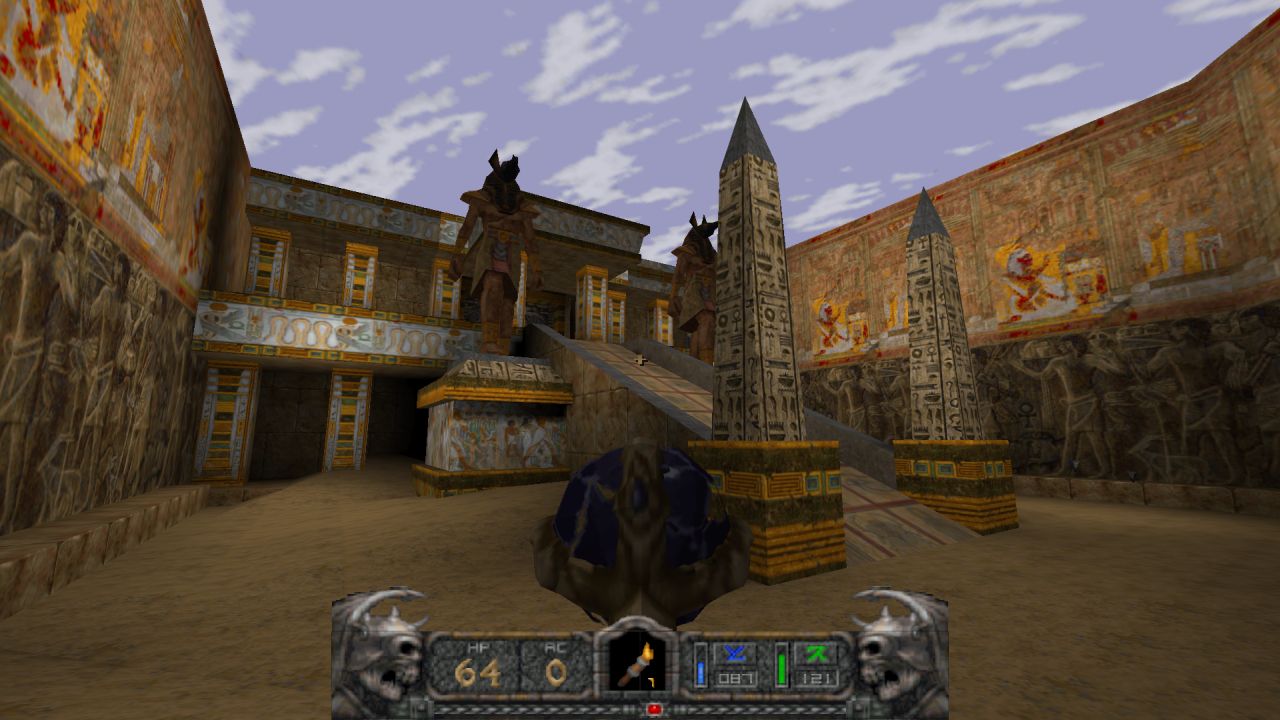
Earlier today, NintendoLife ran an article indicating that two of the classic shooters of the late 90s was back. Unannounced. No fanfare. No bravado. Just a simple, stripped down posting to the Nintendo eShop. A shadowdrop. Heretic and Hexen were two of the seminal shooters that helped cement the FPS shooter as an institution in gaming beyond the foundations that Doom and Quake had laid. And its arrival on the store, on a platform other than XBox, is poignant in a time following Raven Software being impacted by Microsoft’s recent round of layoffs.

Raven has been one of my favorite studios since I discovered the Soldier of Fortune series back in the early 2000s when I entered by second foray into the PC gaming space. I actually missed Heretic & Hexen during their original heyday and arrival as a new PC title. I got a copy of Hexen bundled with my first GPU,  a Diamond Monster Fusion, that I threw in my Intel Celeron powered Packard Smell before I started building my own rigs. I never did much more than pick at it. But I’m downloading this $14.99 remaster bundle to my Nintendo Switch 2 right now.

Raven has been subdued from visibility since it got acquired by Activision and then got incorporated into the Call of Duty machine. And then again by way of second-hand acquisition via MSFT acquiring ATVI.

But I have always believed that they were inside the machines doing the work, even if that belief was born solely out of nostalgia. I believe they have been the principal hands in putting together some of the single-player campaigns, handling campaign structure layout and mission design. But they have come to the fore as principals in leading Warzone. They are the core of the CoD team, central to much of the integration, back-end connectivity across the multiple titles, and handle the HQ launcher. This particular remaster is done by NightDive, which is carving out its own legacy as port & remaster experts in the industry, and it’s a shame Raven Studios couldn’t participate. I’ll have to be satisfied that their legacy has found a way to peek out from behind the veil of CoD via second-hand means. And hope they remain protected in this tough time of industry upheaval while inside the belly of two beasts.

Now to get hands-on with the Heretic + Hexen remasters in handheld mode.

Chronicles of Distraction: Why I Still Haven’t Returned to Destiny 2

This past Sunday, DBqHams, one of my co-hosts on the Enough 2 Keep Going weekly video games podcast, talked about his return to Destiny 2. In many ways, I was jealous. I keep a short list of games that I have every intention of getting back to, including GAAS games. And inevitably, I am unable to do so. Constantly following the glitz of the shiny new thing that is constantly dropping in the gaming industry, I am easily distracted and these things present an active impediment to getting back to every title in the backlog I want to. It is doubly painful for GAAS games, because those are things that require an up-front time investment to reacclimatize to. Remember your build, your gear, much less the in-game mechanics. And then strike out on a worthwhile vector that returns some rewards for that grind and the ever-present allure of the next character progression or loot drop.

I bought The Final Shape. And have yet to make any meaningful progress to getting to it. I said I would start a new build. That I would play through all of the chronological content that was available. I especially wanted to do another run through The Witch Queen campaign. And so, in the course of chewing through this huge on-ramp I’d created for myself, of course, I was distracted yet again by the constant deluge of new releases. And so it sits in my backlog.

Listening to him, through several rounds of Q&A from yours truly, because I desperately wanted to know why he went back, I was both convinced and deterred. He is the same as me; has The Final Shape campaign and hasn’t played it.

His response, was, in some ways alluring. What brought him back was the exquisite gunplay of Destiny 2. A yen I admit I also have and also defines what took me back to playing the Halo Infinite campaign. But it also made me think about all of the baggage I mentioned before. Because while I too love the gunplay, I do not think I could unbuckle myself from my OCD enough to go back just for that. I would want to jump in ten-toes deep. And now that I am back to playing story stuff, I just don’t know if I have the heart to get back into any hard-core GAAS games.

We’ll have to see.

Why Ken Levine’s Judas Deserves Praise—And Why That Bugs Me

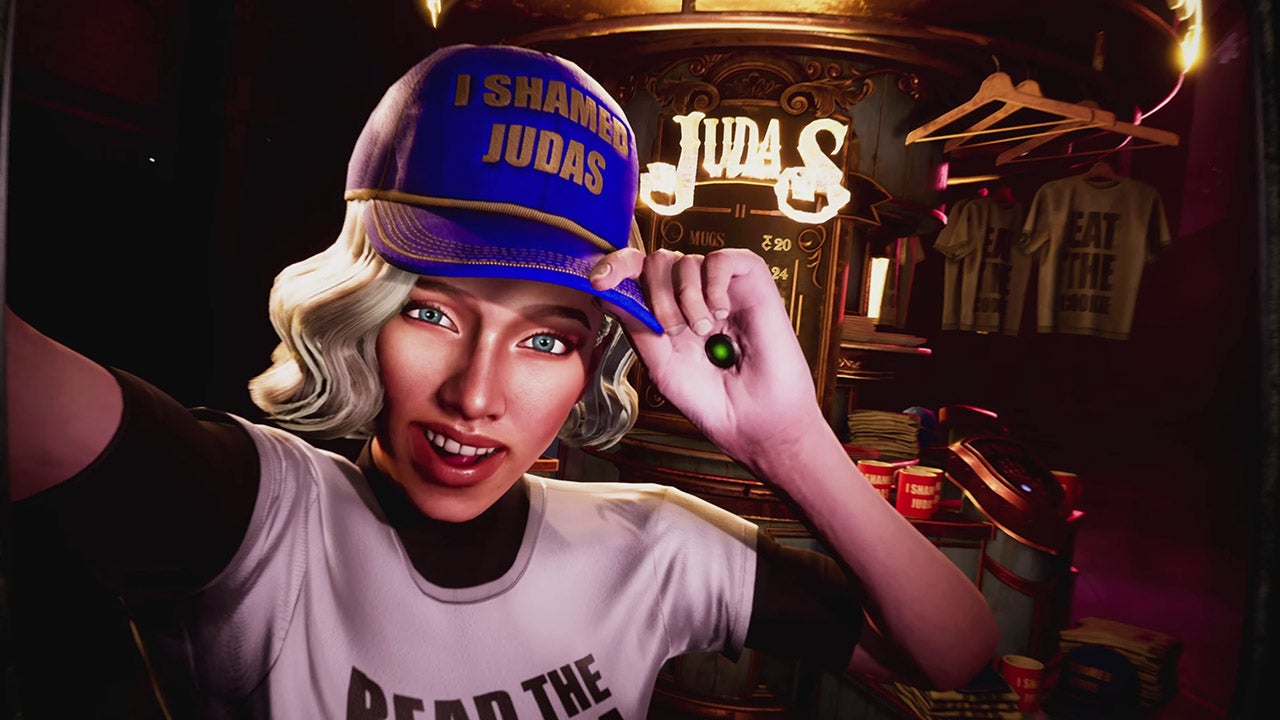
I’ve been a fan of Ken Levine’s games since the very beginning. With the exception of Tribes: Vengeance, his repertoire reads as the list of some of my favorite games that it is. Eurogamer ran an article today that discussed his upcoming game, Judas. A game whose reveal trailer at the 2022 The Game Awards show garnered significant buzz.

Levine, a game designer who numbers amongst the list of PC Game’s New Game Gods from 2000, is working on a new game called Judas which will be a single-player adventure game. The focus of the game will be on telling a story and creating a traditional gaming experience rather than online or multiplayer features. The game is expected to have a classic feel similar to older video games. Levin’e specific quote from the article was “You buy the game and you get the whole thing. There’s no online component. There’s no live service, because everything we do is in service of telling the story and transporting the player somewhere.”

I like Levine’s words. Games that are made in the service of the art rather than those made in the service of commerciality…we need more of that these days. But I also know why this interview and the article were run and why it will get much praise. And that causality sticks in my craw. The root of the message’s popularity is that gamers feel like microtransactions shouldn’t exist. And they frequently revolt against them. Helldivers II. Anytime they show up in a paid game. Anytime the cost of skins or a pack is deemed egregious. This in games that are built entirely on microtransactions. Such as Call of Duty, one of the repeat offenders; a paid game. Because the people playing the paid multiplayer have the same store put in their windshield as the FTP Warzone people.

Microtransactions do not bother me. People complained about MTX being in Assassin’s Creed Shadows. And they called Helldivers II, a PvE game, “pay to win”. I’m sorry…what PvE mode are there enemy human players who are victims of pay-to-win in Helldivers II? They don’t bother me because I can be an adult and not participate. Destiny and CoD players scream loudly when a Skin pack is too expensive. My response to that is “So don’t buy it”.

So it eats at me a little bit when articles like this come out and people are driven to doing victory laps for the game. It’s even more a shame when, while they laud it for no MTX, they will send an entirely different market signal by balking at paying $70 for the game. But the big kicker is, there shouldn’t be victory laps over this sentiment because we should all be able to resist participating. And if and when we do, and the MTX-ridden game goes on to be successful anyway, we should be equally adult enough to understand that we are not the market and the market has signaled its demand.

“…grant me the serenity to accept the things I cannot change, the courage to change the things I can, and the wisdom to know the difference.”

The even larger concern I have is that gamers complain about things like this, but will not complain about things that should be addressed and fixed and that there is little reason for companies not to. Windows should be the premiere place to play games on PC. But it’s not. SteamOS is out-performing it in benchmarks. Windows 11 asks me the same three questions after rebooting to take a systems update like its Rick Grimes vetting a potential new Survivor. And we are doing dolphin flips over Microsoft taking the XBox App UI, a poor app that the vast majority of PC gamers do not like to use, and making ease of navigation out of their own operating system.

We still have the same XMB UI design we have had on PlayStation since the PlayStation 2. No innovation, incremental updates, plenty of glitz and chrome. Barely any movement of the ball forward.

Games on an annual release cycle can release new builds every year for more than a decade with the same bug that has been present in the game since the first year.

Microtransactions aren’t the enemy; we are. Stop celebrating the bare minimum in game and platform design. Stop celebrating companies fixing their own f/ups as if they’ve won some championship. We rage at skins, but accept broken systems. Victory laps over no MTX? Please. There are real battles that gamers ignore.

And games do not choose their battles well. We would all benefit from a more unified voice about the things we can change, and less about the things we cannot.

Backlogs, Beavis, and Beholders: A Week in Gaming and Tech

My Gaming Diary – Gamedate 78978.5

What I’ve Been Up To

Games

  1. Call of Duty: Black OPS 6 (PC) – I got an itch to play a lil GAAS last night after I saw SloMo mention that we should get together. I figured I needed to reinstall the game, upgrade it, and upgrade nVidia drivers if needed. I’m not wrapped around the axle about the Season Pass. Just having fun. I do wish that idiotic Beavis & Butthead mess from the recent Season Event would stay out of my windshield. It’s one thing to have an event and allow people to participate or not. But there is an unstoppable cutscene when you first log-in after the event started. And then it routinely pops an animation when you’ve completed stuff on the free tier. I couldn’t even stand Beavis & Butthead when they were on TV. The last thing I want is to have them in my grill in my video games.
  2. Super Smash Bros Ultimate (NS2) – I finally got time to try out my Nintendo Switch 2 in handheld mode. Looks beautiful. I can’t really track with the whole news outlets reporting => screen looks great (during initial hands on after the direct) => screen works horribly now and can’t do 120Hz (last week) => Street Fighter 6 looks awesome and plays great (this week). I’m just leaving it at beauty being in the eyes of the beholder, mine seems to look fine, so I’m not losing any sleep over it. I have absolutely no idea what I am doing in this game. Never have. But I love the eye candy, & it’s tons of fun (though I might not play on the DK levels anymore 😭 )
  3. The Last of Us Part II Remastered – I already had a copy of this on PC via the Epic Game Store. I guess I had a copy on console too, & now I have the PS5 Pro and have returned to console gaming. Game plays great, looks great, feels much more fluid. I’m actually better at combat, although that could be b/c I’ve played it twice to near completion and not b/c the graphics are smoother, frame-timing is better, and a given overall more fluid look and feel, or that I was playing on the DualSense Edge. I’ll just count it as a win for right now
  1. Uncharted 4: A Thief’s End – Rolled credits. Thoroughly satisfying. Playing this back-to-back with TLOU2, I am seeing how much Naughty Dog are in their bag with the seamless transitions in-and-out of gameplay, to cinematic, back to gameplay. It’s a really wonderful implementation that earmarks any given title as a Naughty Dog game. While not leaving me with the same post-completion feelings as Clair Obscure: Expedition 33, it def gave me a space to replay the story I’d experienced in my head. My feelings about the characters. It was good stuff. And a good bit of lingering impactfulness to go along with it, which is never a bad thing in the aftermath of a game.

Tech – I’ve been noodling on getting into some retro-tech projects and spent the morning looking for old PDAs and MiniDisc player-recorders on eBay. I’ve bookmarked an HP Jornada and a Sony Walkman Net MiniDisc player/recorder for the time being. I have my reasons with both as to why not pull the trigger now. I had a Palmtop before in a retro phase maybe 18 years ago and got rid of it b/c I could not come up with use-cases for it when I could not ship anything off the device. And I have so much to learn on Minidisc. I have time to give it some more thought and plan how I am going to connect it a PC and transfer music. Amongst other things.

Clarity in the Chaos: What This Week in Gaming Means to Gamers Secure in Their Identity

As much of a whirlwind as it has been in gaming land this week, I think that this post will be relatively short. A lot has gone on, but the two biggest things were obviously the layoffs & game cancellations in the XBox division and Helldivers 2, a PlayStation first-party title from an external studio, coming to XBox. There’s a lot that could make gamers feel a certain kind of way. The unfortunate thing is, as usual, these things were used as ammunition in the ongoing platform tribal skirmishes. So I needed some space away in my own training circle, the master’s wheel, to deal with how this personally impacts me as a gamer.

Much has been written and speculated on about the loss of brand equity for both the XBox and PlayStation brands as a result of these events. Were I still in my motif of blogging and commenting on the business-aspects of the industry, I probably would have also. But as I’ve mentioned, I’m retired. Or at least trying to be. So lemme talk about how I feel about this as a gamer who does not have an emotional or ego-based investment in either brand.

For the XBox side, it would not be unexpected to see one have a loss of faith. Expectations of what is coming down the pike. Whether you will get delivered the things that have inspired you to look forward to the upcoming path in gaming.

It hasn’t had that impact on me. While much ink and verbal vomit is spilt in the name of trying to constantly transcribe to prophetical stone tablets what the future of gaming is each week (and then revise what the prophet just chiseled the last week), I am trying to follow a very Buddhist and Taoist path of focusing solely on how I game today. OK, and maybe just a wee bit around the corner; let’s call it into 2027/28, the start of console gen 10.

Xbox Hardware. Now. I have an Xbox Series X. The White all-digital 1TB model. I’m good for the next two years, at least. Do I buy the marketing syrup of anything with an Xbox label on it is an XBox? No. I am in the market for a premium handheld, and so while Valve seems to be in no rush to update the Steam Deck, it might wind up being a Windows handheld gaming PC. The ROG XBox Ally X might fit the bill. But it might also be any other Windows handheld gaming PC with a Ryzen Z2 Extreme. Because I have access to all of my Windows PC games on any Windows handheld gaming PC, including XBox published titles, it doesn’t need the Xbox label for me. It’ll be a matter of specs and price.

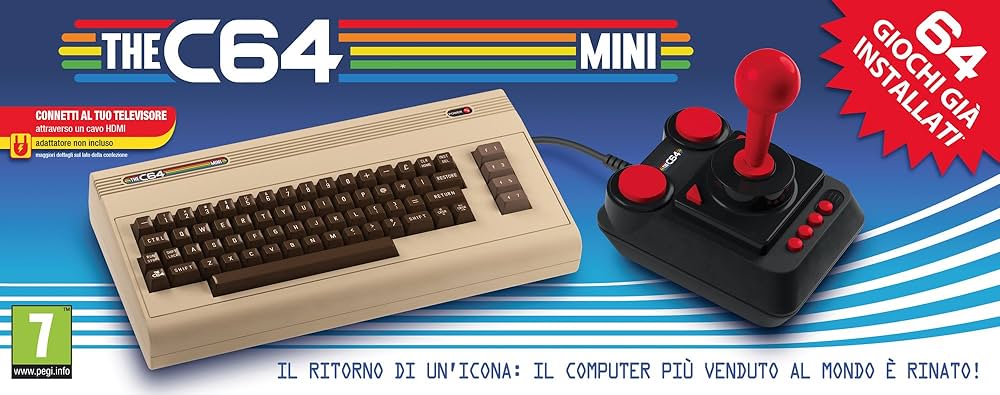
XBox Hardware. Future. If the next XBox set-top box is an XboxPC Hybrid a la a TI-99 or Commodore 64, I’ll be in if it gives me access to my Xbox console games.

If not, that will be unfortunate, and I guess that will end my roadway with XBox hardware.

XBox Software. Now and Future. Whenever XBox delivers a game I am interested in, wherever they deliver it, the events of this week will not impact whether or not I go play it. That is not to say that I do not care about the employees laid off. I am keeping that topic separate. It means, if my faith is loosened, that doesn’t really matter when it comes to a good game being delivered. Regardless of any notion of brand equity being impacted this week, I am a gamer. And I will meet good games on their turf when they show up. Because I am a gamer.

PlayStation Hardware. Now. I have a PlayStation 5 Pro. I really enjoy gaming on it. As I keep trying to tell people, the gaming experience, even when it comes to exclusives, is not solely due to the gaming content of the software as a standalone entity. It is inclusive of the controller. The OS. The storefront. The window-pane through which you see your account & digital identity in the gaming space. And on the PlayStation platform, it’s great. [I feel the same way about the Xbox BTW. And the Nintendo Switch 2]. I love hardware. And I love different hardware. It’s great as a lover of hardware & devices that there are devices that are functionally different and offer me that joy in variety and exploration of experiential immersion in gaming ecosystems. I don’t play Helldivers II. I am good on my PS5 Pro for two or three years. Helldivers II being on XBox does not erode any PlayStation brand equity for me.

PlayStation Hardware. Future. You didn’t skip the last paragraph, did you? Good. Then I won’t go over those same justifications as before as to why I’ll be buying a PlayStation 6.

PlayStation Software. My faith has not been shaken that SIE’s primary, critical, and leading focus is on first delivery of software titles isolated to their performance and the delivery of experience to PlayStation hardware. Operational Excellence. And that anything and everything else comes secondary. I also love PlayStation games on PC, as the potential of additional horsepower that a PC gamer might have, and which my systems do have, leads SIE to have their port-studios and partners render experiences that take advantage of that hardware. I will meet good games on their turf wherever they show up. Helldivers II being on XBox does not erode brand equity for me or shift that philosophy. Have the walls of exclusivity come down? We won’t know that for years. We do not know it now. And I do not intend for that to be a hindrance to my awareness and identity of myself as a gamer, whether it has or not.

And there, I think, is the main rub. If your identity as a gamer was not so tightly coupled to these corporations, to these brands, then this week, while you should absolutely have been empathetic to those whose lives and hopes were shattered, should not have been disrupted. If your identity as a gamer was not so tightly coupled to these corporations, then that identity would not shift as these brands to.

You would be anchored and assured of who you are as a gamer, and not as a PlayStation Gamer, or an XBox Gamer. But since so many are, I am afraid that they are relegated to never having clarity, purpose, and peace in gaming beyond who these corporations tell them they are supposed to be.

Even If You Don’t Buy ARC, We All Still Need It in the Market

When I saw the headline that Intel was end of life-ing the ARC A750 I almost had a conniption. The ARC has arguably been one of the best things to happen to the GPU market since before we lost all of the vendors and went down to a two-party GPU ecosystem. While ARC is not huge, it has had a couple of knock-on benefits. It has introduced a small number of viable alternatives to more expensive AMD and nVidia cards that have met the needs of the “good enough” crowd. And it has led to a small improvement in the integrated GPUs that people get in laptops and AIO desktops.

For me personally, I have not  built on an ARC GPU or selected it as a replacement for one of mine that needs to be upgraded. I’ve been close; at times when the prices of nVidia RTX GPUs have been astronomical and an AMD RX 9070 XT has not been available in retail pipelines. I hope to do so one day. I have a mutual who built a starter box for their kid as their first gaming PC and built on ARC. The main point being that, even if I do not build on one, they are a good competitive force on the landscape of the DIY and system integrator market. And it would be a shame if they went away.

As it is, I wouldn’t have used the term “end of life” in the headline. Bad on you, Tom’s Hardware. I’d have said “End of Production”. And that is only of the Intel made reference board. AIBs are still free to make them and hopefully will for some time.

And newer SKUs are coming into the fold, although on a sketchy, unclear schedule. Which makes consumers nervous in the face of uncertainty and ambiguity, making some stick with AMD and nVidia and failing to woo the already skance few who might’ve seen this as a suitable substitute.

Hopefully Intel gets it together and we see a more proper, aggressive, assault on the low end of the GPU market. Where I think there is room to build a business and undercut AMD and nVidia on price or overachieve them on performance for similar prices. On the low end. And hopefully it can grow from there and give us all a 3rd, viable, alternative in the GPU space. 

Friend Codes and Baby Steps: Nintendo’s Slow March Toward a Real Online Strategy

My Gaming Diary, Gamedate 78864.2

Nintendo’s live service strategy should not be confused with its more foundational need to get its provisioning of network services right. They have been making incremental, baby-step strides in this area for years, while they are admittedly still woefully incomplete. Yesterday, The Verge ran an opinion piece about how “Animal Crossing: New Horizons was a glimpse at Nintendo’s online future”. While connected, I don’t think these two things should be conflated into being the same. They are related, but one is foundational and the other is more aspirational.

Nintendo has an imperative to get its online strategy, its overall approach to network services, straight. It has forever been a muddled mess. It started with the provisioning of a digital store-front, or stores, plural, I should say. While digital, each instance of a digital store has been tightly coupled to the Nintendo hardware platform that it debuted alongside. Move to a different Hardware (generational, not SKU), and the answer you got was unpleasant, to say the least. You would not have access to the old digital store content without that original hardware. (Generation, not SKU, or serial #). New hardware, new store, buy it over again. Shift hardware platforms and you no longer had access to the same digital storefront. 

Flash forward to Nintendo Switch and Switch 2 and we have, for maybe the first time, generationally, that Nintendo has retained, with zero gaps, continuity of a digital storefront from one generation to the next. Friend codes are still less friendly than a gamer tag. Having to use your phone for online voice comms was a nightmare.

And that is being addressed. But all of the new, Switch 2, social features bring a host of mild inconvenience and baggage with them as well. But, overall, these improvements are undoubtedly “better than”. Like I said, baby steps.

On the GAAS front, Nintendo is no better represented in its overall approach to that facet than in the Splatoon franchise. While certainly Smash Bros has been around before, it is almost equally or even more so driven by the fighting tournament scene than strictly its online presence. Whereas in Splatoon, any inroads it has made to building community have been entirely built online.

But these things in combination with whatever it has done to deliver additional content to Animal Crossing should cause no worry that Nintendo is coiling up to begin some GAAS initiative driven by heavy investment a la PlayStation. Nintendo today is still the closest to the three console competitors to being a pure, classical, console business model. While the other two, Xbox and PlayStation, dabble in GAAS, subscription services, putting games on PC, building out mobile components (Nintendo has recoiled from that avenue) of their businesses, Nintendo stays to the core. Minus its foray into licensing its IP for movies in new models that keep them close to supervising the production efforts of those IP, Nintendo continues to be razor focused on its core console business. Albeit, sometimes to their detriment when things that gamers consider part of the core product offering today, such as network services, feel like something out of a Fantastic Four retro movie. But Nintendo is getting better. By baby-steps. It’ll be a very long time before they coil up to come up with their own Call of Duty or Helldivers II, though.

Polish, Don’t Publish: Rethinking the Release Cadence in a Glutted Video Games Market

My Gaming Diary, Gamedate 78863.5

Recently, Reuters reported that Embracer is taking a more conservative approach towards its release cadence. I know. Bug guffaw, right? But stick with me here.

Many gamers….most if not all of the ones on social media…so-called journos, pundits, game-tubers….everyone has an opinion on what needs to be done to “fix” the industry. Most of the ideas are narratives and agendas built around brand-defense and repping. “Games need to be on every platform”, “Playing my games everywhere”, “Platform Y provides the best value”. None of these should be taken seriously and deemed of much of any real critical thought. Add that on top of this, alternate narratives, such as the disparaging of third-party games, even as exclusives, is typically all part of an effort to make an a-ha moment out of a brand’s first-party output.

The rest of it is largely driven by an ongoing class-battle that has erupted in the wake of the industry holding prices static for 15 years, when it has historically raised prices by +$10 every 8 – 10 years. The proletariat saber-rattling often comes close to preaching for socialism or goes so far as to seem like advocacy for the actual nationalization of the gaming industry in its cries for goals that could never be achieved without very heavy regulation. 

Making games that could play on every platform and eradicating the notion of exclusives or giving software away for free or for prices that barely cover its costs (two political platforms that are actually in opposition to each other; many gamers do not seem to realize that)…neither is a silver bullet to righting the industry’s ship.  Nor is simply “Just make more AA games”.

But Embracer might be on to something, as a programmatic approach to a philosophy of change to guide its production pipeline management. And that is fewer, higher quality releases. That concept is not revolutionary. It is not ground-breaking. But the industry is plagued by two colossal dynamics that are the tentpole roots of it woes: Spiraling upward production costs and that there are simply too many games. And not just games, but AAA games.

Usually when we talk about the “too many games dynamic”, it is a conversation about the 19,000 games published on Steam every year. Many of which are shovelware, or college student projects…or hentai softcore porn game. But the AAA space is also glutted in a way that exceeds demand.

If, as Matt Piscatella has discussed, 30% of gamers will not buy a game this year, and gamers on XBL and PSN will spend 40% of their monthly time-budget playing black-hole games / GAAS, then what need is there for a half-dozen AAA games per month? And is it any wonder that so many of them get ignored?

Now that number is not likely to change at industry-scale. But the approach Embracer is talking about…yes, I know it is not likely, credible, or realistic to think that Embracer will actually follow through with the philosophy…is to further space out their own, individual publisher, releases. And not for the typical marketing reason which is for a singular publisher not to have its own games competing against one another. But, for the sole sake of quality, to give them more room to breathe. But, more importantly and specifically, to spend that extra time from those delays for polish and bug-hunting.

The Tears of the Kingdom crew supposedly took a year for JUST polish and bug-hunting. Avowed supposedly also benefitted by using the market-bulge reason for their delay for these purposes. And here, again, note, hyper-specifically, this is not for the purpose of taking on additional scope, trying to add value-added content or to refine a gme mechanic outside of it being a defect. We’re talking about specifically taking time for defects, not enhancements.

Yes, I get it. Gamers do always talk about better quality. But that voice track is drowned out by the constant clamoring that characterizes the trend today for volume over quality. Game Pass provides “all these games”, while there is often a desire to avoid the topic of how many of these are marquis titles resplendent with polish and a quality-cut placing them in the above average tier or higher vs an all-you-can-eat service for channel surfers. PlayStation Studios are castigated for a low volume of output in this back half of the generation, while, in similar vein, there is an effort to avoid the discussion of the degree of polish their titles on the front-half of the generation delivered. As gamers, we always comment on “eating good”, but spend too little time on saying that the industry could deliver us less, and focus on having those deliveries more honed for excellence. 

I dunno. It’s a concept anyway.

When Reviewers Get DOOM Dead Wrong

Is DOOM perhaps the most controversial shooter franchise to try and have a discussion about? Maybe so. DOOM 2016 was an awesome reboot of that shooter franchise in my opinion. It added greater fluidity to the movement model (in comparison to DOOM 3), enhanced mobility overall in both verticality and that feeling of speed. I loved it so much that I played it on PlayStation 4, PC, and even Nintendo Switch. An untypical trifecta for me.

DOOM Eternal, on the other hand, is a bitter tale of love and hate. I love the game because I completed it. I hate the game for very minute that I lived within it. I’ve even been hating it during my second play through, which I said I would never do.

DOOM: the Dark Ages feels like it started with DOOM 2016, and then borrowed a scant few elements from DOOM Eternal to try and find the perfect balance between the two. And, so far, it feels like it is sticking that landing.

But I listened to a podcast today where the person who had reviewed DOOM: the Dark Ages (DtDA) for their site, a supposed expert on the DOOM franchise, and many of their descriptors sounded totally ludicrous to me. DOOM: the Dark Ages is SLOWER than DOOM Eternal?? Absolutely not. There was no SPRINT button in DOOM Eternal, FFS. There was a DASH, but that was really meant for the platforming. You could use it in combat, but it was only two short bursts, and then had a cooldown time. In DtDA there is a SPRINT and no concept of Stamina that depletes over time while Sprinting, so you can just Sprint to your heart’s content. For tactical reasons, I sometimes find I need to stop sprinting and slow the OODA Loop down. DOOM: the Dark Ages is absolutely in no way SLOWER than DOOM Eternal.

He also said “you have fewer tools in DOOM: the Dark Ages”. WHAT??? You have the Shield, which allows you to Parry, Shield Barge, throw (which also has the effect of slowing down time), shoot-to-heat-enemy-shield + throw your shield for AOE splash damage. Then you have all of your weapons in a world where you do not run out of a weapon’s ammo after 5 shots. To-date, I have never run out of ammo on a given weapon (I’m only a couple of hours in), and have to switch guns just because I’ve gotten bored with a weapon and its effects, not because it has run out of ammo. You have the melee system. And then the fact that jumping does AOE splash damage as well. Maybe becausr you don’t have to juggle tools every 10 seconds to win a fight or due to running out of the ridiculously sparse ammo that is in DOOM Eternal that DtDA feels like it doesn’t have as many tools, but that’d be a you problem, not the game.

But one thing is certain: DOOM people see the games each as individuals and can have egregiously disparate perspectives on them, even amongst those who have played every single one.

My initial impression of DOOM: the Dark Ages is that it would & should easily be seen as an improvement over DOOM Eternal. It will be interesting to see if I am wrong and I find myself having become part of a community that is very religious in its perspectives of each of the entries in the franchise. And if I find that there is a weird sect of divisive religious perspectives on what DOOM is and isn’t. Like the JRPG and the Bethesda people. Weird indeed.