
What you are witnessing now with XBox titles on PlayStation is the Napster Effect. Which really was more about supply & demand and price-sensitivity of Music rather than Napster, but “the Music Effect” doesn’t have the same hook.
Before Napster was introduced, market sentiment was that CDs were priced too high and offered a dubious value prop, with often only one or two tracks on an album deemed worthwhile. But another key factor was inconvenience. You could either submit to being an indentured servant of the Columbia House “5 CDs for a penny” introductory offer and then a limited catalog of CDs to choose one or two from each month shipped to you via snail mail. Or you trundled down to Tower Records, flipped through endless bins of CDs to find what you didn’t want, unless you were shopping for the Billboard Top Twenty, and then pay the aforementioned exorbitant prices. And so a chunk of the market opted for Napster due not only to price but also due to inconvenience.

Napster had its own inconvenience working against its value prop. Often the song you’d get was the right title, but was some bootleg cover. Both Napster and its zero-price competitor and eventual replacement, Bit Torrent, also got ID’d as being a transport and delivery mechanism for malware.
But even after Napster shut down in 2001, Bit Torrent continued to carry the “I’m not buying CDs” flag for many until 2003. When iTunes put a fork in the Free Music movement.
When iTunes began selling digital albums, and, here’s the banger, individual songs for 99cents a la carte, the market equilibrium changed. Free music with all of its inconveniences (including the music industry & the feds possibly randomly selecting you to make the example of) suddenly became less of a value prop to the vast majority of the market vs simply paying 99cents for a song that you wanted, could pre-screen digitally, and a purchase method that allowed you to buy only the songs you wanted from the album. Hunting for music in torrents, figuring out how to open your PC up to the channel, at the risk of getting bootleg fake files, malware or getting into legal trouble was not worth the value of even Free compared to 99cents a song.
What the market has said is that XBox titles and its catalog and portfolio were not of sufficient value-prop to warrant the majority of the market either subscribing to Game Pass or buying an XBox Series. Despite the low monthly cost and relatively low cost-of-access overall & the low entry price option of the Series S.
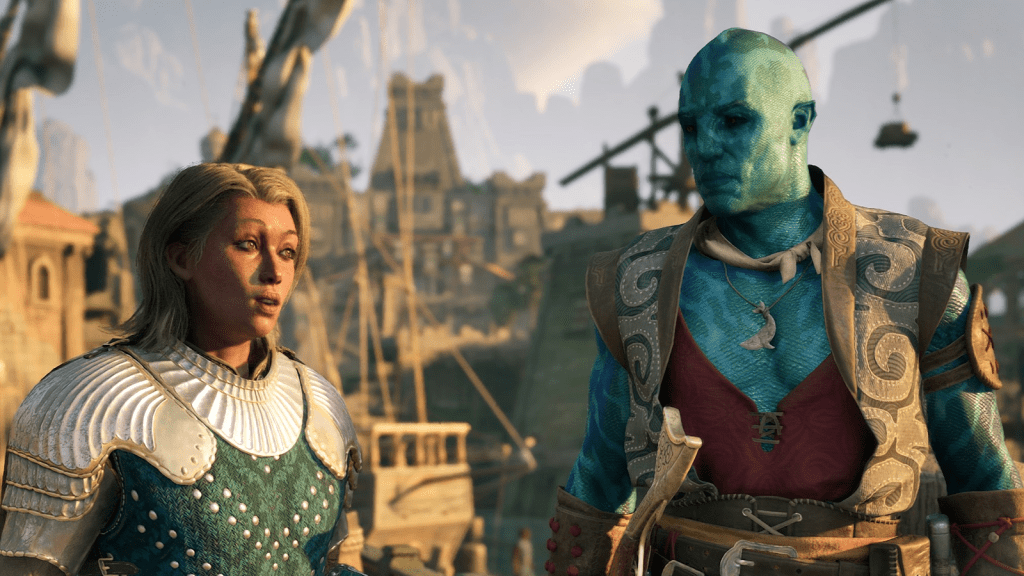
Console Warriors are now saying “Oh I guess PlayStation players really did want those games after all” when they see them trending well on the PlayStation store. They say Xbox is “winning” as if there is going to be a reversal on the HW sales trend due to the perceived positive SW sales trend.
No. The mindshare and brand equity of the game titles and the overall XBox portfolio have not gone up. This is a misconception. What has happened is that those titles have become more conveniently accessible for the market demo of PlayStation customer. Having placed those goods conveniently at the door-step of potential buyers, those buyers are happy to purchase them now that they are an Instacart or Wal-Mart grocery order level of convenience.
What the market said while those titles were only available on XBox or PC was that PlayStation mains considered that inconvenience factor to not be in equilibrium with the value-prop of playing those games. And today, PlayStation players are telling the market that they are ok waiting 3-ish months if need be to play those titles on their preferred platform. While they will also be able to play many of those titles day and date. On their preferred platform.

There is no effect such as PlayStation has suggested on PC, where they believe that they see PC gamers engaging with PlayStation IP, and then buying a PlayStation so that they can play those games earliest. PlayStation players are not flocking to Game Pass to play those games via the Cloud on their phone or tablet. And they are not flocking to buy XBox Series now that they have “had a taste of XBox titles.” So there is no “XBox is winning”. Xbox has established a dependency on PlayStation in the same manner that Ubisoft, EA, Take Two, and Capcom are dependent on a platform being supplied where they can deliver their IP. And PlayStation has a partial dependency on XBox as one of its stable of 3rd-party publishers it needs to support its platform in order to provide a healthy ecosystem that cannot be supported by its own studio titles alone.
PlayStation players, in the meantime, are just consuming what has become convenient. It is the market achieving equilibrium. Which it always will.
 Rounding Off Infinity