The US Smartphone Market is Boring AF – therefore, the OnePlus 11

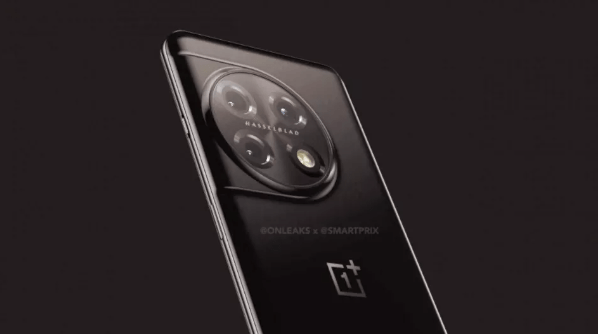
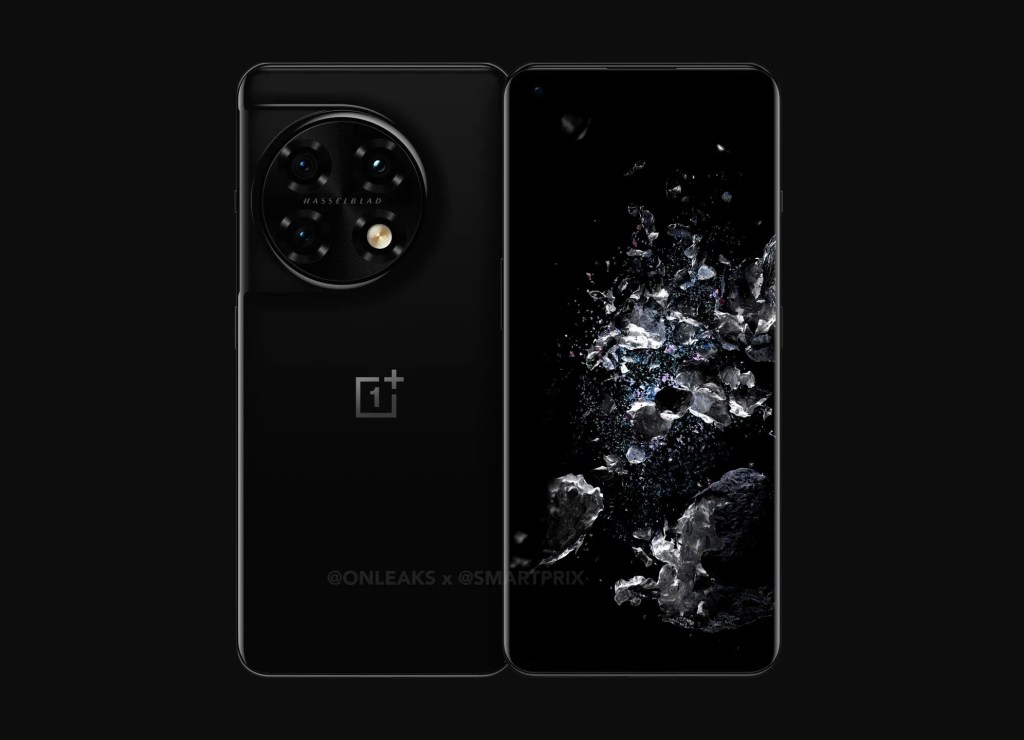
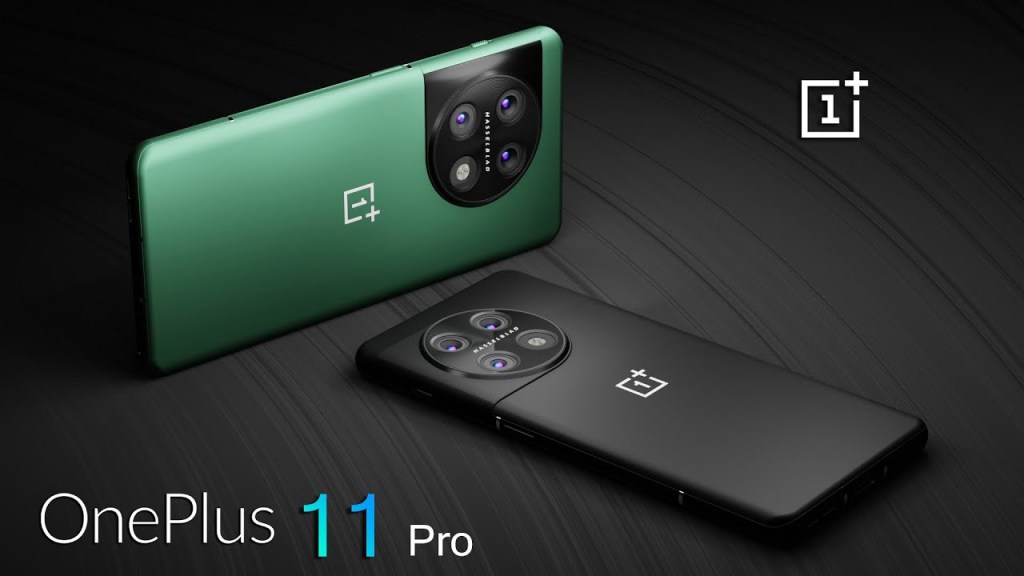
Two days ago, OnePlus announced that its next major flagship smartphone – the OnePlus 11 – and new earbuds will saunter onto the smartphone scene at an event in February. Given that I just recently replaced my OnePlus 9 with the Google Pixel 6, and talked at volume about the absolutely horrible experience it was using the former as a daily driver for the past year, I should have been apathetic about this announcement, to say the least. And yet, here I am, a mild bit tingly in my nether regions about the potential of a solid B-team phone entering the fray. As nonplussed as I am about that emotion, one need look no further than the absolutely barren landscape that is the American smartphone market to understand why.

While OnePlus promises to “elevate the user experience from Cloud 9 to Cloud 11” [OnePlus marketing has always been one non-sequiter after the other, but gorram, we just had the OnePlus 10! WTF does this even mean??], I found that the OnePlus 9 drove in the complete opposite direction. I heard much better things about the OnePlus 9 Pro, which also supposedly played better on Verizon, with the network dynamic possibly being part of the root of the problem. But, of course, I’m neither OnePlus nor Verizon. That’s their problem. I just want a great phone that works on a great network. The big tell on whether or not I dare to get back in the pool with OnePlus is what its global availability is at launch and whether or not the OnePlus 11 Pro will release alongside the base model.

Given that leaked benchmarks showed a model running 16GB of RAM, and past top-tier SKUs were running 8GB, there is a good chance that those benchmarks were for the Pro model and that it is well-near ready with just over 6 weeks to go until launch. It will be a tough road to hoe dropping just on the cusp of what will surely be Samsung’s spring unpacked event and its barrage of conventional phones, meaning everything in the 2023 lineup minus the mid-tier (late spring) and foldables (fall).

But my eyes will be peeled. Because God knows there is nothing else of interest to buy on the US market. There is no more Essential phone, and the Nothing Phone, what could have been seen as a spiritual replacement, was more a ghostly echo of those times than a real contender. Razer is making a handheld, but it’s been tough for me to nail down its usability as a phone. I have zero problem using a tablet as a phone, and at 6.8 inches, it is only slightly larger than some of today’s superphones. And I use a Samsung Galaxy Z Fold 3, which is larger in tablet mode. But none of the Razer or Verizon marketing show the Edge in use as a phone, so I am not going to bank on it providing a good phone experience. The NextBit Robin was an interesting notion, but nothing further has been heard from that tech and we assume whatever special sauce it had has been incorporated into the Edge since Razer acquired Nextbit.

Huawei and ZTE are gone. Using an ASUS ROG phone on US carriers is always a risk whether it and its antennas will be fully supported. And of course full support for Poco phones, amazing tech at rock bottom prices, and anything of Xaomi, Honor, or Oppo will grant you a nice digital paperweight and screen in the US, but not much more. Nope. Today we just get the Samsung Galaxy in 19 different flavors, the iPhone in about 10, and the Pixel. There has not been anything of whiz-bang nerdiness on the scene since foldables. So I guess my curiosity in the OnePlus 11 Pro will have to do, regardless of my nightmarish experience the first time and last time out with OnePlus. Fingers crossed.

Of course, it might no be too much to ask for Microsoft to put some oomph behind the Surface Duo while it’s running around spending $70bn trying to acquire Activision when it already has 23 game studios. Left high and dry since the abandonment of Windows Phone, the Surface Duo was one more crack of light in a bleary Microsoft dream of mobile hope.

That crack appears to have been a portal, though, like the one in Stranger Things and the only thing I got out of the the first Duo was a demogorgon in the car that converted to a Mind Flayer at home. Let’s hope OnePlus brings something nicer to our shores in 2023.

Gaming Was Better When it Wasn’t Cool – How Mainstream Society is Killing Games

Protected Groups Don’t Need to Stop Playing Video Games – Bigoted Gamers Do

It cracks me up to no end the entitled gamers today who do not believe in holding themselves accountable for their own behavior and blame everything on corporations and other gamers. That those gamers then extend their hypocrisy to gate-keeping around demographics of different minorities…the disabled, people of color, sexual orientation…this anti-woke movement is a joke, and just a euphemistic cover for bigotry. We live in an era of modern gamer appropriation, where generations of new gamers colored by prejudices try to exclude vertical demographics of gamers new and old, despite that the fact that they were not here at the inception to make gaming a thing in the first place.

If we want to exclude certain gamers, my vote would be to get rid of a large swath of the mainstream gamer that started gaming after 1990. The rise of the dude-bro gamer in console generation seven is a societal shift that we can draw lines of attribution to for most of the strife and misery in gaming today. Not only has that generation’s bulk and the ones that follow it had a severe negative impact on the gaming community as it attempted to evolve to include social media (what has now become anti-social media, as my man EJ describes it), but more damaging has been the manner in which it consumes interactive entertainment. A locust-like devouring of only AAA content, voracious gluttony of micro-transactions, and an ignorance of independent games that drives production costs higher, and drives publishing houses towards consolidation and extreme risk aversion.

Gaming was unquestionably better when it was not mainstream. When it was the domain of the extreme nerd; a cultural demographic that placed its self-importance on intelligence and/or deep intellectual and philosophical critical thinking rather than acceptance.

But that has largely gone away, as gaming has become the new superficial trend that people hang ego-importance on like they used to do clothes or sports or good looks.

Without the trappings of a consumer demographic that needs to have its ego fed in Twitter Spaces or YouTube, game creators had a lot more latitude to focus on creativity rather than commerciality. While games have always been about business, and there have always been metrics around player engagement and player spend, today developers have to worry about gamers who have zero knowledge about software development criticizing their game based on the accusation of lazy devs, as an example of the toxic consumer that the industry now has to navigate.

Do I want to see increased accessibility in games? Absolutely. Do I want to see more female protagonists and people of color as main characters? Absolutely. Am I ok with games addressing political issues. Certainly. We clamor for games to be more “immersive” and more real, but then shy away from the tough chew that is consuming games that more so reflect issues in our real world.

That is the aversion and cowardice of man-babies. I am ok with those demographics having increased content that caters to them because they are not ruining games.

It’s the weak and the close-minded, the gamers that want to bury their heads in the sand and blame everything on everyone else, that is ruining games. And none of us that truly love games need them at all. It amazes and disappoints me that the consumption of an art-form is so inundated with lunks and Lemmings that the art has started to contract in some ways from its vector of 40-years ago.

Some Gamers Like the Wool Pulled Over Their Eyes. I Don’t

There’s a contract that I make with games that I expect to be fulfilled. I expect games to introduce me to new worlds. To the worlds they have constructed. I expect to be taught rules about those new worlds. How things work. What things harm you. What things help. What things constitute sustenance. What things constitute tools. What things can be used for crafting. What things must be transformed before they can become useful. And then I expect them to keep those rules consistent. To not arbitrarily change them. And for them to remain in tune with the narrative, if there is one. I am unforgiving in this regard. Uncompromising. It is the contract that I make with games and their developers.

It is one of the reasons that I like flight sims and racing sims so much. They are physics based. Even when the fidelity of the physics model is not inherently 1:1 with the real world, by and large, except when there is a glitch or a bug, those rules remain consistent. There are things that make you faster, and things that will put you at a disadvantage. The only license they really take is within the framework of the rewards system. The only one they should take. And so I fall off a bit in the crevice that separates racing sims from just racing games, where, in the latter, there can be things like rubber banding. It’s not that those games are not fun, or that I refuse to play them, they just sit in a stack of things that will never be my favorite.

And so other genres are more so likely to forever be in my penalty box. Even if the world is sci-fi or fantasy, I expect there to be a certain set of rules that defines how the world works. I do not like to be taught how to use my powers, to become uber-powerful such that the common enemy trembles at my sight, only to be massively de-buffed at the sight of the next boss.

It is in fact, by and large, why I have historically hated the typical boss battle. It is why I tend more so towards military shooters, which tend not to change the laws of physics mid-stride, but just give you different tactical situations that place you at various disadvantages to think your way out of. It is also one of my principal detractors from Stray.

While a wonderful and whimsical title, I very much pushed back form the table at the arbitrary changing of physics as you went from puzzle-to-puzzle. The way you could clear vertical distances up or down in one puzzle but couldn’t in the next. The way you could jump to points on some walls but could not on others. And especially the way in which you could not walk on the tops of fences with flat horizontal surfaces until the final quarter of the game. Do those things make Stray bad? No. They just mean that it was not created with the design intent of appealing to gamers with my physics OCD. As bad as I am, there are gamers even further on the spectrum, who will nitpick every physics model to death, and slag a flight sim that does not reflect the specific tire pressure in an aircraft’s landing gear when the runway is at 4400 meters above sea level. I don’t think that is a fun way to live either.

There are games that meet this rubric and ones that don’t. It doesn’t make them bad. It just makes certain ones more suited to my preferences than others. But I don’t want every game tuned to my specific preferences. That would be an incredibly boring product landscape in the gaming art medium. And so while I have my preferences, I am glad to partake in the titles that try to meet them, as well as the ones that boldly choose to say “Eff you and your preferences; this is my creation. Imbibe and be merry. Or don’t”

Where I’ve Been – Travels Through the Wild of PC Gaming

I started building gaming PCs in 1999. I had to get a PC for grad school. Interestingly enough, being in a curriculum that was oriented around people who would hold fiduciary responsibility for procuring technical equipment, the school felt it was important that we understood how a computer was built, along with some minor web design. I took the store-bought Packard Bell that I’d purchased from the local Circuit City and started modifying it. That fall, I moved it into an industry-standard ATX case, divested myself of any proprietary parts (it was quite an experience as I was exposed to what a proprietary motherboard was and why the hell it did not mate with an industry-standard front-panel connector harness 😂), and started to become very familiar with the stretch of California highways that lay in between me and the Fry’s Electronics in San Jose. Good times.

In 2010, I got rid of my XBox 360 Elite, having experienced my 5th Red Ring of Death after having been in the XBox ecosystem for nine years. I was still a PC gamer as well, and I wanted to replace the XBox 360 with a new device, but was not up for building a new PC. There were some life paths coming up ahead that would make building desktop PC’s impractical; a second tour in grad-school was one of those. So I ran out to my local Best Buy and procured an Asus G73. From there, over the next six years, I ran a few gaming laptops in what was growing into a gaming studio, oriented predominantly around a few gaming workstations; a Gateway P-6000 series laptop, a Compal, a few Lenovo gaming laptop units, and I Bootcamp’d my MacBook Pro 15-inch into a Windows gaming machine. I would continue to stock and refresh those workstations with gaming laptops over three moves, eventually regaining the lifestyle where the gaming studio was a dedicated space separated from other parts of the household.

I was still gaming on consoles; three generations of PlayStation and two of the XBox have come through the studio in the time since. And I got into livestreaming, finally having moved to places where I had and continue to have access to bandwidth that readily supports it without workarounds and compromises.

The lifestyle has meant getting very little sleep, as I continue to work in a field where I have been granted yearly increases in responsibility. On the side, in addition to just gaming, I have thrown myself at times into writing, having worked for several paid sites, as well as a handful of fan-supported ones. And done stints as a game reviewer, hardware reviewer, and livestreamed my own personal gaming diary of sorts along the way. I completed that second tour of grad school to earn my Masters in Software Engineering; but despite the work and family and house, there has always been gaming, and specifically there has always been PC gaming as my primary.

I was born in the Mid-West. Grew up in the South. I’ve been a nerd all of my life, and do not see that changing. My parents did not always directly support my gaming hobby, but they never minded as long as my schooling got the attention it needed. I don’t know why I got attracted to building PCs. I’ve never been mechanically inclined. I do not work on the cars or the house myself. Sure, I was a kid who took electronics apart.

But my life would definitely be easier if I just bought gaming PCs. Or even just consoles. The side-gig has had its downsides. The expectations of everyone to fix their computer problems. My role as the wider-family cell-phone device and plan administrator. But building PCs has had professional knock-on effects in keeping me more in tune with how industry technology is moving. It’s actually been directly beneficial, as I have had to change-out parts or do significant changes in the field for navigation and machinery control PCs. And it’s given me a thing to write about to honor my commitments to my college Creative Writing professor.

I grew up in those early years reading the likes of Gordon Mah Ung, Greg Vederman, and Norman Chan. Some of my favorite podcasts have been Buzz Out Loud, and the Engadget Mobile podcast back when it was Myriam Joire and MWC was a thing. I also read copious amounts of Andy McNamara, Andrew Reiner, Dan Stapleton, Matt Bertz, Andy Mahood, and Thom McDonald across Game Informer and PC Gamer. I’ve had the opportunity to interview Cliff Bleszinski and do a few other neat things. Being a gaming journalist, or just a journalist in general, would have been a neat junket. But I was always focused elsewhere for work, and PC building and gaming has just been a hobby. A really great hobby.

I dunno. As you get older, you start forgetting more than you remember. But you also start focusing on the people that are important. And less so on the ones who don’t matter. And in doing so, reassert your orientation to a trajectory that constantly drives you forward, and continuing a path of discovery. There are people who are small, and reside within their own snide bubble, and you remember how irrelevant they are. And so I felt like taking this trip down memory lane for whatever it’s worth. To remind myself why and how this whole thing started. And to remind myself about the importance of the things I get out of it. And to push down the irrelevancy of all the BS that gets in your windshield along the way.

The Curious Happenings of a Gamer Not Built for Elden Ring

The fervor over Hogwarts befuddles me. As a licensed property, I need to see a lot more to be interested. Reviewing the combined track record of PortKey Games and Avalanche Software shows a publisher who has only released mobile games, all of them bad except for one. And a developer that has released mostly bad games, with a few games in the mediocre to average range; nothing that has ever really stuck the landing in terms of critical or commercial acclaim. Excitement over licensed IP’s and other elements often gives me pause and forces me to hash some pointed critical questions in my mind before I settle on how I feel about a game in the zeitgeist and receiving universal approval. I have my own rubric of what I need to experience to ensure that I am not just going along with the crowd. And while today I open with thoughts that flummox me on everyone’s regard for the Hogwarts Legacy preview, I have been equally concerned over having a very measured take on my Elden Ring experience. [Sorry; needed to get the Hogwarts assessment off my chest 🙂]

The world has been gushing. And so I have been wanting to be very reserved, thoughtful, and introspective about what I have been feeling with regards to the latest effort from FromSoftware. I have always felt that the Souls games were niche. And that a large part of the dynamic of the support behind them has been fueled by the bravado of gamers who like to chest-thump and declare their superiority over other gamers. And so I have long held on to the notion of trying to discern any support for their value for credible critical commentary or fanaticism.

It’s taken about 8 to 10 hours of gameplay over three nights for me to square up on where the game sits in my consciousness here at the outset and where I will be going with it from here. I’ve found enough to hold onto here to keep me curious and encourage me to delve deeper. There is a theme of recurring re-work to do, given the respawn of enemies that From continues to hold on to in this iteration, which I find a kind of rearward looking, antiquated take on modern game design.

I was glad to see it go away in the early 2000s and have not been pleased to see FromSoftware bring it back. But there is rune-farming, levelling, the occasional loot-drop, and Torrent, all of which combine to make re-do’s a but more worthwhile, faster, and not as tedious. The addition of the Stakes of Marika make for a reduction in the old trudge back to a fight through a number of attrition funnels that the old games had.

I enjoy the geometry of the outdoor environments and the notion that elevation matters. You can use it to your tactical advantage, and, if a fight is approached foolishly, it can also work against you. I like that the do-loop of levelling has been tuned so that there are opportunities for you to feel powerful and not simply at the mercy of iFrames and stagger-based combat physics that impact you far more than they do the enemies. But within these first eight hours I have found ways through to actually feel the differential between my Wretch at level 1 and my Wretch at level 17 and many step-ups in between. The old games, I felt, made you feel ineffectual and powerless but for those gifted with The Dance, making average gamers often feeling clumsy and inelegant and then…well…dead.

But the single-most thing here is the provenance given over to the player in layering the open-world design on top of the SoulsBorne formula. It is not simply a matter of the additional locomotion provided by Torrent. A lot of gamers have described the ability to jet as one of the most positive aspects of this new spin on the Souls formula. I think that is very simplified view. I do not think that perpetually running away from enemies is a positive gaming experience, nor a very sophisticated one. And I do not think that Miyazaki’s design intent was that flat. Playing the cheekiness of managing the battle-space geometry to avoid aggro-ing enemies while dispatching ones of your choosing is the same, whether you are mounted or not, and so I do not think that labelling an Elden Ring advantage over past Souls games simply because “it’s open world” is a sufficient depth of scratch.

The real change that can be effected here is in changing your relationship with the game. For many, this is an RPG; I’m liking this term less and less with regards to CRPGs, because it has devolved into a descriptive label representing the presence of levelling and how you choose to progress down the skill-tree, and very little to do with actual role-playing or even how your class effects how you interact with the world, outside of combat.

Elden Ring is no exception and suffers from this weakness, too. For some it will be a Souls game. For others it will just be a 3rd person action-adventure game. For me, a map akin to the Elden Ring implementation becomes a strategic endeavor. One in which I choose to plan out how I traverse the map and chart a course of discovery, outside of any recommended path or notion of a mainline campaign. From Gatehouse Ruins in Limgrave, I have struck out East, seeking the edges from where (theoretically) the sun rises. I have both chosen and simply run into engagements along the way. I have deliberately sought out and hunted bear from the Artist’s Shack. I have seen tree ents trudging a carriage behind them, chains attached to the carriage through spikes driven through their chests, and despite their ginormous size, have spurred Torrent towards them, brandishing my sword and whispering “Thataway”. And I have spied enemies on the horizon that I have noted for later engagement. I’ve disregarded any feeling of accountability for the storyline (it is threadbare in its native presentation) and, most importantly, shifted my posture from one of fear to one of exploration and curiosity. And i have have not consulted a guide or a wiki.

I am sure the game will hammer me back into submission at some point and, sheerly by the weight of time, incentivize me to get back to the beaten path. But by then I hope to be well-travelled and Elden Ring-worldly and as such, to regard the coming adversity as simply another piece of the puzzle to be figured out. I think the challenge of Elden Ring in gamerverse uptake (because I do not believe that the sales numbers are representative of actual long-term player engagement and hypothesize that there is a cliff of fall-off after the 21 – 25 hour point of people who will not come back for a return engagement) is that there is a valley where this game sits most comfortability as an experience. There is a very basic panache where it will be attractive to hack and slashers who think that boss-battles are sophisticated and enjoy the accolades of defeating them. This an approach that in many ways truthfully does not feel more complicated than Pokemon, Monster Hunter, or Shadows of the Colossus. Then there is a high-functioning end where some will find a gamification in the many metas that there are in the game. Metas that in previous installments have been rigid, non-existent, or so Byzantine as to be almost invisible, and most pointedly only observable through intense investigation, trial and error, or seeking a guide. There is a swath of gamers in the middles, arguably the largest demographic of the gamer-population, for whom this game will still not be a fit. The game’s narrative that I’ve seen so far does not go that deep. I still think this is a Souls game first, and an open world game second. The world is not lived-in in a way that a Morrowind game is, and that will be a steep fall-off for many people seeking that kind of experience. I do not know that someone who loves the narrative of a God of War, System Shock 2, Deus Ex, Spider-Man, or Horizon Zero Dawn – Forbidden West will like this game, unless they are decidedly on the lookout for a disparate experience.

While it has its open-world hooks into me, I still feel like Elden Ring is a murder-simulator. That sits on a holodeck rendition of the 9 circles of hell in Dante’s Inferno (the literary piece, not the game). People will need to consider that, I think, in order to determine if they will make it past the onboarding into the meat of the game. That jury is still out for me as I continue to trudge through my own Rembrandt of the experience.

Streamers, Podcasters, Gamers: FFS, Protect Yourselves

Since rising from the ashes in this new incarnation, I’ve said that I would skew away from the lecture-y, preacherly litany of the past. I’ll renege on that aspiration for one moment. These past few months have seen a barrage of cyber-attacks on game companies, plying for the sweet, succulent sensitive financial information of those of us who broadcast far too much about our personal lives on the internet every day. When we are lucky, they just make off with source code, which does not impact us consumers directly. But sometimes they get our information, too. Most recently, Ubisoft was the one who found itself in the crosshairs, as reported over on Game Developer, formerly Gamasutra. In this case, supposedly no player data was compromised. But far too many of us live cavalier lives in the face of rising cyberthreats, and are far too exposed to continue doing so.

Most of you streamers out there tell the world whenever you buy some new piece of gaming or production gear, mention where you bought it from, indicate what carrier delivered it, and let your followers and anyone else in earshot know how much you paid for it. Congratulations. You just divulged a honey pot of information sufficient for a bad actor to call and use that to corroborate the “last purchase made” question that is typically used to screen someone calling in to request a password or, far worse, an email address change to the one associated with the account. Most of the other information they need, you’ve divulged before; this would be the last peice. Trust for the security of these companies should be held with high skepticism, but I trust the people manning the customer service lines even less (sorry; you guys all do good work, but I doubt the average call-center person in the account access section has their Security+ or CISSP).

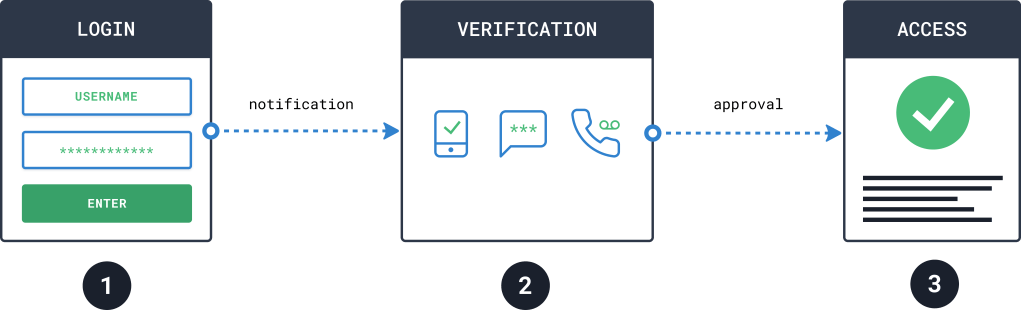
How long have most of you ignored the nagging message when logging in or the email entreating you to enable two-factor authentication? You typically use mad-obvi email addresses, typically some variant of your real name (which people have a habit of finding out), or your social-media handle or channel name plus at-gmail-dot-com.

Someone will guess that, and then combine it with that “qwe4rty7” password that you patted yourself on the back for for your ingenious trickery, but isn’t a strong password and will be easily toppled over by a brute-force effort.

While it is true that I am not a fan of the many behaviors that monetization drives in content creators (because it spawns many of the 🤡), I will encourage people to be more prudent about the security of things that drive their livelihood. Last time I checked (and maybe partners get bennies I don’t know of), YouTube and Twitch do not offer health care, life insurance, short or long-term disability, or, hell, even pet insurance or discounted legal service for its content creators, even if it’s what you do full time. If you lose access to one of these accounts or, worse, people use flow-across social engineering to gain access to multiple resources as the domino effect from knocking one account down (such as financial accounts you have tied to your gaming, social media, or content creation accounts), you’re farked, to say the least.

On this note, I will also mention that protecting yourself is not limited to password protection. The number of content creators who stream, game on, or otherwise create content from a PC that do not have a backup or disaster recovery solution or redundancy in place is staggering. The number of tweets I see about someone saying “No stream” or “My channel will be offline” because their PC is down hard slash crying emoji and has to be rebuilt, typically because the OS got borked, is far too many for people who are monetizing and reliant on daily interaction with their followers to maintain their revenue base. Or some of the even worse cases, like people who have serious physical repair problems with the location they stream from but refuse to get insurance….SMH.

If you are dependent on one PC, you need to be making a periodic image of that machine…a FULL image, not just incremental backups…or else it’s going to get painful when the bad happens. And when you upgrade, consider keeping your old rig around as a backup.

Back to passwords. Don’t just set up 2FA. Also consider using a password manager or a local encrypted vault. Some people don’t like password mangers and worry about the companies that own them and what happens when those LLC’s change hands. OK; fine. Local vault then. Better yet, get a physical key.

Two standard tenets to live by:

  • If there are less than 3 copies of a thing, then you don’t have a backup (I’m leaving out the geographic separation, because mainly I am talking here about images to restore your PC and I recommend you just make full images and I wouldn’t worry about shipping those out to your cousin on the West Coast)
  • Account security should be based on a thing that you know, and a thing that you have, so if your account is compromised by the first, they still cannot get in without having the latter in their possession

Cool? Cool. Now go play games.

My Changing Relationship With Games (or why it’s important that the Steam Deck will never do 120fps and how that might make me finally subscribe to PlayStation Now)

Long title. A lot to unpack this morning. But we’ll try to move quickly. I’ve been molting. As a lot of you know over the past couple of weeks I’ve been transitioning to only playing on PC, after 20 years of playing on 3 or more platforms, and twice as much time gaming in general. Tonight will be the second or third episode of the Enough 2 Keep Going podcast that I’ve recorded since this process started. Grooming the agenda this AM, I noticed that we didn’t have the most recent State of Play down for discussion. I was about to be ok with that. The new show format is supposed to be the games we’ve been playing as a priority, and any news associated with those games as a secondary matter. And I haven’t played anything associated with the PlayStation brand this past week. In the transition, I got rid of my XBox Series S, Nintendo Switch, and PlayStation 5. And I’d taken a break from SIE’s God of War on PC. I scanned over the State of Play, and once again considered how my decision was going to cut me off from the PlayStation ecosystem. I had settled on this path forward, but a recent conversation with a friend had given me cause to once again consider whether or not I was going to miss the PlayStation exclusives.

I’ve never been a big SIE exclsuives fan. For the most part, I can take them or leave them. My other gaming interests have always made it difficult to fit those games in. That being said, over the past few years, I’d had immense fun playing the Uncharted franchise installments, Miles Morales, Ghosts of Tsushima, and Death Stranding. And the PS4 was my Destiny 2 main for a very long time. Maybe I should do PlayStation Now? Lemme come back to that.

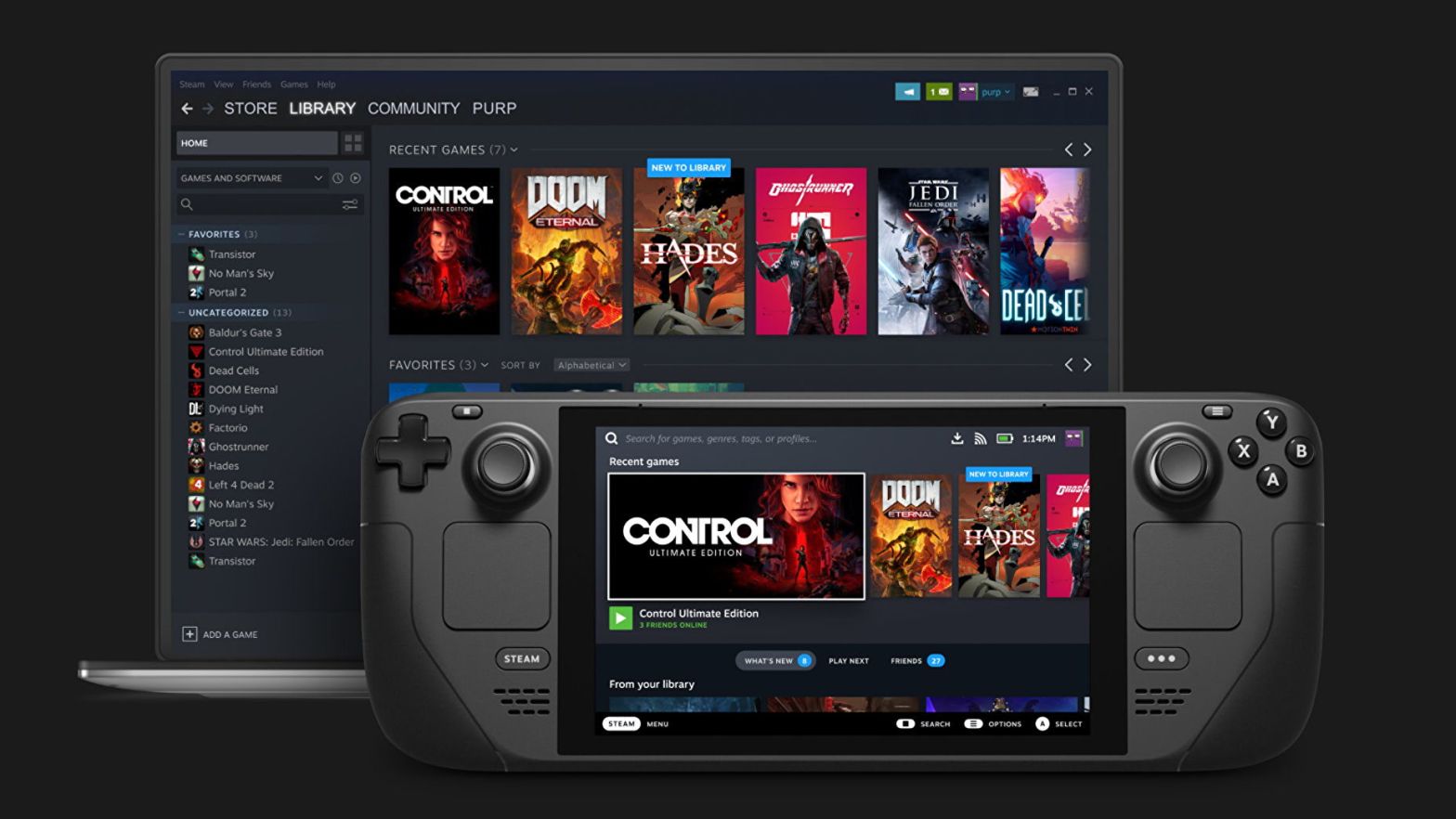
The other big swirl in the news cycle that has impacted me in recent weeks is the drop of the Steam Deck. I am anxiously in the queue awaiting my notice to buy. Good chance I could be skull and bones by the time it comes, but I’m still anxious. Yet, I look at some of the wildly hyperbolic reviews of late with a heap of side-eye. The Steam Deck is a mobile, portable, cozy-couch kind of value proposition. I look forward to playing mine docked, yes (I basically only ever played my Switch in handheld mode when I was on travel), but when it is, it will decidely be the bottom of the heap of any rig in operation in my studio. Even lower than my dedicated streaming PCs. As I’ve been running The Witch Queen expansion this past week, and benching my new builds as I see them pulling 160 frames on an HDR 10-bit display, and my oldest, least powerful gaming rig pulling 120, I know that such performance will never be present on the Steam Deck (of course as of now, you’re heavily discouraged from even trying to play Destiny 2 on the Steam Deck anyway, but you get my drift).

And when there is a SKU that is, there will be even more powerful hardware available on Desktop. The Steam Deck has the potential to meet its specific use-case better than anything in recent history, but the comparisons to desktop power are kind of ludicrous. For me, there is no way that a 7 inch OLED will ever rank as being “better” than one of my 27″ curved IPS 1440p 144Hz HDR displays. Again, it will meet its use-case as a couch-device, but it willl never exceed the desktop in other areas. And so those who embrace power over portability will never embrace it as the “best”. Better in mobile situations, better in bed, better on the couch, better on travel, sure. But let’s stop the flat-earther takes on where it sits in comparison to desktop power.

The Steam Deck is a decidely casual PC gaming value-proposition, where someone wants it for scenarios where they can’t use a desktop, or for the crowd of PC gamers for whom “good enough” is just that. Again. Casuals. I know that that latter category of PC gamers is growing, led by an army of livestreamers who had to buy PCs for streaming because you can only do so much production quality streaming directly from a console; and then once there, flipped over to be a PC gamer out of convenience, and now run out to buy 3080s and 3090s so they can play Fall Guys and PUBG. That and other influences are creating an additional demographic of PC gamers out of a knock-on effect. So there are more and more people in the PC gaming space who don’t build their own rigs, and will be ok getting by on low-power compute on a heavily optimized operating platform because their performance demands are not high. And as an alternative to lugging a 10 pound package of gaming laptop + power supply brick, the Deck is a viable alternative. In fact, I am sure it will be an alternative to my current PC gaming travel solution, Google Stadia.

Once I do get my hands on the Steam Deck, I expect to end that subscription. A subscription that has done what I needed it to do because, as a Network Engineer in a previous life, I understand packet-loss, latency, and jitter, and have always used Stadia under conditions where its delivery to me is optimized. And that has prevented me from having to lug the aforementioned 10 pound kit.

20181017075736

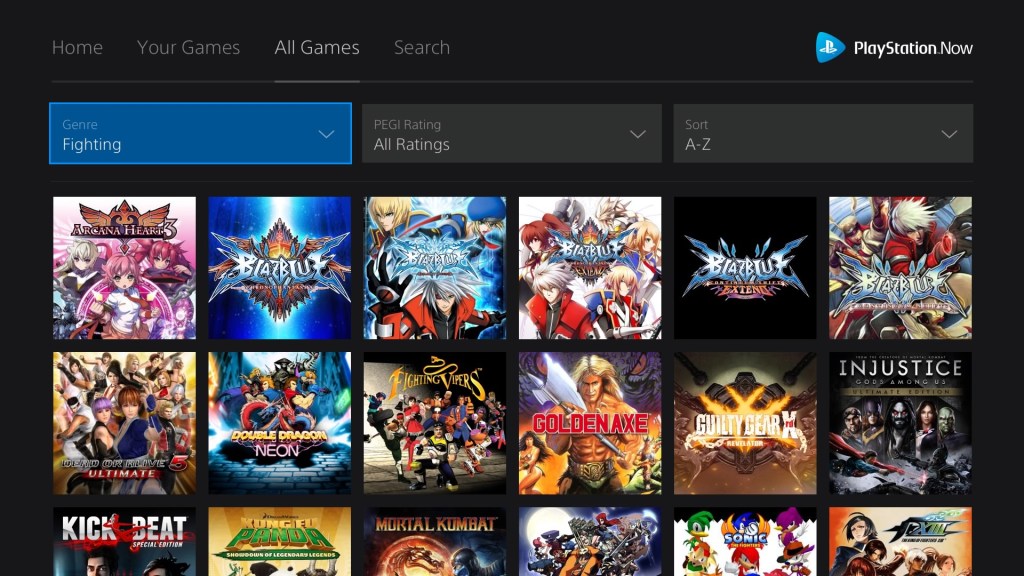
When that happens, it frees up room in my subscription space for PlayStation Now. And so I spent time after grooming the agenda this morning to litmus test whether or not the service would be a fit for my requirements. There’s a host of technical reasons why it wouldn’t be, in its present state. But the first litmus test I wanted to run was for content. I’ll be set for Uncharted for bit once the PC version of the 4 + Lost Legacy Remaster drops for PC. But none of the other titles I mentioned earlier are available on PS Now. Spider-Man I think is, which I guess means the official list of PS Now titles isn’t up-to-date? I couldn’t find it this morning under Spider-Man or Marvel’s Spider-Man. And it would need to include Miles to secure my interest. Ghosts is not and Death Stranding is not.

Sony’s approach to its streaming service is weird on the landscape of streaming media. Streaming media is a very specific business model, so don’t take umbrage to my perspective based on the way the gamer thinks about it, because it’s not the same value-proposition that streaming and cloud content have established themselves as across the entertainment lansdscape. In every other strategic approach to streaming delivery, recency is key. And the value of delivering things so far beyond day-and-date that they are only nostalgia plays or collector plays is a weak hand. I know that rumblings and rumors of Spartacus are likely to change that outlook. They’ll need to in order to encourage me to renew my relationship with PlayStation again anytime soon.

I’m Out; Transition to PC Complete

It’s been under consideration for the last four years or so. Really even longer than that. When I built my first gaming PC, back in 1999, I asked myself a few months later why I would ever have a need to play on console ever again. In truth, I only kept my original PlayStation around because I had a buddy who would come by from time-to-time to play some rounds of Tekken Tag Tournament. But then the Sega Dreamcast came out a few months later, I fell in nostalgia-love with it, and it was a short slippery slope from there to becoming a multiplatform gamer, playing across the Dremcast, XBox, and PlayStation 2.

3 years ago, I got deep into Star Citizen, as I wanted someone on the podcast to take a deep investigative look into the culture and the community model and determine what was really going on with the game from an insider’s perspective. Then Destiny 2 embraced its existence as an MMO, I found paths to other persistent progression games, and I discovered a need I had to become involved with games for more than the 40-hour long-form narrative of a single one-and-done.

I needed more time on PC. Then add VR, Stadia, and my old staples of driving sims, flight sims, and space sims, games that ask of you more than that 40 hour commitment…all of these experiences are at home and at their best on PC. My gaming world was becoming too crowded. Had been for a very long time. Since that inflection point back in 1999. I needed more time on PC.

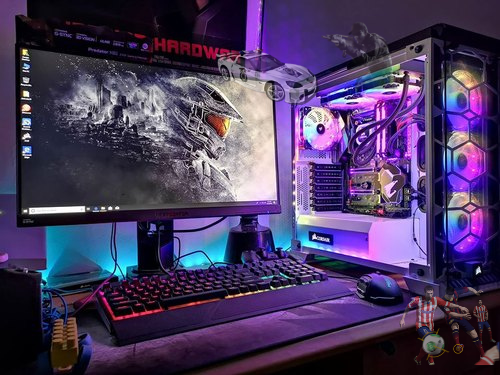
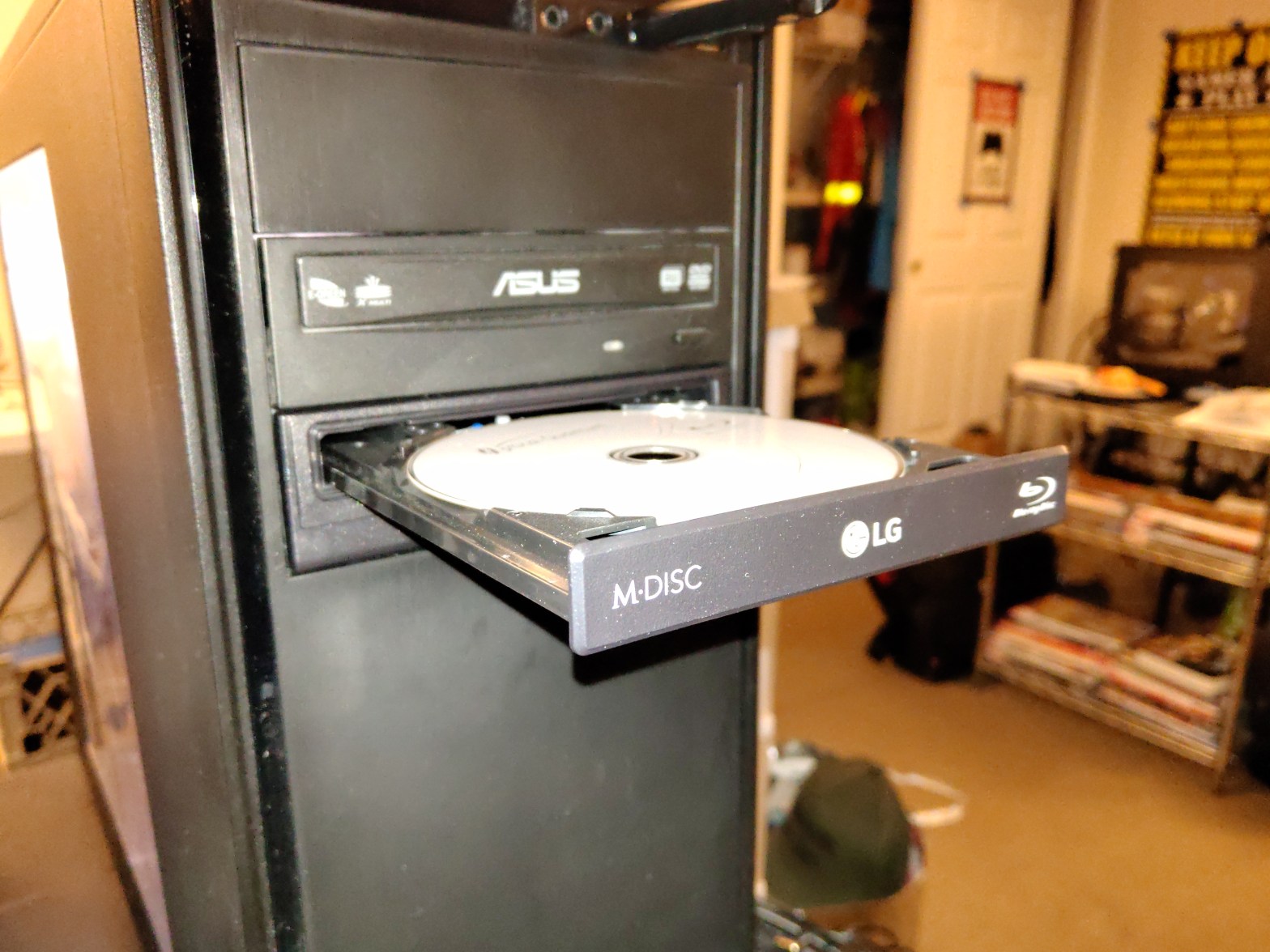
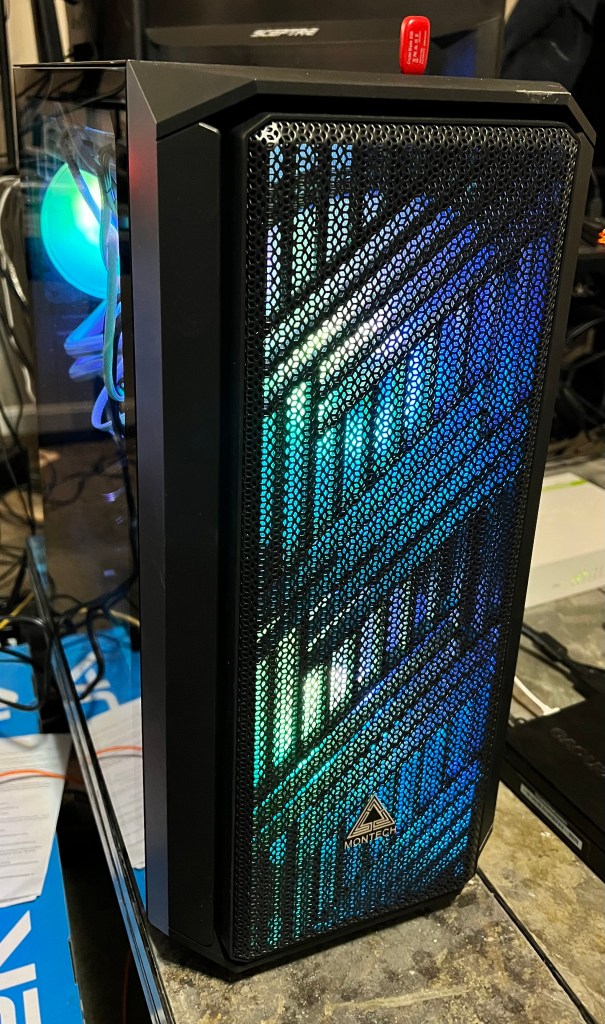
These past few weeks, it’s been time for the 2-year PC ecosystem overhaul. Last done in 2020, it was once again the point at which I needed to upgrade sometime this calendar year to bring into existence a new primary and secondary gaming PC (because I believe in redundancy and failover) built on current tech. Through a calamity of travails, I wound up at a place where a Lemony Snicket series of random occurrences led me. One of the PCs I’d procured failed, and in having it built, I had to do a ton of research on parts. So much that I realized that I was only an inch away from returning to doing a DIY build; I’d fallen off from doing from-the-ground-up-builds during the pandemic and he chip shortage. It was easier in the supply-constrained time to have a company do the base-build (case, power supply, motherboard, CPU, cooling solution), test it, ship it to me, and then I would just add-in scavenged RAM, storage, any optical drives, and a GPU. But I found many of the previous hard-to-get parts were now in good supply, and in briefly experiencing the wonder of liquid cooling, I felt a DIY build would much less of a PITA than it had been in my air-cooling days.

The other thing that converged here was that I had a failed livestream because I could not get capture cards working. Capture cards which had played nice with that streaming PC just the week before while doing a podcast. I did the math and realized that too large a chunk of my 7 year livestreaming career had been time spent futzing with capture cards. I started reading more about other streamer’s experiences in both dual and single-streaming PC setups; valid ones. Not the ones who poo-pooed dedicated streaming PCs because of cost or eschewed capture cards because of money in lieu of a no-cost solutions such as NDI (which in no way matches the graphical fidelity of a capture card). I thought about the simplicity of single-PC streaming setups and the fact that my rigs have had the compute to handle gaming and streaming for a very long time. I also thought about the nit of the re-config I have to do when using a dual-PC and capture card setup to livestream PC games…having to route to HDMI (I normally just use DP), and step the game display down to 1080p 60Hz is a pain. Was a pain.

Without any more need for dedicated streaming PCs, and with soulful investment in DIY builds, the demand to extract more return out of the PCs in the studio just hit the tipover point. Gaming on my PS5, Nintendo Switch, and XBox Series S, and their forebears, has always been a distraction. Every time I am on one of those COTs boxes, I was always nagged by the worry of how I was not clocking time on one of my own custom builds. Putting time into playing on an application-specific appliance…the same one that another 139,999,999 people have versus one that I’d spec’d and built myself…that solution just hit a point where the opportunity cost was out-weighing the benefits.

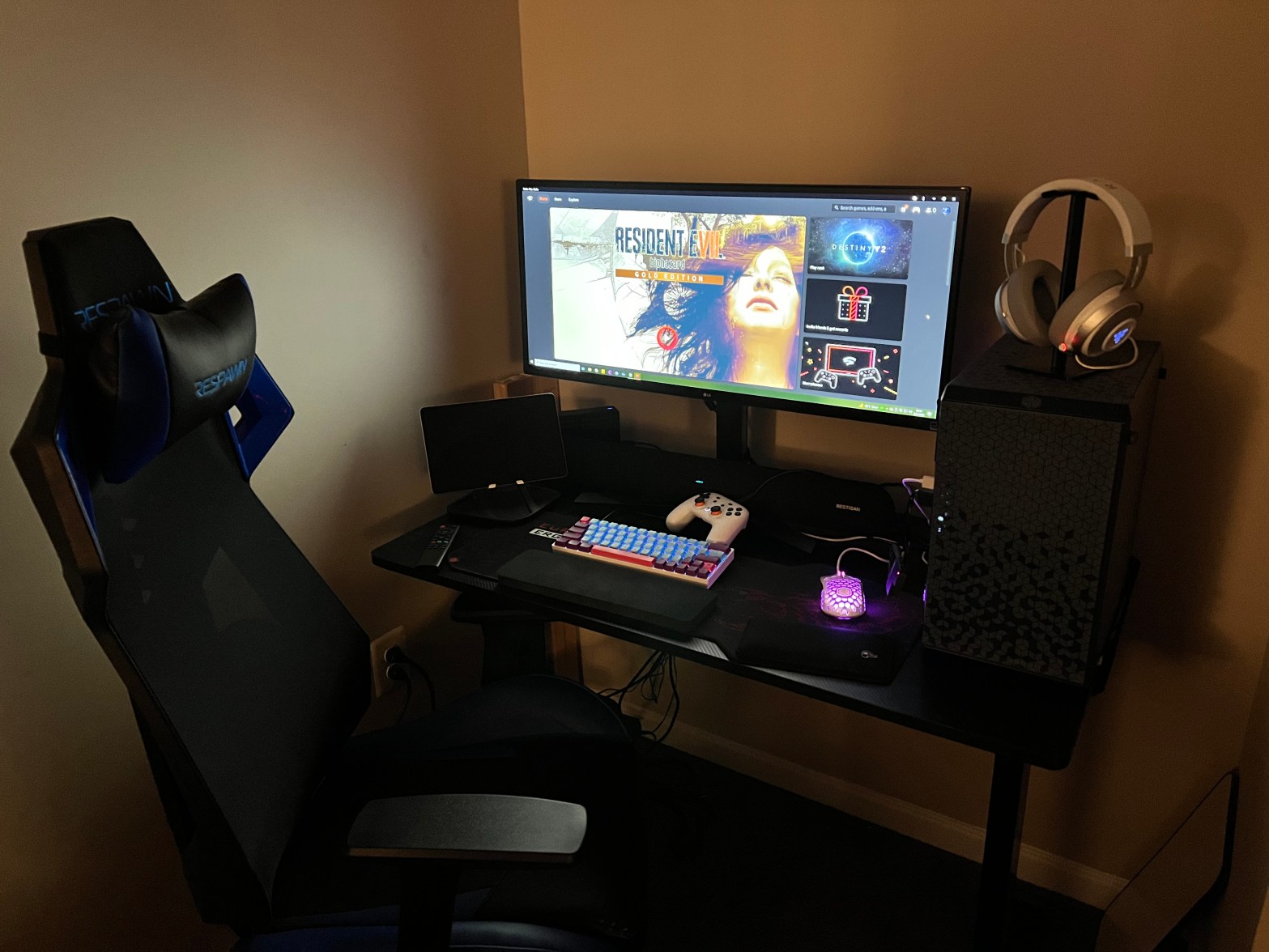
I do not begrudge anyone who plays on console. My decision and choice is not an indictment of console-gaming/ But rather a decision to invest fully in the platform that brings me the most joy. I enjoyed my time on those console platforms for many decades. This is about personal choice; like going vegetarian. I’m not saying everyone else has to, I’m saying I feel better when I do. And in the turn for the last two weeks…during which I bought a new primary gaming PC and built the backup, and then transitioned and re-arranged configurations of some legacy boxes that I run in the lab, achieving better optimization of my best GPUs in the same boxes with my best CPUs, I’ve felt better about my gaming. I’ve been more attentive. I’ve been more surgical about what I choose to play, I’ve gotten back into recording sessions when I am not live and posting clips to social media outlets. I don’t talk about what I enjoy playing. I just put that joy on display and people can draw whatever conclusions from it they want. My conversational points on the podcast and prep has gotten more focused. Overall, I have felt more grounded and organic in my approach to gaming. More like I am in my own skin. It’s a pivot that has been under consideration for two decades. And I am glad I have finally made the turn.

Since I originally drafted this, my PS5 and all of its accessories are gone. My XBox Series S? Traded in. My Nintendo Switch. Upstairs for other people to use. I won’t say that the social media dialogue on gaming has had nothing to do with this choice. It was not the impetus, but getting out of and away from it is certainly a benefit that I’ve acknowledged. Whenever I scroll Twitter, it’s the same tired dialogue and console-warring amongst people who do not understand software development, finances and business and economics in general, and often have not participated in a wide-enough breadth of the art to really have a credible, salient opinion. I’ll be glad to be out of an ecosystem of conversations that overly focus on brands; a biodome where any praising of a game is coupled with a pejorative against another title, corporation, platform, or whatever narrative someone is trying to achieve .

After 32 years, I think I am done with my commentary on games. I think the future is just me building PCs and enjoying the experiences that I can through them. Combining my love for PC building with my love for games.

Does It Matter Whether You are “Good” at Games or Not?

If you’ve seen any of my iconography, you know that the tagline “For the Love of Game” often features prominently. Knowing who you are as a gamer is a lot about figuring out your id. Much in the same vein as it is difficult to figure out whether you are an introvert or an extrovert until you focus on and nail down which types of activities you derive energy from and which ones drain you, it’s hard to figure out what kind of gamer you are when you externalize all of your observations. How do people see me as a gamer, what do people think about me, do people think my skillz are good enough? A lot of this is rubbish from my perspective. But I try to empathize with what angle others’ perspectives come from before I cut so quickly to being judgmental. My heart often yearns for other gamers to be the same.

One of the principal reasons I left Twitter (and the list is long, I assure you), is that Twitter gamers are some of the most judgmental people on the planet. More so than many religious fanatics I know. Dialogue goes from 1st-contact exchange of ideas almost immediately to the twist of why your opinion isn’t good enough and is somehow proof of what a “trash” gamer you are. Having been, for a short time, a member of the streaming community, this externalization of view is prevalent there also from people starting out to the most experienced veteran with the largest following. How do you insulate yourself from the impact of people having a poor opinion of you? To keep from having a poor opinion of yourself? Pretty simple. You stop caring. Not just about people’s opinions, but about allowing external systems to be your rubric of success.

Everyone has to find and/or establish their id. Lots of people allow external systems and frameworks to be the yardstick by which they measure themselves. Then the next stage of evolution many creep to is selecting the system by which they are going to measure themselves. They find the break-away from being measured as successful by corporate America, or Church, or family.

This middle-evolutionary group often pats themselves on the back for detaching from societal norms of success definition and ride loftier egos for a time. But I think what many of that group do not understand is that they have just ascribed to a different success framework. Maybe it is decentralized. Maybe it is grass roots. Maybe it is blue-collar, depowering to the white-collar overlords that they perceive run the world. I think however, and this is where many streamers land and live, they then just slip and slide sideways to the same anxieties, (often worse ones) that shade their own perception of whether they are successful or not. As streamers, they worry about followers, concurrent viewers, and as gamers, they worry about their K/D, whether they are diamond or legend.

I made a good run during the year that I stayed on Call of Duty: Black OPS – Cold War. I didn’t become great by any means, but I was respectable. I got invites to run with other crews who were looking for solid players. That fullback that gets you the 3 to 5 yards per play, and who, every once in a while, busts a surprise scamper and becomes a hero for five minutes. This gave me a healthy enough flow of dopamine, but at the end of the day, my ego is not anchored to my performance in games, my gamer score, or trophies. My main goal in life is to be able to do the things I want to do, buy the things I want to buy without much impediment, to not be overly inconvenienced except by my own goals, and to walk away from this whole flesh-bag deal having made a friend or two. Oh yeah, and I like to consume multiple gaming experiences. That’s pretty much my bucket-list. I don’t know that any of those is driven by having a high K/D, being on the leader board in Halo multiplayer, or having tons of followers on any social media channel.

I always talk about the danger of anchoring your ego to something that can be taken away from you, and that is generated by the energy of others. A lot of this feeds into my feeling on whether or not you have to be “good” at games in order to enjoy them; an unfortunate id barrier that I think keeps people out of the hobby because I think they are concerned about how others perceive them. I love games too much to be impeded from playing certain games or enjoying some experiences because of a fear about how others will perceive that consumption. Putting a game on baby-ass-baby mode is sometimes necessary to push through a story if what you really love is the narrative.

And tying ego to the stats of PvP games would lead me to only playing certain games and types. As much as I’ve come to love that exhilaration of playing a PvP game well, I’m not willing to give up and bypass all of the great single-player experiences that are out there. That’s too high a price to pay. And while it is hard figuring out how to fit both in, and it’s admittedly difficult to be derping it up on stream struggling to get through a Tomb Raider game, Soulsborne, or figuring out the latest space or flight sim, it’s worth it for the internalized rubric that I have chosen to ascribe to. That yardstick is not measured by a lot of things that are in vogue in the social sweet-spot today.

For those who are hoeing that row and finding success as they see it, I have for them the utmost of praise. That’s a tough life, and that’s a math formula that eventually slopes to zero. If it doesn’t slope gracefully, the landing could be experienced in a fragile, temperamental state. My hope is that they find their own internal resilience along the way. Self-care as both a gamer and a streamer needs to be about self. And finding yourself and knowing yourself is a tough thing to do in a crowded room unless you focus on cancelling out all of the noise and establishing your own yardstick. For me, it’s Love of Game. And that does not require anyone else’s input, approval, or sanction. But I am forever grateful for the friends alongside me who are on similar journeys.

I Spent the Day Re-Building a Streaming PC so I Could Return the ATEM Mini Pro

Truth. The Blackmagic Design ATEM Mini Pro is a slick looking piece of gear. Wonderful to the touch, and elicits a feeling equal to the happiest of digital ballets whenever your fingers dance across the sizable keys to run your live video production of choice. Unfortunately, I have found the quality of its video output under gaming scenarios to be wanting. Whether livestreaming directly from the device using its Ethernet connection to talk directly to YouTube, using it as a glorified capture card connected to a PC running OBS, or sending the feed directly to local storage, I could not find any single way that ended with good looking video.

Now. I am sure that there are streamers and YouTubers out there who have dug into the XML files or are using the ATEM Mini Pro alongside other Blackmagic gear that enhances the video output. Plenty of influencers are out there approving the use of the ATEM Mini Pro and I am sure there is something to that. For someone like me, who streams from any of seven different gaming configurations, I was not interested in onboarding a piece of gear that would lead to more work.

And so today I boxed the BMAMP up and did the online work to process it for a refund. I gave thought to a few different options to pivot my production on. I have been using one of my builds as a dedicated streaming PC. Its position in the studio allows me to use it to stream from my XBox Series S, Nintendo Switch, one gaming PC, and, until recently, my PlayStation 5.

The other gaming devices are on the other side of the studio, and I just let go of streaming from them when I designated this box as THE streaming PC. While testing the ATEM, thinking I would be ok streaming from it in standalone mode, I moved my PS5 over to the other side of the studio. And I was just not up for moving it back. The console station was too overcrowded and I liked the cleaner and less cluttered area I had moved it to.

I thought about moving this streaming PC around to whatever machine I wanted to stream from. But I also game on this PC, and I didn’t want to lose that capability. And it doesn’t have any SSD’s in it , which would be another risk to it being shaked, rattled, and hummed when moving it around. I had another streaming/gaming PC that failed a few months ago. At the time I was switching jobs and had to cover a lot of territory for the owner who had some outages soon after I joined the new company. I was not up for troubleshooting the strangely behaving box. There was also another hanger queen under the same work bench. I figured it was finally time to troubleshoot it and clean the messy area of the basement up in the process.

Just as it had done a few months ago, that PC, a mid-tower in a Corsair SPEC-01 case, powered up, but had no video output, and would not shut down after holding the power button down forever. The box had one of my spare GTX 1070’s in it, and I decided that was the most important thing to salvage, since low-end nVidia cards are still great for livestreaming. So it was more important to get the GPU out and troubleshoot it in the other box, rather than swapping out a Power Supply or motherboard/CPU/HSF. I also pulled the 2TB nVME SSD out of it to use as the OS drive in the shorter chassis.

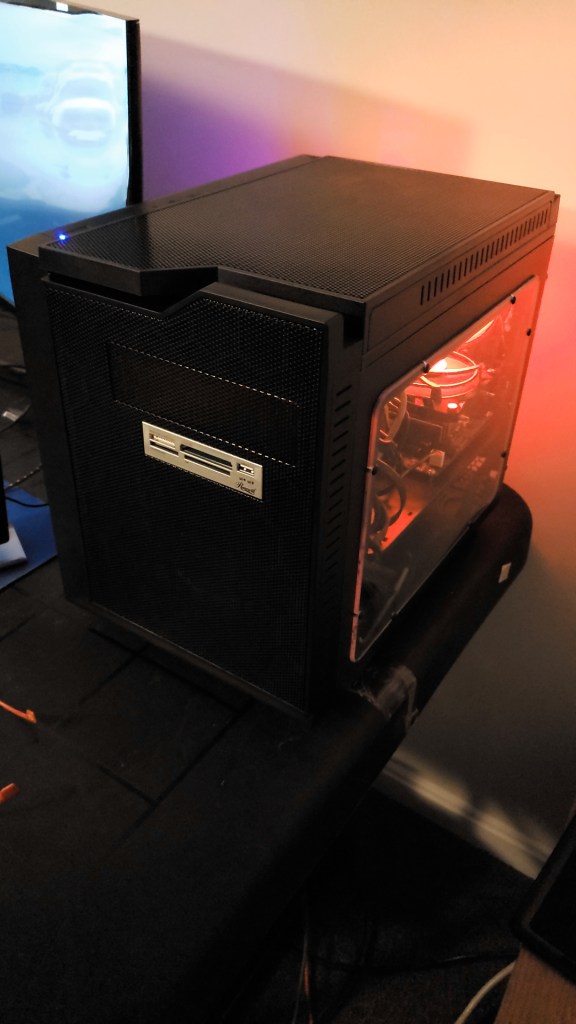
The hanger queen was not as bad off as I thought. It needed a good dust blowing. It kind of looked like a barn find in Forza Horizon. But the fans were still wired up and pretty easy to wrangle into place; this case, a ThermalTake v21, has 4 fans at the top of the case and they are powered by a mix of molex-to-2-pin adapters. It would have been annoying to wire them all-up again. The 6TB storage drive was still in the case and already connected for power, the data cable just dangling, waiting to be reconnected to the SATA headers. RAM was missing; there are only two slots in this case. The failed PC had 4-slots and I had populated them with 8GB sticks. Yanking them for the new build would have resulted in a 16GB cfg, and I really wanted 32. Fortunately, I still had a pair of Corsair Vengeance RGBs hanging out in an anti-static baggie of spare silicon, a set of twin 16GB sticks that had been in this case before.

After a bit of part-swapping, I had the new streaming PC reconstituted. It powered up, and gave me a bit of trouble getting the nVME drive installed with Windows 10. But other than that, it took all of the software I use for my production tools with aplomb. I was also able to sort out a few nits in the test livestream I ran with it later that evening. It doesn’t have any SSDs in the case other than the nVME. I had recently dug up my spare nVME drives and got an external nVME SSD enclosure that connects over USB, as I had intended that to be the drive solution for ATEM Mini Pro. Connecting that to one of the USB 3.0 ports works on this new dedicated streaming PC better for local recording than my old solution of recording to an external USB 2.0 drive. But the biggest leap tonight was in cameras.

The whole reason I went down the path of acquiring an ATEM Mini Pro was because nothing I have in the studio was doing a good job of consuming video from the Panasonic LUMIX GX85 I got last summer. I needed to get my ROI out of that camera. At a minimum, I figured the Blackmagic Web Presenter, a piece of kit I’d had and been using for a few years, was always reliable and expected that the ATEM Mini Pro would do the same. It did a great job with the GX85, but fell short of my expectations in everything else. Getting rid of the ATEM Mini Pro meant that I was right back where I started with regards to that camera. I didn’t like using such a great camera and then sending it through the Web Presenter, which maxes out at 720p. The Elgato Cam Link saturates the USB bus and will drop offline or freeze almost every live video I use it for. The Mirabox HSV321 was much more reliable, but has cameras it likes and ones it doesn’t. I finally considered an approach that I’d considered many times before, but figured must not be viable, because I do not hear about other streamers taking the same road. That was to just use a second video capture card; one for the primary gaming machine’s video, and the other for my higher-end cameras. I have tons of capture cards around from when I used to review them. I had always worried about how a streaming PC would react to two capture cards and if it could keep with that much data coming across the USB bus. Turns out it works just fine.

I used the Elgato HD60S+ for game capture and the AverMedia Live Gamer Xtreme GC550 for capturing the camera tonight, the Panasonic HDC-HS80 camcorder. It all worked well. In fact, I’ve struggled to get decent video out of the HDC-HS80; it is extremely sensitive to low-light and the Web Presenter and any other camera capture device had only provided barely passable camera video for my past livestreams. And nothing worked well when I’ve tried using it for podcasting, with the camera picture blown up to sizes greater than the little PIP-like modal I use when livestreaming. The GC550 did the trick. This now sets me up to use any capture card in tandem with the main card and, fingers crossed, that approach should work just fine. I’m not sure why other streamers don’t just use two capture cards when pulling in a high-end camera’s video.

All-in-all, its been a day of technical adventure. One of the rare ones in a world that continues to be a swirling pool of outhouse slurry on most days. I’ll count this as a victory and continue walking forward.