I know. I thought it was frivolous, too. A manifestation in the worst vector of over-zealous fanboism. Some small group of, seemingly, unknown gamers from California, New Mexico, and New Jersey, have re-filed their contention over Microsoft’s efforts to acquire Activision (sorry; “merger” is too courteous a term). While the original case was dismissed in March 2023, on a basis that I am very familiar with, the industrious group and their retained legal counsel, have gone back to grind-stone, seemingly correcting the original errors of their ways. I say a basis I am familiar with, as the judge’s decision and my opinion tread similar ground. I find that that those lodging that the merger is “good” for competition, good for the industry, and good for all gamers, typically make those claims as an assertion. They do not provide historical proof, factually-based models of predictive outcomes, or cite rationale other than “makes CoD cheap lots of places”. The judge felt that these assertions to the contrary also failed to provide sufficiently substantiated basis, and did not meet the measure of a private citizen anti-trust suit, and neither do I.
The MSFT-ATVI merger and acquisition has proven to be one of the biggest get-rich (or at least get-followers) quick schemes in the past decade of social media. It is the most on-fire continuing story amongst the YouTube-Twitter circle-jerk. It makes the rounds weekly, even when there is not any actually tangible, real news. Accounts have been re-branded, from their normal diatribe of console-war trash talk, to amazingly eloquent legal prose (proof that they have someone else writing their posts for them). While often inaccurate, unstudied, and lacking in foundational research, these accounts have flourished. Making more cake than ever before; capitalizing on the sensationalism and the controversy. There are more ambulance-chaser legal accounts on this gaming topic than I recall ever seeing. In fact, so much so that that slice of Gamer Twitter is no longer the niche that it once was. It’s common. Additionally, many gamers have submitted commentary to the regulatory agencies that have invited comments. And then promptly raced to Twitter to inform the world of their contribution. I give those accounts the side-eye.
And so, what does that leave to be said in a positive light about the Gamer’s Lawsuit? Isn’t it just the same sort of tripe? I actually think it is fairly interesting that the team has gone back in for a re-attack. The notion that they were unwilling to merely be swept aside and dismissed in irrelevance shows a degree of stick-to-it-iveness that I was not expecting. Even more so, the appearance that this group does not seem to be making the rounds on social media, stumping for clout based on a holier-than-thou arrogance that they alone have marshalled their resources to be the saviors of gaming, may be even more of an acclaim.
I might question the ability of their lawyer, given the original misstep in filing. And maybe there will be no traction gained in this second bid. But it ain’t cheap. And I have to have some respect for people quietly doing the work. And not trying to make themselves famous off of it.
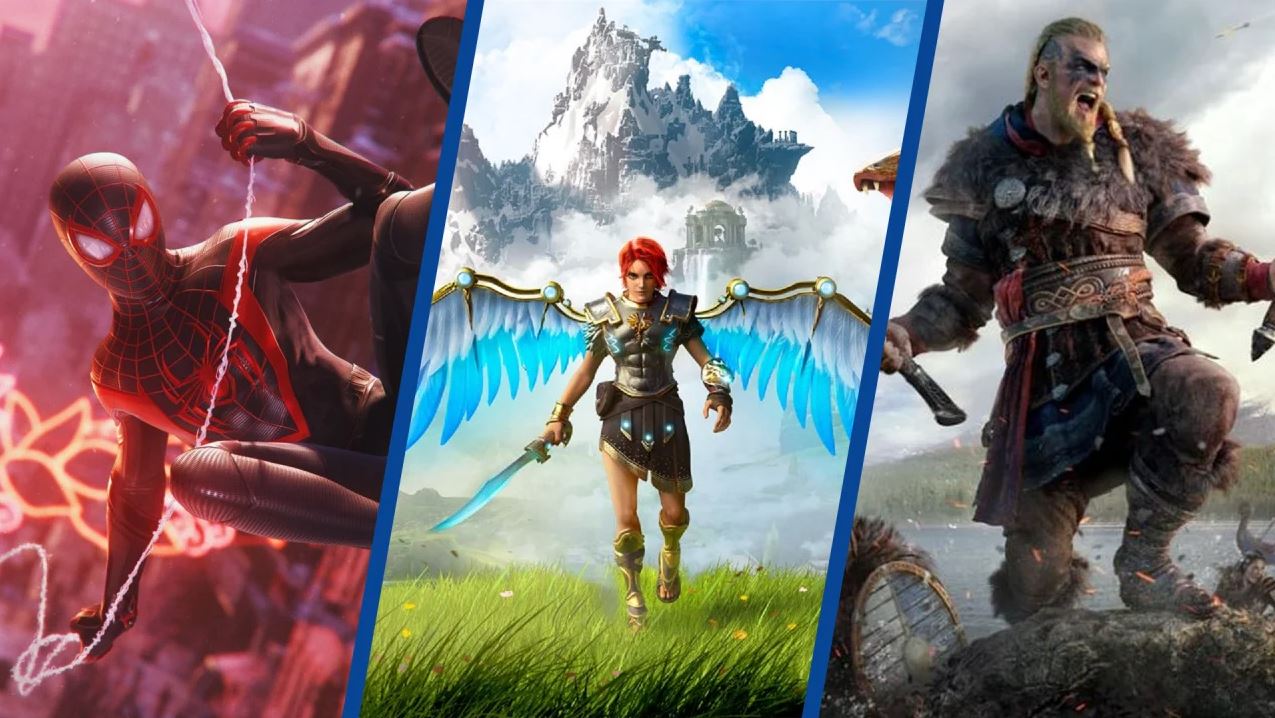
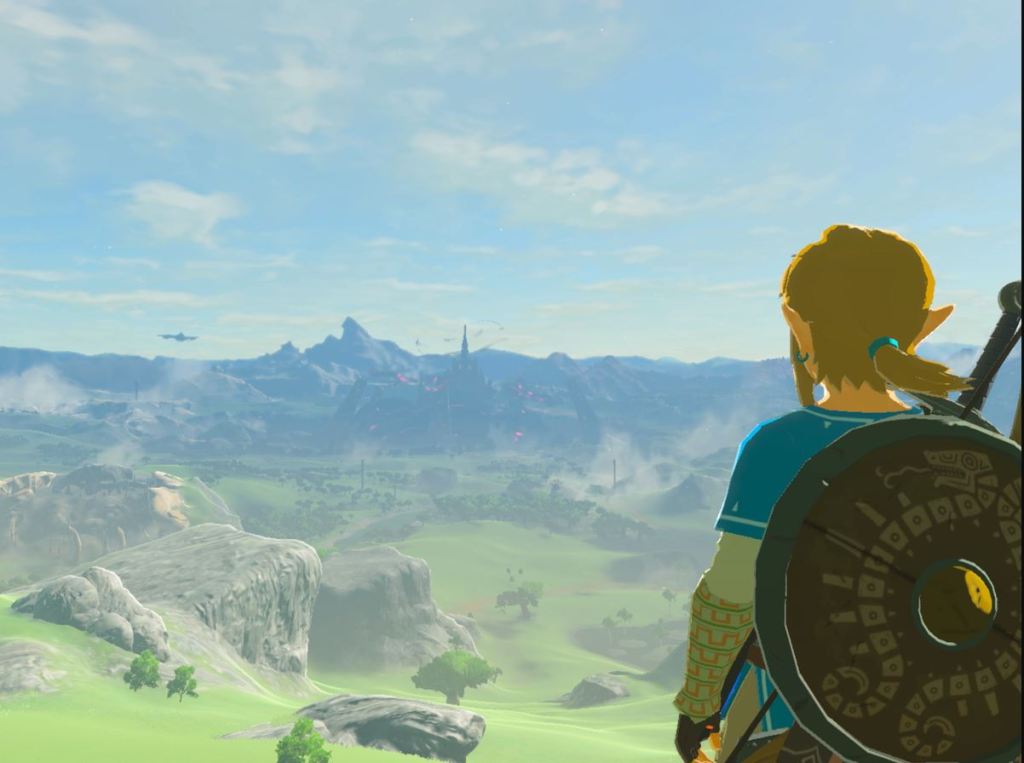
I want to write a feature post here over the next few days about my favorite Open World games. It’ll be a doozy. But first, I felt the need to set table stakes with a problematic part of the narrative going around on Open World Games.
“Not every game has to be open world”.
The statement has become a trope amongst the gaming opinionated. The 17% of the gaming market that hangs out on social media. It is not the indictment that some think that it is. It reveals far more about the limited palette of the commenter than some perceived decrepit state of the industry.
So much of the dialog about gaming centers solely around the games that populate the front page of Metacritic and whatever the gaming media raises up. This limits the conversation to a very small population sample of what is available on the market. And therefore, gives a skewed take whenever someone extrapolates a statistically founded comment based on that small population sample.
The problem stems from not taking into context everything that comes out on the gaming market every year. Somewhere between 240 and 320 “playable” games come out on the gaming market per annum. I say that based on using a thumb rule of games that chart at 80 or above on Metacritic. It may be an imperfect ruleset, but for the sake of conversation and this discussion, it suits. 241 games that met that criterion came out in 2022. So, it’s not as if 50% of those games are open-world. In fact, a relatively small percentage of those games are.
Open world is a big-budget effort. The game worlds of those titles are huge. And only able to be tackled by large teams with big budgets. At least any open world with fidelity and at scale. So, the number of games of that ilk that come out each year are not representative of a bulk of what the market is putting out.
So, no. “Not every game has to be open world”.
But also, not every game has to be single-player story-driven deep narrative with cinematic cut-scenes.
I’ve had the great fortune (or misfortune) of seeing some of my favourite genres recede to the point of almost becoming extinct. RTS’. Flight sims. Driving Sims. Spaceflight sims. For years, no new simulation peripherals were even made; a telltale, tangible sign that the tide on a given genre had gone out to sea. Manufacturers of those devices were bought, and their product lines given little care and attention. The genres that they supported almost nearing the stat of faded memory.
Given that psychological scarring, I tend to watch the output of the industry at a statistical level. While I believe the math is not there to support the take, I get it. I do. I used to say not everything has to be multiplayer. Not everything has to be Battle Royale. In fact, years before I became an RTS fan, I used to say everything doesn’t have to be an RTS. LoL. I was part of the problem. My own words and mentality led to the near demise of RTS’, until they slowly, but steadily made their comeback over the last couple of years.
Not every game has to be Open World. That statement is kinda…well, no shit. And not every game needs to be about a singular-genre. Or a Destiny-like. Or a Souls game. Or a gatcha game. Or a PvP multiplayer shooter. This same push-back is seen today very much around games as a service. But, again, the math does not match the narrative. The commentary. The truth is that every game is not any of these things. Maybe it feels like it is. Because that is the kind of game that is constantly on the front page of IGN. Or what is charting on Metacritic. But those types of games being in your windshield is more a matter of media coverage. And the fact that those other games that are out there? Gamers don’t play them. At least not the ones who speak so vociferously on social media. The claims that the industry is just churning out one type of game are not statistically significant and falls down when you true up the math. Is it bad that those games, types of games, games with those designs…get all of the attention. Yes. Maybe. But isn’t 50% of that and how it is interpreted and how it is perceived…a you problem?
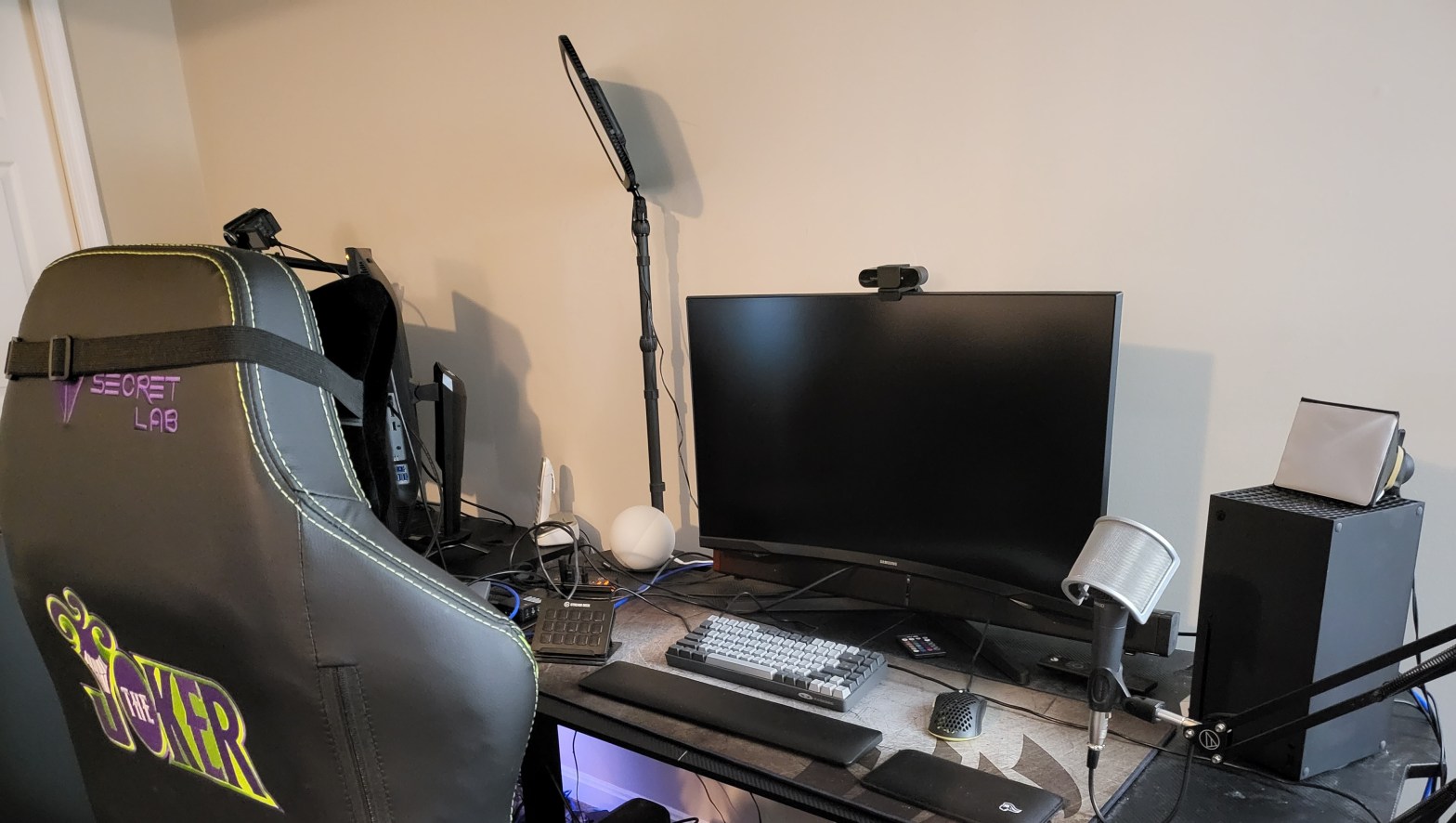
Battlestation 3 is all rigged for my next arc of livestreams, scheduled for Sunday February 19th through Tuesday the 21st. But a few weeks ago it did not look like Battlestation 3 would ever be used for livestreaming again. Or much of anything. I was having a massive heat problem in the box, which I had only discovered while chasing down a failed GPU. The heat problem left me wondering if I should build a new rig or if there was a cost-saving salvage op I could pull off, but that would be a low enough level of effort that it would feel worth it to save the elbow grease over building new. Too far above the critical path activities that a new build takes, and I would just want to start over. And most of the work surrounding swapping out a cooling system, which would include removing the cooler from the CPU and cleaning the lid of the proc, and then re-applying thermal paste and seating a new cooling block would be a lot of the heavy lifting that goes into a new build.
I felt that the CoolerMaster Heat Sink and Fan assembly that CyberPowerPC (the original builders of this particular unit) had used was underpowered. And the RGB fans that they’d used were failing, sometimes refusing to light up, or lighting dimly, and always failing to follow the inputs from the teeny remote they came with. That and I also had low confidence in the Power Supply; both the fans and the PSU were made by Apevia, and I’d had an Apevia PSU fail before. I decided that swapping these three parts out would be less than half the level-of effort of building a new box, so a salvage op got the green light.
I replaced the cooling system with an ARTCIC Liquid Freezer II 360 AIO Cooler. The fans were swapped out for 3 X ID-COOLING XF-12025-ARGB 120mm fans. The Apevia PSU was replaced by a Thermaltake Toughpower Grand RGB 850W 80+ Fully Modular Power Supply.
After all of the change-outs (not really calling it an upgrade because CyberPowerPC should have sent me a proper box, but what they sent me was shoddy workmanship, including a poor thermal paste application that left half of the AMD Ryzen 5-56000X CPU uncovered), the PC is the quietest of the four builds I run in the studio. So quiet that I sometimes have to shine a flashlight in the small bottom window on the front panel where I can see the lower of the three fans of the front-mounted AIO to visually verify that the AIO fans are spinning.
And yet, despite all of that, I am at one of my lowest points of caring at all about the industry and the various games it is putting out. I mean, I still love to game. But I have fallen into one of my PvP Shooter phases, and am given little care to notice things like Hi-Fi Rush, Forspoken, Hogwarts, or, more importantly, the controversy surrounding them. Since leaving Twitter, I check in now and again just from the browser without logging in. Console wars. And more console wars. While I keep an eye on the Microsoft-Activision merger goings on, I do so out of a compelling need to keep up with current events, but not out of a desire to talk to anyone about it. What used to fuel me to discuss the business and finances of the industry has fallen low in my ladder of concerns. I just want to play competitive shooters.
What is wrong with me? Of that, I am not sure. Nor am I convinced that anything is. I’ve gone through this phase before. It started with Star Citizen. And then Call of Duty: Black OPS Cold War. Halo Infinite. I feel like deeply diving into and immersing myself in a single title, or a small handful, keeps my head out of the bullshit, gossip, rumours, and drama.
It also keeps me focused on wresting every drop of ROI from my gaming PC builds. But it, to a certain extent, also keeps me from diving deep into flight sims, racing games, and from getting use out of my other hardware. It is something I continue to ruminate over, even as I try to make small wedges within my sessions of Call of Duty and Halo to play my Steam Deck and other things. But for now, I’ll just accept that I am going to be playing a lot of Call of Duty: Modern Warfare II. And reading all of the tips, and watching a healthy chunk of the videos. That will be my faith for now. My temple. At least that will keep me focused and righteous for now. Like the year I spent in exile reading and writing reviews out of the limelight, it is time for a cleanse from all of the nonsense.
Recent indications have come out that Microsoft knows full well that its Game Pass subscription service cannibalizes sales of new games. There are reasons why this is ok, and worrisome suspicions that gamers should have that it’s not. And reasons why the analysis of impact of this nature of business, now being admitted to by Microsoft, is consistent with things that I have said, and reasons why it may not. Neat, huh? How it is possible for two states of existence to be concurrently true? Let’s dive into both.
Conspiracy theory number 1: “OMG!!! This is proof that Microsoft is trying to drive the entire industry to a subscription model!”
I’m not ready to fall off the log and buy into that shark tale just yet. It does not sync up with the previous statements that Microsoft expects annual Game Pass revenue to be 10- 15% of its Gaming Division’s Content and Services revenue. “But GameLogIQ, that’s only if you accept that Microsoft is telling the truth and not lying.” Well, I do. Here, let’s draw a line between lying and being outright unethical, versus carefully couching a phrase to drive and influence the desired outcome that you are seeking. The latter to me is ok and is a natural and expected behavioral pattern in business. And so, while I believe Microsoft in the revenue proportion it has used in the past, I also accept that the caveat could be “…10-15%…for now”. Meaning it could shift over time, and that 5 – 10 years out, the balance may not be the same. And Microsoft may know, suspect, and be strategically planning around the resultant dynamic their subscription service will have on the market.
Why it’s ok: This movement may happen because consumers will see less and less differentiation in the value-added of buying a thing versus accessing a thing via a service. Older gaming consumers already see this added value. They think that it’s better to buy your games, and even that it is better to buy your games physically rather than digital.
This is relevant because there are more older gamers on the market than younger. That will, of course, shift over time. But more importantly than the sheer demographic number, that older consumer forms a block of buying power, where it has much greater disposable income, than the younger demographic. And is more willing to spend it, as we have statistical proof that the younger generation includes a block of consumers that just won’t pay for games or content. And so the older block cannot be ignored within the addressable market. Microsoft could have a plan to further differentiate the perceived value of buy-versus-subscribe, so that it feels like you are getting a better deal by buying, whereas today you are forced to ask “why buy, when the exact same thing is available via sub?”. And so the market differentiation would have to make it so that the thing in the sub is not the exact same thing.
Why it’s consistent with my caution for the XBox community to pump the brakes on “We’ll win if we put CoD in Game Pass, and we’ll immediately sign on 50 million new Game Pass subscribers”: First of all, it’s wrong because it’s not “we”. Microsoft gains market share and maybe earns some more shekels of silver. Not you. You don’t get one red cent. Bupkis. In fact, you are probably more set up for a price increase in Game Pass once Microsoft does gain market share through following loss-leader strategies. SMH. (I swear, the console war psychology is right up there with Scientology). Where I mentioned before…that the older generation perceives value in a way that still makes buying titles viable and has more disposable income? Some of those consumers…some of those in large number…are over on PlayStation. And won’t see the value-add in flipping over to subscription. Some of those consumers only buy one or two titles a year. While some armchair “analysts” may think of them as casual gamers who would not be wedded to a platform, their findings are incorrect on thus impact on incorrect. What they are wedded to are two things: sunk cost, and the absence of change.
Having already purchased a $500 plastic box this generation, they are not going to swap it out in large numbers for CoD. While the gaming market is marginally more tech savvy than the general consumer market (and let’s not take that and run with it; barely more tech savvy….there are many on Gamer Twitter that wouldn’t know the difference between a transistor and a vacuum tube, and yet will spend 8 hours in a Spaces trying to say how one platform’s VRR implementation is “better” than another’s), it still suffers from the exact same dynamic as other consumer product sub-markets.
My for example continues to be Android vs iOS. People tend to settle into one and stay. I may flip back-and-forth each year; let’s be honest, I typically buy one of each. But let’s say as far as one of those being my primary daily driver. But I’m not the norm. And most consumers don’t do the same. Vendor lock-in is a thing. Proof can be taken by how many of you rode that red ring of death through multiple occurrences in gen 7 and stayed on the XBox platform, despite this breach in supplier-consumer good faith and good will. So no, there will not be a huge jump in legacy gamers if and when the deal is consummated, even with the ones that are fence-riders and platform ambivalent. There will be a slight bump, and then maybe another in gen 10 as people buy new, but again that will only be with the small subset that is ok with change.
Why it is also consistent with my statements that old gamers should stop with the “market analysis” that everyone wants what they want: OK, so we hold true with these lines of reasoning for the older gamer. But note that I have not addressed the new gamers coming into the market every day. These gamers will invoke on the market the result of a shifting baseline syndrome. What they experience will become the market norm. Kids growing up today know and are comfortable with the streaming content model, for example. Not the legacy cable tv model. That genie is not being put back in the bottle. We’re not going back. Regardless of whatever perceived difficulty NetFlix and Disney+ is experiencing or whatever streaming service of the week puts out some bad news. Let’s stop getting carried away with the exaggeration and lack of consistency that whatever happens to those businesses will happen to Game Pass. Although as an experience in a PlayStation bukkake Spaces recently showed me, some of the Jim Ryan faithful lose their grip on the comprehension of English grammar when I try to speak to them about how exaggeration, hyperbole, hypocrisy, and consistency all part of one topical continuum, and so this part of the thread may be lost on those with brick brains versus bubble gum. But the younger generation of newly onboarding consumers into the gaming space will be normalized for the subscription lifestyle. And so, over time, these cannibalizations of game sales versus people directing money towards subscriptions, people who do not have an innate, cultural bias to the perceived value of buying being a better value proposition than subscribing, will start tilting the market demand.
Does Microsoft know this? Their own statements revealed in the recent CMA document indicates so. Would it be natural for a corporation to see an impending shift in the market, one that they themselves are driving, and shrug their shoulders and do nothing to prepare for it? Unlikely. Companies adjust for cannibalizations the same as they do for product obsolescence. Apple is a great case study in managing this dynamic. They have recently lowered production targets for the iPhone 14 Plus, as the iPhone 14 Pro is cannibalizing sales of that lower SKU. There isn’t enough product differentiation between the two for people to worry about the small price differential. So they step up. As a result, Apple will also likely do one of two things for the iPhone 15: kill the notion of an iPhone 15 Plus in the product lineup, or increase the perceived capability and value gap between the 15 Plus and the 15 Pro. Apple also killed the iPod Touch when demand for the iPhone made it an unnecessary product. In times past, it has let the Mac Mini languish when the low-end iMac offering and MacBook Air crowded out the reasons for a person to buy a Mac Mini. So it is a guarantee that if Microsoft admits to seeing the data that a large-game offered on Game Pass not only crowds out demand for purchasing that title on its own platform, but also on other platforms, AND knocks against other games coming out in the same launch window, it is assured that they are not complacent. That they see it, acknowledge it, and are planning for it. I’ll hold position though on what exactly that might be until we see more of the case and the ensuing market dynamics comes to fruition.
What the interpretation of Microsoft documents to the CMA says is that while Game Pass may be overall good for Microsoft, it is not good for individual games under specific release timing and market conditions, and therefore possibly other publishers writ-large on a case-by-case basis.
It says that your gamble to put your game in Game Pass may not play out well if you go into Game Pass the same month or week that a big title launches there and sucks all of the air out of the room. And that Game Pass, as a market force, has the potential to move a majority of the market to only wanting a game that launches in Game Pass, even if it is available cross-platform, to be bartered for access via the subscription model rather than the buy-to-play model, reducing the get for sales for that title overall, but also being a lure from playing that game on another platform where it has to be bought.
Companies do this all the time. The typical social media response is to call market positioning of a given product a “miss”, when the reality may be that the company didn’t make it for you. People said the RTX 4000-series was a miss. People who were already on 3000-series GPUs. The truth might be that nVidia knew exactly what they were doing, marked the risk down appropriately on the books, and moved ahead with the plan to upgrade their gaming GPU line to the next architecture. And while marketing position of the initial RTX 4000-series cards has experienced some challenge, I am not certain that you could call the entire product-line a miss. The truth may be that nVidia simply did not want the customers who were already on RTX 3000-series hardware as the primary return customers that they were catering to.
Such is the way with other consumer products. Companies that raise the bar on legacy products with a design refresh, and bump the specs, sometimes tend the move the product up-scale. Of course they know it will cause some negative impact and loss of customers. They’ve decided that that is an acceptable risk. And they’ve decided that there are some potential customers for that product category and price point that they no longer want.
Rumour leaked this week that the iPhone 15 and variants, (the ones that are coming with USB-C at least), may include the same type of authenticator chip that was eventually incorporated into the Lightning cable. This may mean that Apple may not allow some devices to be supported on the iPhone unless they achieve Apple approval/certification as a compatible USB-C device with the iPhone, at least. That’s seems like it will cause a bit of a row amongst the Apple faithful when it is officially announced.
Apple’s moves, both this one and its legacy penchant to do similar, are typical for the electronics giant. And it is less frequently that it is a matter of moving customers upscale in Apple’s case as moving customers along to a newer standard and spec, so that they can quickly no longer have to expend money, staff, manufacturing, and other operations capital, on the old and any baggage that it brings along with it. Earlier this week we talked about perception, image, and exposure. The problem is that these moves stand out and are stark in a much more exacerbating way than before. Because Microsoft, Google, and others, are focused on making their software and hardware as unilaterally compatible with multiple other products as they can. Apple’s products have long been seen as being stingy with regards to interoperability. But this instance of allegedly going out of its way to make a thing that the European Union forced them to make…out of the basis of it making iOS devices more compatible with the daily lives and households of Europeans…and taking action that will make it clearly less compatible with things outside of the Apple ecosystem. That is giving me pause to determine if this is a instance where Apple is telling me it does not want me as a customer. Yet again, reminding everyone that products within the Apple ecosystem are really made, and only have their maximum return on investment, for those who wrap themselves entirely in the veil of buying everything Apple. For everyone else, this tells people that Apple is not a company that looks to support those who want to integrate some Apple products into their lives based solely on specific use-cases. It is either All-Apple, or you are on your own.
I am often concerned that AMD treats its PC gamer customer-base like a hobby. Unconvinced that it takes said marker seriously, or just uses it as a test and demo population sample as an RDT&E field for its console parts. I ran Radeon cards for a bit over a year. Specifically the XFX AMD Radeon™ RX 5700 XT Triple Dissipation 8GB GDDR6, which I ran in two builds. And the AMD Radeon™ RX 6700 XT Challenger Pro 12GB OC, which I still run in my Linux gaming build.
In that time, to say that I found the driver’s to be lacking is an understatement. Even without my anecdotal evidence, it is needless to say that the optics on drivers for Radeon cards are not good amongst the PC gaming market. AMD needs to find a way to address this perception, image, and convert their PC gaming exposure to good. And recent events show that this is not it.
Earlier this week, AMD announced that it would deploy a non-unified driver update to its Radeon series of cards, specifically for the 6000-series and older GPUs. What I think of as the mainline of GPUs and its associated drivers.
The drivers for the 7000-series line are not yet unified in the stack with the rest of the Radeon GPU products. The mainline driver package for Radeon cards has not been updated since early December. And while the LTS version of stable card drivers for Radeon has always iterated slower in recent years, with a beta version releasing first, this whole set of shenanigans seems obtuse. Presenting to customers that there is some technological nit that keeps AMD from unifying drivers amongst it’s product line would give me the wiggins if I were a prospective buyer.
Enough to shake me off for the lower price that AMD typically offers? If there were the typical cost savings that going AMD and avoiding the nVidia-tax usually brings, maybe not. But right now, AMD’s best card trails nVidia’s best by about 20.3% in performance, and is 33% cheaper. BUT…for 25% less than the price of AMDs best, you can get the #3 desktop part from nVidia which has the same performance as the #1 AMD part. In fact the new laptop nVidia part performs better than the top Radeon desktop card.
And in that top Radeon part (and their number 2 as well), you have issues and reports on bad quality, heating problems, design and manufacturing problems which have already added to the bad look that hangs on those cards.
The dichotomy between the pursuit for performance that lies between AMD and nVidia is well-known and documented. AMDs place has always been value, price-to-performance, and drivers that iterate more slowly and are therefor more stable. If you take those things off the table, what is left to convince a buyer that they should go with AMD?
Now. If I’m an extreme bargain hunter looking to pick up a 6000-series card on the cheap, because the 7000-series cards seem all FUBAR’d, this presentation that there is something amiss within the systems engineering of AMDs product line might also give me pause and cause me to look at an nVidia option. Either current gen or last gen, depending on just how cash strapped I am.
It’s entirely possible that my past problems with Radeon card drivers…maybe this was me, not being able to strangle Windows 10 arbitrary updates enough, which sometimes seem to include hardware updates that monkey with the compatibility between AMDs drivers and its Adrenaline software. There was evidence of that; but the point is that AMD does not make this as self-managed as it should be and hasn’t worked closely enough with Microsoft to stop this from being a problem that is foisted on the user.
Even if it was a me problem, the fact of the matter remains that I never had this problem with nVidia, which seems to have everything needed for all SKUs in a given generation of cards within a single versioned instance of a driver update package. Whatever the root, it should not be the customer’s problem to sort it out, regardless of whatever I say about PC gamers needing to take on the responsibility of being their own sysadmin. At the end of the day, the result is that I continue to only recommend Radeon cards for Linux builds. Admittedly, it is a strong recommendation. I do not know why you’d suffer the expense and the imperfection of an nVidia GPU for a Linux build. But at least consumers do have the two options now, and with Steam Deck Verification being a real thing, the Linux option is actually viable. But AMD needs to either grow the Linux market base by partnering with Valve and Ubuntu to make ease-of-adoption Microsoft-simple. Or it need to be satisfied with its current meager market share and bank on server and consoles to be their real bread-winners, if they continue to have this misalignment and bad messaging.
“Why aren’t we setting trends instead of following them?” It makes for good internet travel. Makes the rounds. Serves as a battle cry for those who dance whenever the pot is stirred. We both know that the answer to that is simple. Because you work at one of the largest 3rd party publishers and those dev teams do not get to take wild risks with the company’s money. Some do; onsie-twosie. Few. Infrequent. And never in droves. One at a time please. Single-file. New ideas please get to the back of the line.
While much ado was made about the gossip-worthy soundbite that allegedly was said to Yves Guillemot in the after-math of his developer call-to-action, there really is very little ado about it at all. Set-trends? Developers get that opportunity maybe twice in a career. 3 times tops. Because most games will be a derivative of themes from the successful games that have gone before it. Teams that build a strong enough argument to get a green-light on something previously unheard of; that’s lightning in a bottle. Think Media Molecule and Dreams. Large publishers will roll those dice on 1 to 3 teams at a time max in a five year stretch. And those games will get marketing budgets that make it seem like those games won’t lose. And that is the corporation’s intent. That any gamble needs to go big to win big. And winning big with those games is the only thing that is acceptable.
Souls games have set trends. Destiny has set trends with its incremental, almost episodic, content and recurring-revenue return-customer oriented business model. Assassin’s Creed has set trends; really all of the Ubisoft brands that followed the lead set by Red Faction: Guerilla and nailed the open world template as a guaranteed way towards success (for a time) .
And, by and large, those 3 templates are what the games industry has centered on over the past decade; with one or two additions.
That all being said, Ubisoft does have creative problems in its management of its production pipeline where it is dependent upon creatives. Because Ubisoft micromanages that creativity. And they became so full of their success, that they did not see early enough where they needed to make change. The classic Research In Motion (Blackberry) problem. But while that’s a chunk of their problem; maybe call that 50%… the other 50% is a problem that we like to call “just the games industry”. Activision and EA are not setting a trend other than throwing a bunch of money and people at annualized releases. Take Two is doing much of the same, and setting the “trend” of milking any IP that is making bank for as long as it possibly can; no point in making a sequel if the current game has the market stick-to-it-iveness of the Nintendo Switch. Sony isn’t setting trends. And Microsoft certainly isn’t.
In fact, the entire notion of “setting trends” voiced as if it is an indicator of creative thought leadership is wrong. Almost to the point of being laughable. The only factor that company’s look at to determine if a trend is worth following is…you guessed it…big revenue returns. And that leads to any trend being derivative.
If you want creative freedom, you need to look to indies, and any dev would need to work there. Or at least something at much lower scale than AAA. Anything that is trend-worthy in the games industry is going to be derivative; putting polish on an already worn idea and pumping the marketing up to make it sound as if it’s paving the way. When it is really just following a path that someone already cleared.
The European Union has a Lemony Snicket kind of case on its hands. One that it created of its own doing. One that is driven by the tendency towards techno-fear in the EU. But one that also has a valid cause for concern. They are just not going about it in a manner that presents a solvable problem. And have not since its inception.
As reported by TechCrunch this morning, both Meta and the Irish Data Protection Commission (DPC) are being sued by Data Rights Ireland (DRI). DRI is a consumer privacy protection advocacy group that engages corporations and regulators on behalf of private citizens. Last fall, the DPC found that an incident where Facebook leaked Personally Identifiable Information (PII) of the 100 million European Union users of Facebook did not require notifying those subscribers. It came to this conclusion that nothing was actively broken by FaceBook in the protection scheme of that information; ie no one made an active mistake that compromised the security of that information and led to it being accessed. That is because no real security of that information existed in the first place.
In Systems and Software Engineering, the formal regime that characterizes best practices taught in industry and defines the science of those domains in academia, this falls under the label of phase identification of the root cause of a defect. A “bug” is not always necessarily created in code. It is often a defect of the systems requirement or the design not properly translating the business or the operational requirement.
Or the architectural intent, for that matter. It is a case where, if tested, the implementation should pass verification, but not validation. The bug cannot simply be corrected in code. The requirements and design may need to be updated, the test may need to be revised. The architectural model may need revision. But a defect still exists.
And this is the problem that GDPR and its policing regulatory agencies do not address. If the company never implemented security properly in the first place, then nothing got broken, and therefore no remediation action needs to happen, and no one needs to get informed. Maybe it’s a defect, but it’s not a GDPR thing. Not my problem, man.
In other regimes, we have specifications. Yardsticks, rubrics, and goal-posts that establish measures of effectiveness and successful thresholds by those measures. They are developed by NIST. The IEEE. SEI. But no one thought to ensure that there was one of these established for GDPR.
The age-old mistake was made of creating a compliance framework that did not have the teeth of being enforceable. And so the regime is generally useless. And consumers go on at the mercy of corporations who cannot be policed.
It would make sense for there to be an international consortium on privacy. There are some scattered thumb rules that exist, but none that have the international weight of law, and none that point to a tangible specification that measures compliance effectiveness for GDPR. And so a defect must be an operational manifestation to be valid. No look at root causes that pre-date operations are taken into account. It’s a path that allows for a lot of skating by, and allows corporations to hand-wave compliance without really doing the work. And, as TechCrunch indicates, it allows things like Cambridge Analytica to be scape-goated so that the corporate perpetrator that allowed it to happen can go unscathed. It is the difference between knowing tech and building a solid mouse-trap, versus fearing tech out of ignorance, leaving the cheese out, and hoping the mouse will just go away once it’s full.
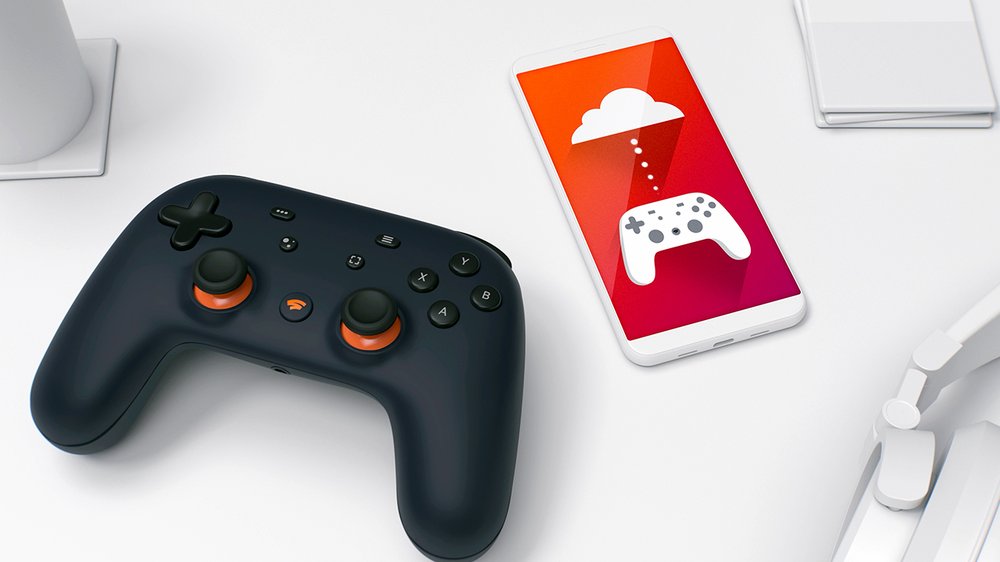
I was a Google Stadia Founder. I jumped off at one point due to some bad customer service associated with the other Google services I use; I retuned later. But by and large I was always a fan of the service. It became my travel gaming solution. It kept me from having to lug a gaming laptop and its associated brick of a power supply. Especially on trips where I already had to bring a work laptop. For family trips, I always carry a tablet. Stadia prevented me from having to also pack my Nintendo Switch, and, there at the end, my Steam Deck in their rigid travel cases and with their associated accessories. It worked for me at home. It worked in a hotel. Tablets becoming compatible with XBox and PlayStation controllers were boons equivalent to the joy I’d felt using the nVIDIA SHIELD and its controller solutions once I was able to pair them with my Stadia experience. But, of course, it has all come to an end.
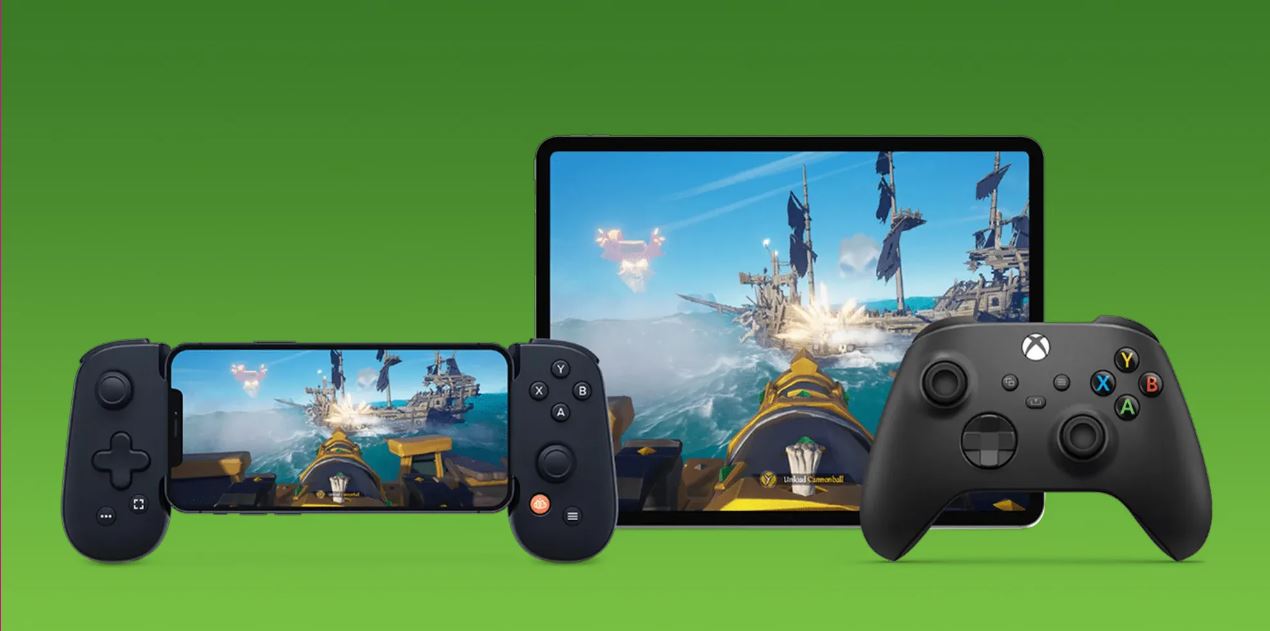
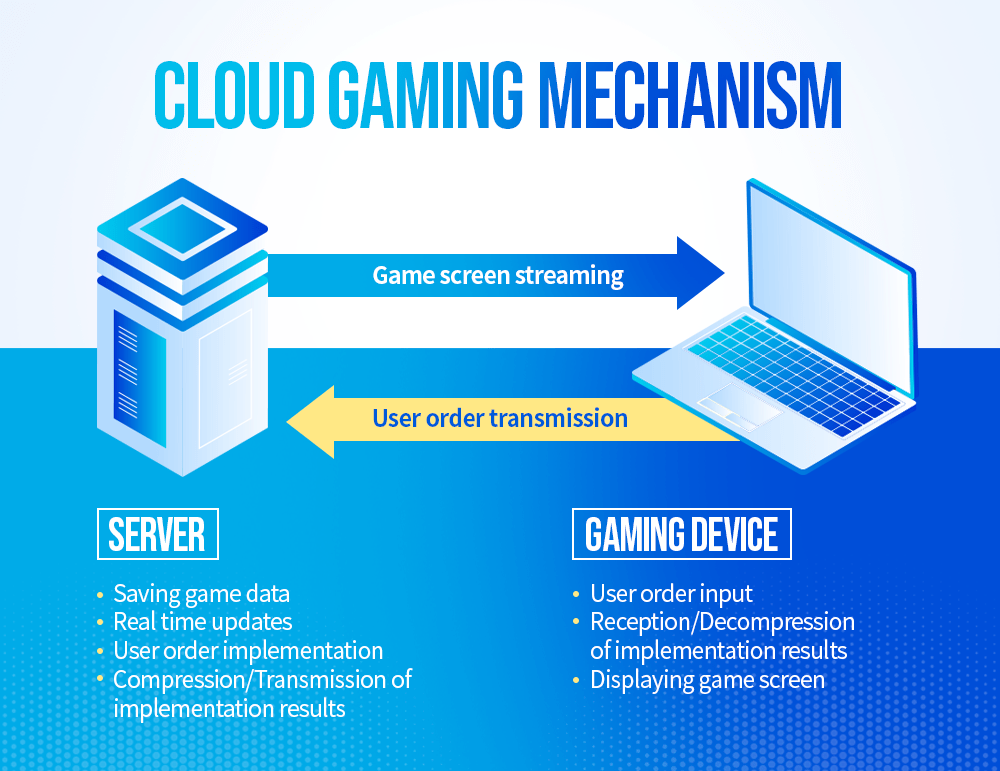
I set up this discussion about Xbox Cloud Gaming and Game Pass to thoroughly telegraph that Cloud Game Streaming for me is about moments of convenience. As part of my livestreaming, hardware reviewing, podcasting, and blogging, I run 5 gaming PCs and 4 consoles. I don’t need to light off a fire-breathing dragon every single night. And I certainly don’t need to carry one on travel when it is not absolutely necessary. The convenience of Stadia for me was the ability to pick up a mobile device or sit at a business or ultraportable laptop, my LINUX laptop, or some other low-end device, bring up Stadia, not worry about patches, System Updates, drivers, controller firmware updates, being assaulted with ads or whatever cockamamie thing Microsoft or Sony wanted me to pay attention to that day…and just game. It’s not about graphical fidelity or a high-end hardware experience. I have that in spades; enough to keep 9 gamers occupied. So I can make other choices.
And there we have the departure from the silliness that normally surrounds this discussion. The people who try to make the discussion about Cloud Game Streaming as a replacement for hardware experiences. It’s about convenience for me. And not having to be bothered when I don’t want to be.
It just works.
But…there is some interest I have in it for ROI. I also use a lot of high-end mobile gear. Hold-over behavior from when I was a mobile device reviewer. And I have more XBox controllers than I can shake a stick at. My yen for getting back to gaming on mobile was piqued throughout 2022 as my co-hosts on the Enough 2 Keep Going Weekly games podcast constantly talked about Marvel Snap and Retro Bowl. More over, hearing so many of my adult friends re-surface the discussion of the difficulty in finding time to game between house, kids, career, cars, and pets, I also thought last year about how mobile gaming became my primary gaming outlet during my second grad school degree. Offerings have gotten more complex these days, but I still wanted to get back to some small screen gaming in 2023, and some quiet nights without exhaust fans spinning in the game room with the boompse.
With no more Stadia in the picture, and GeForce Now not really providing me anything outside of my Steam Library experience (and being more expensive than desired), I resolved to sign back up for Game Pass Ultimate to also take advantage of XCG. I’ve hopped off the service twice in 2022.
Once due to lack of interest and the big cancellations. The second time because in reviewing my consumption models in the fall, I was just buying those games anyway. While I have a new PC build underway…the most powerful beast I’ve put together…and a major studio re-arrangement in progress, things are almost getting back to normal. Now was a good time to get back to Game Pass and try out some XCG as it will let me build incrementally in the background, take a break while playing, and not get too deep into a 3 or 4 hour gaming session on a more powerful piece of metal. So hopefully I’ll get the build done without doing nothing but that for a day or two, and get some lightweight gaming done on the side. This is my second year with the Samsung Galaxy Z Fold3 and it’s embarrassing to say that I have not used it much for gaming and absolutely should have. Ditto for my iPhone 13 Pro Max and Google Pixel 6 Pro. I’m looking forward to taking them for a spin with XCG, as well as my iPad Pro, which is due for an upgrade this fall. I also brought in a BACKBONE One for a slightly different controller experience. Good times.
And here lies yet another departure. The discussion of Game Pass swirls around this obtuse way of thinking about consumption as if someone signing up for Game Pass is making a lifetime commitment. As if people cannot dance in and dance out just like we do with video streaming services. Turn a thing on to consume what you want and then turn it off. I saw one narrow-minded analogy the other day, which was a bit idiotic, comparing Game Pass subscriptions to PlayStation console sales. Anyone actually educated in market analysis knows that these two products do not compete with each other. People are not down-selecting between a console and a subscription service. Hardware does not compete directly with service access. And hardware is a long-term, seven year (at least) commitment to an ecosystem. A subscription service is a flexible means of consumption that can be turned on and off like a water fountain. Only the unsophisticated get those twisted.
Gamers are a pretentious lot. In their discussion of anything new and innovative, they oppose anything that walks, talks, looks, and smells different than the exact way in which they game. It seems like XBox fans have grown slightly more amenable to Microsoft taking gaming in new vectors. I think that they get that that has become essential for the survival of the brand. PlayStation loyalists still seem fairly entrenched, though. When PlayStation games started coming to PC more regularly, they decried no longer feeling that were being treated “special”. Even when those games came to PC four years after initial release. When Hulst recently indicated that they would come to PC more regularly and suggested even less lag, the wailing and gnashing of teeth grew louder. And now that Sony is patenting methods for streaming its games on appliance-level IOT devices, I expect the outcries on Twitter Spaces to commence anew. As soon as everyone sobers up from New Years.
The PlayStation community has been the most vocal in its pushback on the notion of Cloud Game Streaming; no surprise, since XBox has been one of the primary proponents of this technological advance. Much in the way XBox fans were against $70 video games because Sony went down that path before Microsoft. Until, of course, Microsoft did the same, and then that camp’s pushback went remarkably silent. When it comes to Cloud Game Streaming, PlayStation fans tend to not believe it’s “a thing”. They tend to voice that “console gamers don’t want that experience”. All the while miraculously being oblivious to their own statement undoing the very rationale of their logic. It’s not about what experiences console gamers want. It’s about the experiences that customers in a different demographic of the addressable market want. Put more simply, it’s not for you.
It’s weird to me that Sony fans take this approach even though Sony bought Gaikai back in 2012. Five years before Game Pass was announced. Eight years before we got the inklings of what XBox Cloud Gaming would be.
Seven years before Google announced Stadia. For those who have been around the platforms and been paying attention to the industry and console evolutions, the expectation was always that Cloud Game Streaming would obtain some foothold, even as we watched OnLive go through its apogee and its sale to Sony. While we saw the service sunset, the outlook was that Sony would use the technology to merge as a cornerstone of its own platform foundation and put it to good use.
Whether or not Sony has done that is debatable. While I had interest in 2012 in its Cloud maneuvers, the launch of the PlayStation Network in 2006 and the compromise of said network in 2011 were persistent reminders that Sony was not a software, networks, or services company. It is an electronics and entertainment company, and that still holds true to this day. But it has been relatively quiet on the Eastern Front since Ryan said in 2019, five months after the announcement of Stadia, that
“We believe the streaming era is upon us and is about to begin a period of rapid growth.”
Good that it was “upon Sony” in 2019…four years after it had launched PlayStation Now, (now rolled into PlayStation Plus). That uses the legacy Gaikai technology to deliver its content to Windows PCs as a streaming service component of the larger service fabric.
And that is the only place that its Cloud service is being delivered to. Not Linux PCs. Not Macs. Not iOS devices. Not Android. For Pete’s sake. The entire point of the Cloud is to be platform and hardware agnostic. And yet, here we see Sony still mired in a platform-centric modality of thinking; proof that in many ways, Sony is hampered by an inability to get out of its own way.
As well as that of its most vocal fanbase. But this ship may be slowly but surely changing course. The Activision merger is well-known to have caused Sony to avert its eyes from the stodgy but consistent strategies that got it to market dominance. And that’s a good thing. Fans never make good NFL head coaches. And in similar vein, PlayStation needs to grab its balls and forge forward into areas that it has previously avoided or only made tepid toe-dips into. While console gamers may be its core, the growth in that demographic is constrained. Because the number of people who are willing to play games, but are not interested in buying a $400 or $500 technology appliance is much larger than even its current install-base. As the mobile industry has been proving since 2007.
Cloud game streaming is here to stay. The vast majority of developers are engineering and tooling their production pipelines with Cloud game streaming as a primary future target. It’s part of the reason why nVidia deployed its GDN (Graphics Delivery Network); don’t let all of the AI/ML marketing-speak lead you to believe that that is its sole purpose. And don’t follow console “pundits” who insist that Cloud game streaming is “not a thing”. For over a decade now, its fruition has been unquestionable; a matter of “when” rather than “if”. Hopefully Sony’s patent indicates an intention to get there before that ship sails. Before it finds itself looking like Research in Motion (RIM), stodgily refusing to change before it is too late.



















 Rounding Off Infinity