Searching for Frankenstein’s Monster on Gamer Twitter. Or Avoiding It.

This is typically the time of the year when we make wide-sweeping, hand-wavey gestures towards notions of being better. Better family members. Husbands. Wves. Fathers. Mothers. Working out more. Living life healthier. For those of us who are into the content creation gig, we often resolve to do something better in that space. Sometimes it is just to do it more. Or more consistently. For me, for the last two years, I have been on a spiritual journey to find myself as a gamer. I’ve been round the moons of Nibia and back. I’ve settled on a place that I am happy with. And now that that is done, I’ve given my mind over to what to do about this problem with the conversation on gaming on the web and how it gets in my windshield.

I did more soul-searching throughout this year in particular and determined that I needed to get back to writing. That creating video and audio content was not the sole vector that Professor Glynn wanted me to pursue. In doing so, I also had to wrestle with whether I was going to let social media be an impetus to the topics I would take on. I decided that it would not. Moreover, I’ve also determined that I will not let social media drive my audio content either. I’ve grown so weary about talking about everyone else’s outcries over the gaming industry’s business practices and everyone’s boasting about the quality and output of their chosen brand. In fact, being a content creator in the gaming space has been an entirely exhausting and wearying experience this year.

I know that I’m not great to have as a collaborator. A recurring theme this year for me is how the hobos of the internet frequently made me leap off of the bench in crusade of egalitarianism and even-handedness in the formulated opinions of the gaming pulpit. And in doing so, I would also wind up lashing out inadvertently and unintentionally at friends of mine; the “good guys”. I did all that I could to walk that back as the year went on and I fear I still do not do as good job of ensuring that no one has cause to respond to my tweets with “I feel attacked.”

My conclusion: Gamer Twitter reactions are not news. And we need to stop treating them as such, which continues to give them power. A quick aside: in very similar vein, I identified a couple of years ago that Twitch is soooooooo much less of an influence on the gaming industry than streamers claim it is. This coinclusion can be gleaned by scanning the spectrum of sales figures, Metacritic scores, and what titles are trending on Twitch. Those indexes are often moving in wildly different directions, and it is almost always without fail the Twitch metrics (Twitch Strike and the like), moving off-topic from sales and Metacrtitic, which are typically always in unison. Streamers tend to play mediocre and often bad games. And yet the “real” gamers tend to figure out what to spend their vey real money on.

Much the same way, Gamer Twitter seems to have  convinced itself that its opinions matter. That in some manner it’s voice influences companies to make significant business decisions. I am sure that the occasion for a company to walk a thing back in response to Twitter outcries is taken as evidence of this. I think this is a lofty aspiration. Far closer to the truth is that companies use Twitter as a sounding board if and when they deem it pertinent. Decisions that they are not beholden to are thrown like wet paper towels against the wall of Twitter and if there is kickback, they take those intentions down. But don’t fool yourself. Those are only for the decisions that they were not entirely convinced of in the first place. Things that they could either do with or without. Microsoft wasn’t going out of business because Twitter didn’t accept its thoughts to increase the subscription cost for Xbox Live. And Jim Ryan didn’t ask Twitter’s permission before he decided that y’all were gonna pay an extra $10 for the privilege of playing a new triple-AAA first-party title. Sony believes in generations and they stuck to that, despite what Twitter had to say about it.

The problem with Gaming Twitter reactions is that they represent but a fraction of the real temperature of the gaming market. Whatever heat is perceived as being in the discourse on Twitter is but a self-fulfilling prophecy. We are too small a percentage of the buying power of the consumer space to be valid analytic.

So what is Gamer Twitter? What label do I put on it in order to put it in a box that ascribes to it an appropriate taxonomy that classifies it in a manner that I appropriately weight it in the consideration of its relevance to what I do as my night job? I think Twitter is reflective of what, in the past, has been the social structures that have given way to the proliferation of public opinion in its written, and, now with Spaces, audio form. Let me not declare its value an absolute zero. While Twitter tends to the end of the value-spectrum of communications that is akin to hieroglyphics and paintings on the wall of caves, it IS a form of written communication. In that cloak, it offers more value to me than I would typically account for in a verbal medium. Barely. At the high-end, Gamer Twitter is akin to the parlor which encapsulated Socratic discourses between Shelley, Shelley, Byron, and Polidori. But for the vast majority of Gamer Twitter, it’s a mosh pit at the sweatiest pub in Croydon.

It flows along a spectrum of low-end to higher-end content, and this is the crucial problem with Gamer Twitter; the level of effort to find the gems, the truly intellectual nuggets amongst the floatsam is excruciatingly steep. It is incredibly questionable as to whether or not the ROI is there.

More often than not, I have arrived at the conclusion that it is not. I have my podcast crew, and often I am left to think that I should just be flat in consideration that maybe those four are all that there are in kindred spirits in the world. But I have empirical evidence to the opposite. I have been blessed to come across the path of some truly ingenious commentators on the gaming industry, the state of the art, and its designs. The guys at The Backlog Pod, who include my former podcast co-host, K-Med. The crew of The Game Junky Show, with whom I have had some of the most existential conversations about the gaming medium. The show and its dialogue are literally experiences that are spiritual in their nature, allowing me to achieve a height of thought and verbal excahnge that is quite frankly unequaled, even on my own show, as our cast is static and CSmithStine raises the dynamic flow by having a constantly rotating cast. And of course the man whose intellectual shadow I am forever cast in, Gurnico.

So there have been some choice gets. Bonds that have been forged that, in truth, make the constant slog through the picketers and rioters of Gaming Twitter, those seeking to burn witches at the stake, whether there is just cause or not (and 99% of the time there is not), on rare occasion, worthwhile. 2021 has been exhausting. It has literally been exhausting to love games and attempt to have a conversation about them on Twitter. And that’s not the way it should be. There are those that love football; that study film, Hall of Fame players, the famous games and situations, who talk about the nuances and shades of microseconds between victory and defeat when two great tactical genius head coaches deploy their troops to face each other on the field. And then there are those who shout at each other while sloshing their beers; these are the conversations where, no matter how horrible a team is, their fans are incapable of doing truthful analysis on their team’s pros and cons,  but will always defend them with the worst deliriums absent of any rationale. These are the two levels of conversation on gamer twitter. And I am looking forward to putting my coat on, walking out, and leaving the noisy din of the latter behind.

The Murder of the Gaming Dialogue

It has been a year of anniversaries. Xbox. PlayStation. GameCube. In two months it will have been 20 years since I launched my first website and penned my first blog post. In that time, the dialogue on gaming has experienced an arc that I imagine will be not too far from the rise and fall of some of the great civilizations. It has been birthed, seen rabid uptake, fallen into chaos, anarchy, and warring, experienced moments of peace, and then been lit ablaze once again. Throughout that time, the dialogue on gaming has held value. But I believe that I have seen the apogee of that value, and am now seeing its final decline into putrefying decay.

A lot of this has been brought to the fore as one of my most prized intellects has left the field of social media this past week. In truth, this is not a singular cataclysmic event, but yet another perturbation in a gathering trend. One of the other mediums that I observe and have written extensively about is comic books, and those creators have been backing away from social media , as well. Long thought of as a way to make themselves more accessible to fans, many comic creators have realized that their relationship with anonymous personas hiding behind the veil of digital chasms and obfuscation, is just not healthy for them. And thereby impacts their livelihood by not allowing them to do their best work.

Work. The job. When I started blogging, my desire, as someone with backgrounds in finance and software development, and a lifelong love of games and the gaming industry, was to convey particular insights into gaming through those lenses, in an effort to better inform consumers without the motivations and incentives that drive larger sites to post the things they do in the manners in which they do. Monetization is a dynamic that I often demonize. But in truth, the errant vector is less about something so modern, but has its definitive roots in the factor that has always been the plague of journalists, writers, and any of those who attempt to convey thought, knowledge, and opinion in the written word or other mediums. Validation. The desire to have one’s promulgations corroborated by others by opinion, anecdote, or praise. It is the factor that has historically driven dictators and fascists to power, enabled psychopaths and sociopaths to capture our national attention, and given rise to the world’s infatuation with reality TV.

The great writers and creators know and have written and spoken on the Achilles’ Heel that is the want for commercial success. It is not solely evil, but it can, via obsessiveness, become the singular compulsion that drives all. And it is the sole currency that social media trades upon. We can trace its roots back through forums on popular technical sites like ArsTechnica and GameSpot, the flame-wars that eventually consumed Digg and begat Reddit, and have now taken up firm residence on Twitter.

And so, I have been given over of late to introspect on why I write. If the notion of a dialogue on games in the digital space has been smothered, and is increasingly of less and less value, and intellects of the highest mark are incentivized to depart the pattern, then writing is all that is left. I will add to that podcasting and video content as well, which, for me, has always followed that non-monetization model. One of my mis-steps has been in convincing myself of value in the use of Twitter under the concept of one of its past labels, as a micro-blog. I use it mostly as a means to jot down epiphanies and emergent thoughts that broach a cloudy veil during the day and in-between times of other practical mental gymnastics. But that path of connectivity has also led way to the infinite scroll. And the metric I key in on is how often and how far I scroll desperately searching for any meaningful conversation about games.

What serves as a dialogue today is largely represented by a breakdown into console Wars, game or franchise X is better than game or franchise B, and trying to tell people how they should spend their money. Those are the ones that are inherently malicious. The ones that come from a place of trying to do good but do not help me much are the dialogues that are constant applications of the label of GoTY, raising up developers and companies by sometimes standing on theories that are great reaches, and defaming any effort by any company because they are only “out to get your money”. It is difficult to gather and convey effective, critical thoughts on a medium without spending a lot of time in quietude, alone with your thoughts, and chewing through theories at great length. The speed to post and the thirst for first that were ushered in by the rise of Gizmodo and Engadget has just snowballed into faster and faster promulgation of information and opinion that is not deeply marinated in taste and cultivated steeping in the richest leaves of existentialism. Too many takes pointed as missiles on an audience without the payload of the writer really making an effort to find themselves.

And so the dialogue on gaming is largely dead. Not entirely. There are some rare pockets of the type of parlor talk that yielded some of our greatest works of literature and journalism. They are few and far between. And yet even I will have difficulty backing away from a feast of interaction that we have become institutionalized to feel is of value. The problem is not the platforms. The problem is in how we have fallen victim to some of the most primitive motivations that have plagued humanity throughout time, and weaponized those in a short-note coliseum in the fictionalized belief that our banter is increasing the dialogue on games, when in truth we have murdered it in its infancy.

Does the Pedigree of a New or Unknown Dev Make a Difference?

Years ago, I ascribed to the conventional wisdom that most gamers don’t know their developers. Meaning that they could not name the developer of some of the games they played, maybe even their favorite games, by name, location, frequent publisher the studio worked with, and whether it was a first or second-party studio or published to multi-platform. Or whether the studio just had a platform that it was mostly focused on as a creative foundation. Then whether or not those gamers knew anything about the studio’s history and what events or schisms it came out of would get even murkier. This was back in the Console Generation 7 era. Admittedly, some of the increased brand awareness since gen 8 and the return of the (idiotic) console brand wars have led to some improvements in this area, albeit for the wrong reasons. But I now am not sure if we live in an era where people only know about Naughty Dog, Sucker Punch, and Insomniac…maybe Bethesda, although that is typically distilled to a lack of awareness of the differences between Bethesda, Bethesda Softworks, ZeniMax, and the studio differences between Arkane, iD, Machine Games, and others. This mainly because the only reason that gamers obtain and utilize this knowledge is to weaponize it in the constant bickering about brands.

I’ve written recently about the miasma of thoughts and feelings we develop about games and how we express them when a game is still in production and development pipeline. As gamers have become more and more aware of the individual identities of developers, it gets further convoluted in the makeup of the feelings you develop about a game prior to release when the developer is new but has a lot of back-history in the makeup of its employees.

Almost every new studio is stood up from a makeup of recently expatriated devs from some other studio, often a big name one. Developers will often reconnect with other creators they knew from a previous project three or four titles back. Sometimes there are firepit conversations about a game idea that take years for devs to get back together on, and the decision to leave the comfort of big financial backing and go the indie route or stand-up your own financial overhead by incorporating your own gig lengthens that road as well. On the consumer end, it is tough for me to decide what games I am going to pay attention to pre-release, and this historical makeup of a studio is often a key element of that.

In recent months, we’ve had a number of new studios crop up out of just these dynamics. Perhaps more than at any other time in history. Partly because the pandemic has caused a large shift in work and collaboration patterns as everyone re-sets to work almost entirely remote in some cases. Also because the shortened TTL of Stadia as a going concern in the development space versus being a specialized Cloud infrastructure play, has led to a sizeable dissolution of aggregated talent back to the industry gene pool. The closure of Visceral, Telltale, Boss Key, Gas Powered Games, Capcom Vancouver, Harmonix just before the pandemic was also a big sieve. And then prior to that a redistribution also occurred with the breakup of THQ, although most of that event left studios intact but just coupling with different publishers. And a bit further back there was the big parting of ways between Vince Zampella and Jason West from Infinity Ward, which of course gave way to ReSpawn Entertainment.

These realignments and redistribution of talent back to the industry often create interesting results. Respawn has given us the Titanfall universe, yielding three major titals, two of which have been significant commercial successes. Star Was Jedi: Fallen Order could arguably be credited with single-handedly bringing back the single-player narrative-driven AAA game outside of anything other than a PlayStation platform, and most definitely should be given that acclaim for influencing EA to give such properties a place within their portfolio.

There is no questioning the historical significance of the emergence of the Assassin’s Creed franchise on the gaming landscape. And the devs who were behind the inception of said IP, helmed by newly branded CEO Jade Raymond, have come together to form Haven Entertainment Studios. Their pedigree and contribution to the gaming space is certainly a reason to sit up and take notice to the title they are working on for eventual play on the PlayStation platform. A select number of us recently got together to talk about the wonder that is Arkane Studios and in doing so went back over their DNA; how they emerged out of the divergence in the timeline when EA chose to double-down on consoles versus PC, multiplayer versus single-player, and other characteristics that have come to define its portfolio. So often these small tremors in the gaming timeline become echoes that reverberate with much greater significance than the events that foretold them. Often, seeing these dynamics cascade across the veil of over four decades of gaming history make me feel like Uatu, observing from the Nexus of all gaming timelines. And as the years go on, it becomes more and more difficult to try and assess just which of these ripples it is valuable to pay attention to.

I would love to pay attention to them all. The harsh reality is that the bigger and more significant a given studio and its IP and long-running franchises become, the more likely it is that lead developers and major figures develop creative differences or just a yen for greenfields and leave, to the point that the space packed with studios that are started out of “one of the creative leads of ‘franchise X’ ” just starts to become noise. There seem to be an innumerable set of studios born out of former leads of Bungie and Destiny, 343 and Halo, Bioware and Dragon Age. And now with the recurring reports of toxic environments existing at Activision/Blizzard and Ubisoft, we are seeing more news coverage of the demographic of studios borne out of that splicing. Speaking of splicing, the number of studios that hone back in some way to paths crossed with Irrational Games in some genetic manner is almost too many to count. It is often just too much.

But I think that the sheer magnitude of trying to account for all of these tentacles in the timeline and the variants they spawn as a means to determine what games we should pay attention to should not be cause to be less attenuated to this signal. No, we cannot keep up with them all. But I think it is still important to pay attention to, and to learn from. In many ways, I think of Torchlight as the branch that fixed a lot of the things that I had problems with in Diablo II. Such emergences will continue to occur and I think that our understanding of the history, creative, and social events that begat them lend to the overall consumption experience in playing these games. It is kind of like the marinade that creates the deep flavors running beneath the surface of any given title’s graphics, mechanics, and artistic style. So I think these pedigrees do make a difference, even when the landscape seems exhaustively dotted with studios from a few common points of departure. I’d propose that when it seems like those genetic fibers all seem too common, then you should dive deep, and read more current and past writings covering those teams and personalities and see if you can unearth the key differences that may pervade. I can almost guarantee that the depth of understanding and digestion of the next title you play from them will be much more greatly enriched that you would have though possible.

The Inevitable Truth is You Don’t Know Whether a Game is Good Until it is released

Gamers have a long existing love affair with trying to establish a game’s theoretical Metacritic or (choose another scale) review score before it is released. I get it. There is some joy in playing review score poker over the 12 – 18 months between a game’s announcement and/or E3 showing and its eventual launch. But this roiling turbulence in the cyclical conversation of gamers that is inherently anchored to the annual release cycle of games, gathers storm-like energy from our own inherent addictions. The appeal of gambling. The narcissistic leaning towards having to be right. And the extreme avarice for followership, attention, and credibility. None of these things are inherently “evil” or “wrong”. They are just common variables that characterize our discourse on games. And sometimes edge over a threshold where they influence our purchasing decisions and take on a life of their own reflected in our messaging.

Now, the latter half of that last statement, the stuff that happens after purchase…that’s a thing in consumerism (the need to feel justified in one’s purchase by championing a thing that they have spent money on), but maybe less of a flaw in our communications schema than others. We are used to this dynamic, and maybe it is less harmful to the development cycle and what can happen to a game in the lead-up to its release as a result of the developer / publisher interacting with the public. The stuff that comes before launch is the factor that can tank or torpedo a game before it ever leaves the tube.

All of these reflections are driven by how today has unfolded. The video presentation of the Halo Infinite campaign as well as the Guerilla Games Developer Blog Part 2 post over on the PlayStation blog which showed off healthy amounts of Aloy’s environmental traversal modalities, sucked all of the air out of the room in today’s news cycle.

It was good stuff on both parts. But this element of gaming journalism and industry study I have become less and less enamored with over the years. The reality is that for a very long time, I’ve ceased caring about a game that hasn’t been released yet. There are a few steps along the way that pique my interest. The announcement. Tech information (engine mostly and anything else pertinent). Any pricing and/or business model and content announcement. And the release date and any delays. These constitute about four or five singular blurbs of text that come out of the marketing cycle in the lead-up to launch. But the endless speculation about whether a game is going to be good or not?

I’m a firm believer that you don’t know whether a game is good or not until after it’s released. For a game-as-a-service, you don’t really know until the game has been out in the wild for a month or two and received its first two content drops. As someone who also reviews tech products, people endlessly speculate each year on what we’ll see on that year’s iPhone, Galaxy S, Pixel, Surface…you name it. And I know from 20+ years of reviewing hardware, the only way I can tell if a device is good is to live with it for a few months. Which I can’t do until I have final released hardware in my hand. The same is true of games.

A recent biennial survey conducted by IGN and Nielsen found that for ~70% of gamers, genre was the prime motivator for gaming purchases. 38% of those surveyed said franchise. It also identified categories of gamers that don’t pay attention to gaming news, only care about price in deciding on gaming products (free being the best), and an attachment to older game models and franchises.

All of this is to say that my own evaluation of the survey results is that we are motivated by so many factors, especially in pre-release, other than by whether the game is good or not. In pre-release, it’s an absolute truth, because we can’t know.

Look. I like playing poker as much as the next fella. But I can’t make a final call on a game until it drops. In my daily life, I have to decide when my team’s code is ready for release. I leave it to the developers and publishers, creative directors and producers to make the same call. I’ll judge whether I am satisfied with it after the fact. If a game drops and it’s not good, I’ll play something else. I try to keep my own customers away from vendor lock-in, and I make my own product and service choices the same way. In my recent post on never getting attached to a game, those salient points are echoed here in their relevance. I’m a lifelong gamer. I often struggle to manage my time in what I want to get around to playing. If a game hits different in its release form, it’ll make it’s way onto my playlist. If not, there’s so many other things to play, I’m likely not remember much until we discuss the year-end wrap ups on the Enough 2 Keep Going podcast.

Bad Gamer Gone Average: What Happens when a Single-playa Soulja gits gud?

This is a bit of an expansion on my post about getting attached to games, and a side-note about gaming modalities. Enough table stakes. The past year has been a story of colliding worlds. A historically single-player focused gamer, I have had my brief flurries of infatuation with multi-player, both co-op and PvP. But over the last year, the thirst got ahold of me something big. A brief history.

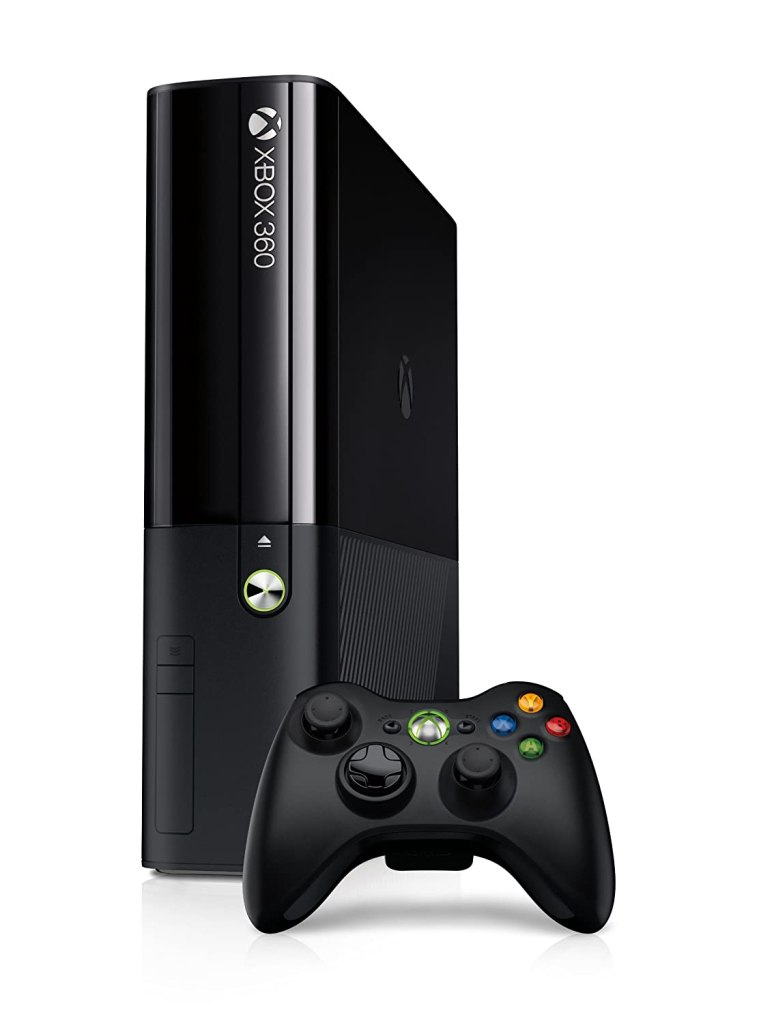
XBox 360 Elite – my last version of the 360 that I owned

I’ve been gaming since the industry existed. My console lineage goes back to the first pong sets that were sold at retail. I started with a Magnavox Odyssey, then moved on to a Magnavox Odyssey 2, Sega Master System, Sega Genesis, Atari Jaguar, back to a Genesis, Sega Saturn, Sony PlayStation, Sega Dreamcast, Sony PlayStation 2, Microsoft XBox, Sony PlayStation Portable, Microsoft XBox 360, Sony PlayStation 3, Nintendo Wii, Nintendo DSi, Nintendo 3DS, Xbox One, PS4, Nintendo Switch, XB1X, PS4 Pro, XBox Series S, and PS5. Along the way of my console lineage, I got into PC gaming in the early 90s, but I did not know the industry, and I only played a small genre-focused set of military simulations and a handful of adventure games (Space Quest, Kings Quest, and Leisure Suit Larry).

I dropped PC gaming and re-acquired consoles in the mid-90s. In the early 2000’s, I returned to PC gaming with a force, and started building my own gaming PCs.

During all of this time, I was one of those who was a naysayer about the bolting on of multiplayer to games that were single-player narratives as their primary focus. The Last of Us, Uncharted…I booed Electronic Arts and Activision when they said they would not publish anymore games that did not include multiplayer. As a major fan of the XBox Live Service, and a brief time in PC gaming when I had enough friends to do frequent LAN parties, I did like multiplayer. But it was just a side-dish. Sure, I played Call of Duty with my friends on XBox. But around the time of Modern Warfare 2, online gaming became far too toxic, and about this time the control of a single player always being in charge of any given lobby also went away. I’d had tons of fun for years playing Project Gotham Racing and Forza because you could always kick an idiot out of your lobby if they didn’t jive with the ethos of the rest of the room. This is when you could still make friends with randos (in fact, the term “randos” didn’t even exist, because everyone was a rando and comms were not almost entirely done in party chat). I clapped out, and went back solely to my single player roots. Concatenated with my disgust of the loss of player-controlled lobbies and toxic players, my skills were also eroding with age, both because of…well…age…and because as I became a homeowner and job priorities took over, I didn’t care as much.

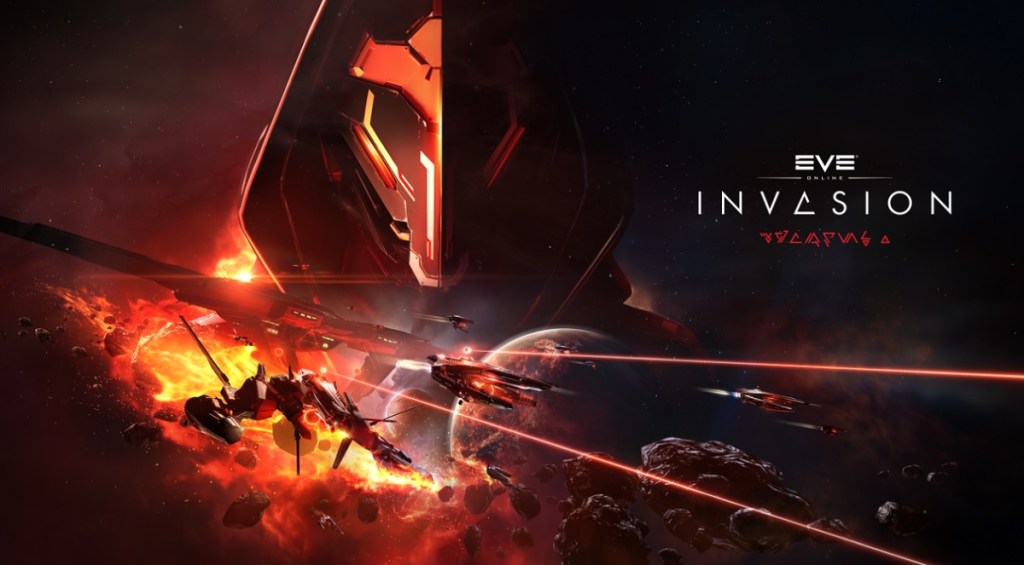
Destiny and Destiny 2 started to pull me back in. I had good friends who could occasionally make their schedules align to do an occasional strike. But as I got into those MMOs I wrote about last time, I still, much so in the complete opposite vein of those player communities, played them like single-player games. EVE OnLine? I stayed off on my own and did my own thing.

EVE OnLine

Star Citizen? A brief foray into joining a corporation, discovery that our priorities were misaligned (it’s a game and I have real-world stuff to do, too), and I was back to flying solo. But the nostalgic appeal of Call of Duty: Black OPS – Cold War got a hook in me last year. I am an 80’s era, Cold War kid. And my time running alongside the streaming community, where there is almost a sole focus on multiplayer games to the ignorance of anything else, left me very susceptible to a multiplayer addiction I had long avoided.

Key to this gravimetric pull that I eventually would fall to was the fact that, somehow, due to game design, my own give-a-crap factor, or my acquisition of higher-end hardware and a FIOS connection, I became competitive again. Not tournament winning good, but at least no longer I spawn-I’m dead-I spawn-I’m dead-match ends-I’m in the bottom two level bad. Average. And that is fine for me. To cop a frequent quote, it’s Enough 2 Keep Going. And on Call of Duty: Mobile, which I play with controller, there’s something even stranger going on. I’m MVP with the most kills and the highest score 90% of the time, even in Ranked Matches, which I admittedly don’t play enough of to have a long trend of stats. I play with a controller, but so does everyone else in my matches because it’s a binary trigger-condition in SBMM for CoD: Mobile. I think here it is because I play on tablet while almost everyone else plays on a phone, and I have a tactical advantage in my ability to see and discern tangoes on the field.

Where the rub comes is that, while I am not a teetotaler when it comes to season passes and microtransctions, I find it very difficult to balance the time between PvP and single-player games. It is very hard to play a Season-based game and take breaks to go off and spend some time in a story-driven game, or even a sports game that has Franchise mode and multiple seasons, or a game requiring high-skill and cognitive focus like a flight sim or racing sim, and get back to the Seasonal PvP. You can, maybe, if there is one PvP game that is your focus. And a small set of games that you like to bounce back to. But it’s not only the friction in keeping up with the Season. There is also a pace dissonance in many case. CoD is a balls-to-the-wall, hopped up on adrenaline, Keanu Reeves in Point Break or Speed kind of experience. For those two or three hours that I’m in it, it’s high pulse, quick breathing, high-paced action that I feel like I need a drink and bath after. It’s tough to make that your main, and then go back to something like Civ or Death Stranding.

Death Stranding

I’ve since pivoted back to the style of gaming that has more so typified my career. And I miss the PvP. I dipped into CoD Mobile last night and immediately felt that surge of making progress and unlocking tons of items, but, most importantly, winning. And not just winning, but being anointed. Winning almost every time. The buffering factor is that in the recent weeks, my turn back to single-player games has yielded some absolutely incredible experiences that I think have moved me to a point where I cannot let go of those opportunities, now. The aforementioned Death Stranding, but also Psychonauts 2, finally giving The Elder Scrolls V: Skyrim a go, Diablo II: Resurrection, and Mini Motorways, to name a few. Tonight I flip back hopefully to finish my run in Halo 2. The stickiness of the PvP games is something I am looking to skew away from now, in order to retain my latitude to dip in and dip out of a game without feeling obligated to commit to it without interruption. But, man, I still feel the burn when I step into those PvP lobbies. Perhaps there will be a time when I return to PvP full-force. But for now that addiction is in regression. Thankfully so. Because I cannot find a way to time-manage it and do PvP half-force.

Do I Really Want to Upgrade? And if so…how?

It is the best of times. It is the worst of times. I am probably at my most disposed as I have ever been in life to basically do whatever the hell it is I want to do. I am also disposed to consider that there are not that many decades of life left, in all likelihood, and so many of the turns I take now, I may be doing so for the last time. So minded, I am in the process of one of my last, big, hardware-reviewer-lifestyle, recapitalizations. I recently picked up the iPhone 13. My Samsung Galaxy Z Fold3 5G arrives tomorrow (fingers crossed). The iPhone 13 was at no cost due to Verizon’s current trade-in deal on my iPhone XR; the Fold got a significant amount knocked off due to trading in my Galaxy Note20 Ultra 5G. What will be up to bat soon is my gaming PCs. A time which should be filled with wondrous joy. And yet I have agonized over this step most of all. 

I’ve seen recent puff-pieces from some bloggers; about PC hardware and upgrades. Posts about how even an RTX 3080 laptop couldn’t make them fall in love with PC gaming. A click-baity headline meant to make die-hard gear-heads incited and froth at the mouth. That individual’s dislike of PC gaming had nothing whatsoever to do with hardware or graphics and even a rack full of 2U chassis with dedicated GPUs wouldn’t have made a difference. Another about how a poster just now figured out that the most sensible way to procure a current-gen GPU in this age of chip scarcity was to buy a pre-built PC. Eye roll. I figured that out last holiday season. I’ve been triaging and running various Monte Carlo simulations about the upcoming PC upgrades for months.

And yet each output of a simulation run has not left me filled with joy. I’ve considered everything from pre-built, to barebones and salvage, to just paying the extra cheddar for a 3000-series RTX. Nothing has left me with a smile on my face. It’s not because I love building my own box so much that I am disappointed by the thought of a pre-built or partially assembled barebones.

I’ve built over a hundred systems in 20+ years of building PCs, so there’s little else for me to explore. No; it’s something else I cannot quite put my finger on. And I’ve been trying to nail that down, because there was a time that juggling a ton of variables and coming up with an optimal upgrade package would put a smile on my face before I even went to order parts.

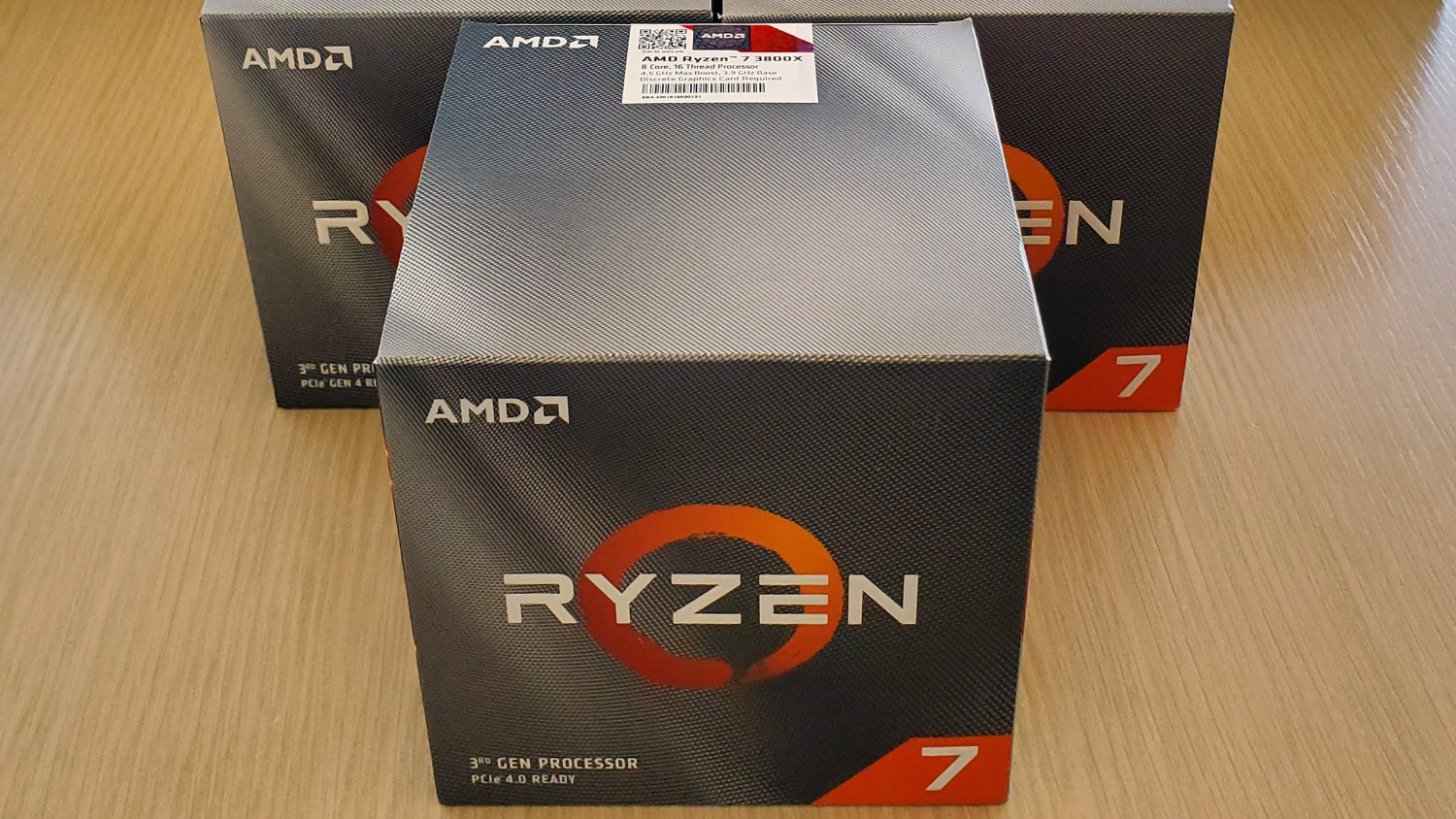
I don’t truly need to upgrade CPUs, in all honesty. I have typically skipped a generation, and I’m on Zen2 Ryzen CPUs right now. I could wait until whatever comes after Zen3. I skipped the 2000-series Ryzen procs; even though the latest procs are Zen3, I’d still be ok waiting. When I was on 800-series nVidia GPUs, I skipped the 900s and next upgraded in the 10XX-series GTX GPUs. I have RTX 2070s and AMD RX 5700XT’s now. I know the 3000’s are much improved in the ray-tracing department. But still….I could wait.

Part of the problem is that my lowest end PC is also the least powerful CPU-powered and should be the first one I upgrade, despite the fact that it is the youngest machine in the studio. That has caused me to stay my hand; I like the CoolerMaster MasterBox Q300L case that it is in and hate the thought of getting rid of it so soon.

It’s replacement will just be another low-profile cube case. Nothing that unique. I will also admit a bit of FOMO over the Xbox (I have the Series S but want a Series X), and feel like I’d rather have that over a PC upgrade, given that I have plenty of performance overhead in my various configs.

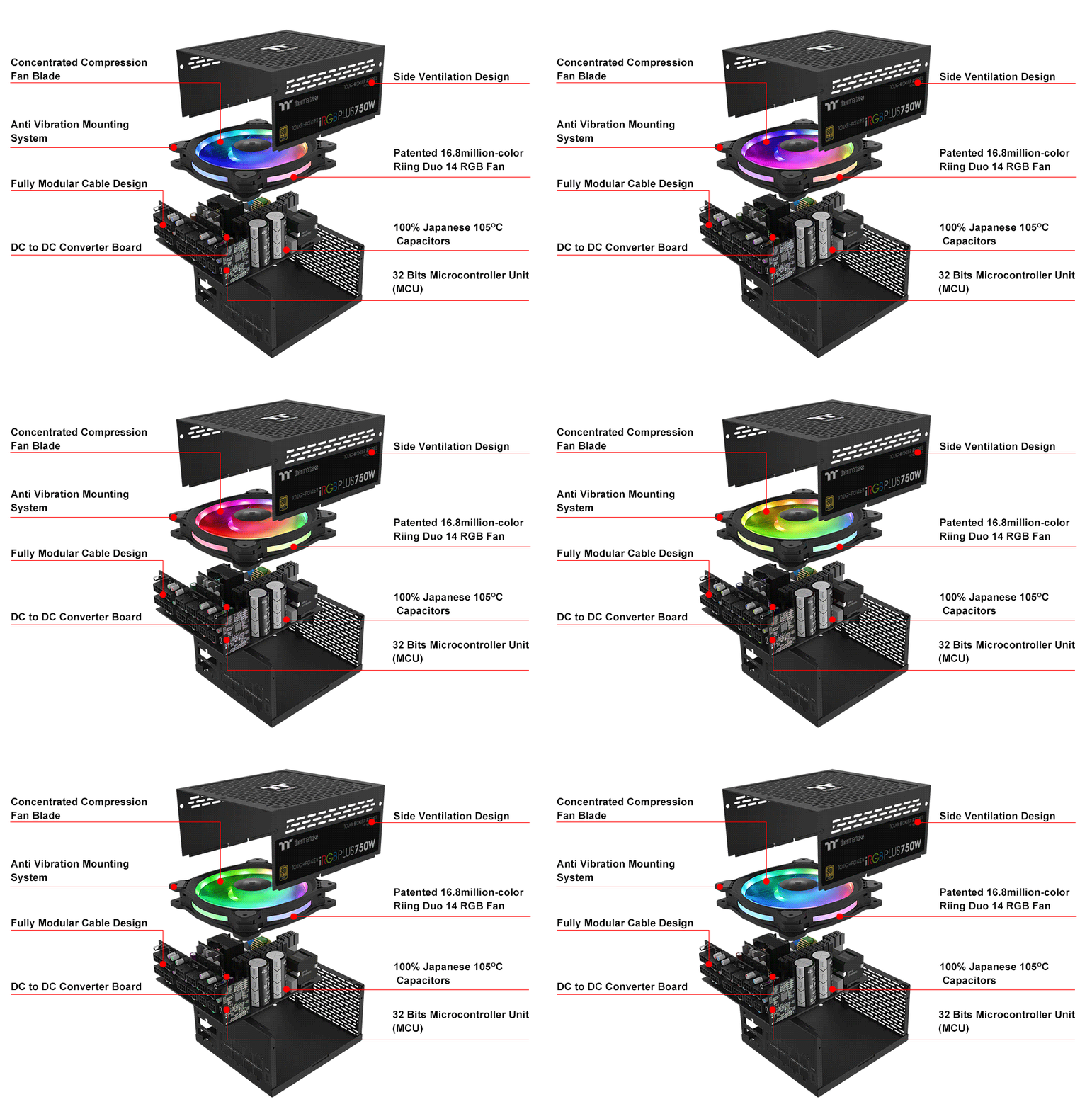
So maybe it is that I have not found the best optimization fit between needing to upgrade cases, moboards, and power supplies, and not necessarily needing to upgrade CPUS and GPUs….all of which are in different machines and I don’t want to have to swap a ton of parts around if I’m buying at least a partially built box. Maybe I would feel better starting completely over with an entirely new build, rather than trying to cut this fine line in between my existing builds and an upgrade that makes sense.

All of this has been going through my head and I have churned the variables in an infinite number of calculations and logic equations. At the end of the day, I am going to upgrade. And maybe it doesn’t even matter exactly how or what. The wonder and the love affair that I have always had with hardware is that I embarked on those journeys out of nothing more than curiosity and exploration. It wasn’t because I had to, and I did not always limit myself out of necessity, but often just for the budgetary challenge of solutioning within a given set of constraints. Upgrade? Yes. Why? Just because it’s time to go on another adventure.

I Don’t Get Attached to any Game That I am not willing to walk out on in 30 seconds flat

I wish it were that simple. The rest of my life has been easy to explain away in such colloquialisms. Pockets of it have been. And even my primary life motif. Relationships. No woman can wake up in this apartment after sunrise. Fear of commitment has been a staple. And while I am a materialistic SOB, nothing that I own has any real emotional attachment to it. I can drop a car or a bike or a house and feel not one ounce of remorse. They were all things earned. They can be earned again. And if not? I can’t take any of it with me anyway. It’s no wonder that I am a digital guy when it comes to games. Versus physical. But that’s a conversation for another day.

Experiences. Now that’s a thing. People make much ado about the differences between spending money on durable goods versus experiences. I have not one ounce of hesitation in telling you that I would much quicker drop a few G’s on a spec’d out PC that I am going to play games on for 2 or more years than a vacation to some place that is likely a pain in my keeshter to get to and that I won’t be able to wait until I get back from. But what about the games themselves? How do we establish value over those experiences in a discussion about  entirely non-durable, almost ephemeral, goods? This is the struggle with self that I have been going through for the past two years.

It started in December of 2019. No. Let me wind the clock back even further. In January of 2019, after an episode of Enough 2 Keep Going, in the post show discussion while everyone was waiting on the Discord phone call to have me validate that we had captured a good recording and the stream had held integrity….this was when the first die of doubt was cast. It was not really intended as such. It was more a journalistic entreat. After ragging, once again, on Star Citizen, I mentioned that if we were going to continue to throw pot-shots at that property (we had been for some time), then one of us, as a matter of journalistic integrity and credibility, was going to need to go deep undercover and become a member of that community and play that game. Participate with the denizens and find out if they were all gas-lighting themselves, or if there was some Illuminati at the center that held the conspiracy together, kept people believing that a real game was actually eventually coming.

I took the assignment myself. I had already gone undercover once as a member of the streaming community. I figured this could be no less dangerous. My co-hosts were always there to pull me out if I got in too deep. But then they weren’t. I became a hard core member of the SC community. I played the game despite it’s game-stopping bugs. I paid in to an extent that approached my normal annual spend as a variety gamer. I believed in the dream and that was what I held on to. The concept. The ideal. To hope. But that, too, is a tale for another day.

The crux of all of this is that after I took a desk job after coming back as a UC, everyone thought everything was ok. I showed up for the podcasts like usual, it appeared that the usual games were coming back on the menu. But my time on the inside left me bereft of the ability to feel anything when playing any game that did not have a persistent progression model. Any notion that I was shoveling time into a time-monster that was going to end in 40 hours just left me disinterested. I wanted something that gave me a tingle that I’d felt while on the Star Citizen op. That feeling that the time I was putting in was leaving bread crumbs of progression that I would still feel represented itself with tangible evidence a year form now. Or two. 

So. In search of that same high, I went seeking that blow. MMOs. Season passes. Battle passes. Microtransactions. I don’t regret any of it. In that migratory onboarding, I signed on to Dual Universe, Warframe, Fortnite, World of Warships and Tanks. I went back to Destiny 2. I finally invested in EVE OnLine. Before I knew it, subscription gaming had become my all. And I could little be bothered to lift my head up and notice anything else. Many of these titles were things I was aware of as a gaming commentator, but had never dared step my toe in. I had always known that with my addictive personality, that once I went into that pool, it’d be hella-difficult to ever come out. I lapped all of these up, and then when Call of Duty: Black OPS – Cold War dropped last year, I went into an eternal abyss from which there appeared to be no return.

But as is the case with many things, the way out was to go through. As I relaxed and stopped fighting the sub-conscious urge to resist, stopped telling myself that I was doing something wrong, and just let myself enjoy the ecstasy…eventually I came to feel that I had drank my fill and that I was ready to go back. In some ways, that sabbatical may have even allowed me to gain some new freedoms that I had previously not been afforded. I now do not feel as repulsed by the idea of spending time in a JRPG. I am no longer rigid in my thought that time in a puzzle game is a waste. Or that a point-and-click adventure is beneath me. No longer do I equate gaming to something that needs to drive me to the nerve-firing ends of adrenaline and lived at no less than 120mph. There’s more room in my gaming appetite for a slow night here and there and some consideration for slower movements and a sonata every now and then.

I have not closed my accounts. I am totes ready to slap on the FPS gloves and sit in front of one of my 240Hz displays with the GPU on fire. But I am also not displeased for that world to no longer occupy my  frontal lobe, with all of my planning constricted around the metric of what my revisit time is on a particular game and account and platform. I’m less cognitively loaded by having to plan and project out my gaming plan and schedule weeks into the future. I can afford an interrupt here and there to go and dip into something I’ve been wanting to check out on Game Pass or to hit one of my Pro Games on Stadia, which is the freedom I should have allowed myself to feel before. This allows me to do things  like check out a Final Fantasy game, which I thought I would never do. Or play some DLC….yet another thing that I did not let come across my windshield before my subscription addiction. It’s a good time, with eyes perhaps a bit wider open. Let’s see how long this tune is held before I need another beat drop and some change-up in the syncopation. Despite my seeming joy at this change, I thoroughly loved my time in MMOs and subscription games and games-as-a-service. And I enjoy my time now. A lot of this essay is a bit of was joking and satire. It all goes to the proof of the philosophy of play what you want and bollocks all to any who tell you to think , speak, and play different than you are. But also don’t follow the crowd. Your gaming self will figure itself out if you let loose the reigns for it to meander and seek out what it ascribes to. Don’t force it and it will all work itself out in time. Maybe four or five times in a very long life as a gamer in different ways. Having lived that experience and now into yet another decade of the life, I’m here to tell you….that’s ok , too.

Overstaying their Welcome: Games We See Too Much Before Release

There is such a thing as too much exposure. As the gaming industry has struggled in recent years, amidst the ever-changing landscape of E3, with when it is “too soon” to reveal a game and its associated trailer, consumers have also had to come to grip with how they feel about the whole thing and how it impacts their buying habits. Square Enix fans seem to be never be nonplussed about the inevitable announcement of a delay of a Final Fantasy title. Other fans voice much Sturm & Drang about game delays, but then complain about games releasing with bugs. I can’t comment about how everyone else feels and the choices they make. I do know that too much marketing, too many demos and trailers, cause people to talk about a thing. At a certain point I get tired of constantly hearing about a thing. I’ll just wait until it’s out, but then I’m at a point where I start to feel bothered by a title as being over-hyped or just too exposed.

Being someone who tracks the news cycle of games and the gaming industry, and the greater consumer tech industry and its products, I go through this multiple times a year. I am soooooo happy when the new iPhone and Samsung Galaxy’s release so that people can SHUT UP about them. In those fields, the marketing drum-beat from Apple and Samsung are bearable, but the endless consumer speculation and puff-pieces that get written about what they might be are maddening. In the games space, we get this exposure from fans over-hyping a game. I am so weary of the blog posts and twitter posts that declare a game a potential game of the year contender before the game is even out….in MARCH. Truth be told, I do not really have a lot of tolerance for the GoTY posts even after a game is released. There are a large number of games to be released in the holiday season, and while they may not be something on an individual’s radar, I see little reason to start GoTY conversations until the last major release of the year is out.

So it’s not only the industry, the media, and Wall Street that play into this dynamic, but also the hype-trains driven by fans. With movies, I go on social media blackout maybe 3 – 4 weeks before a big movie drops. In that case, I am trying to avoid spoilers, and less so the speculation (but, yeah, that too). Given the much longer production pipeline of a game, it is not quite so feasible to go on media blackout. And admittedly it’s a bit easier to avoid spoilers. In games, it’s the hype and speculation that are more voluminous and less desirable. Perhaps even they are more of a threat that I will develop a pre-release disdain for a title than it being overexposed at E3.

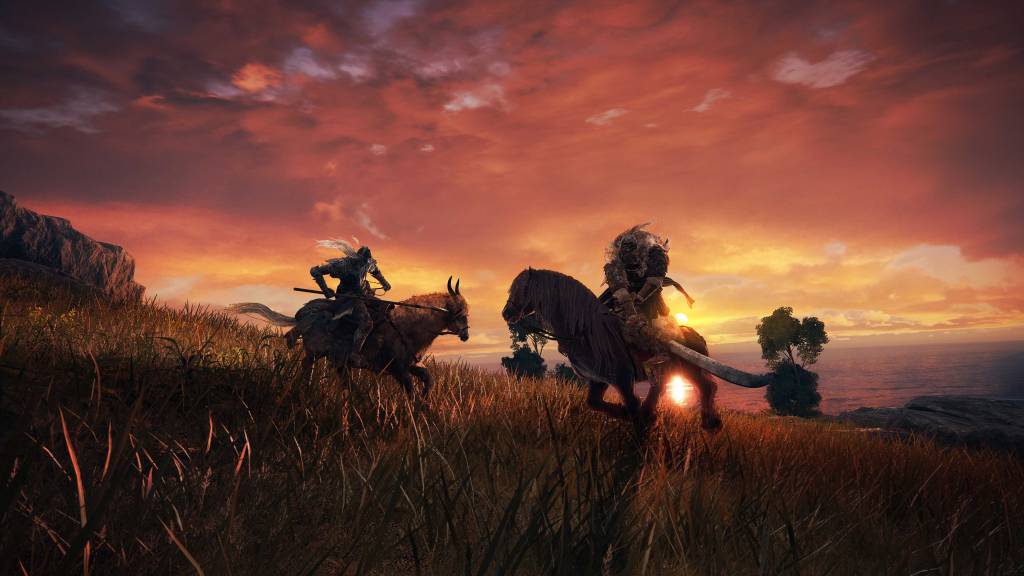
Elden Ring, first shown at E3 2019
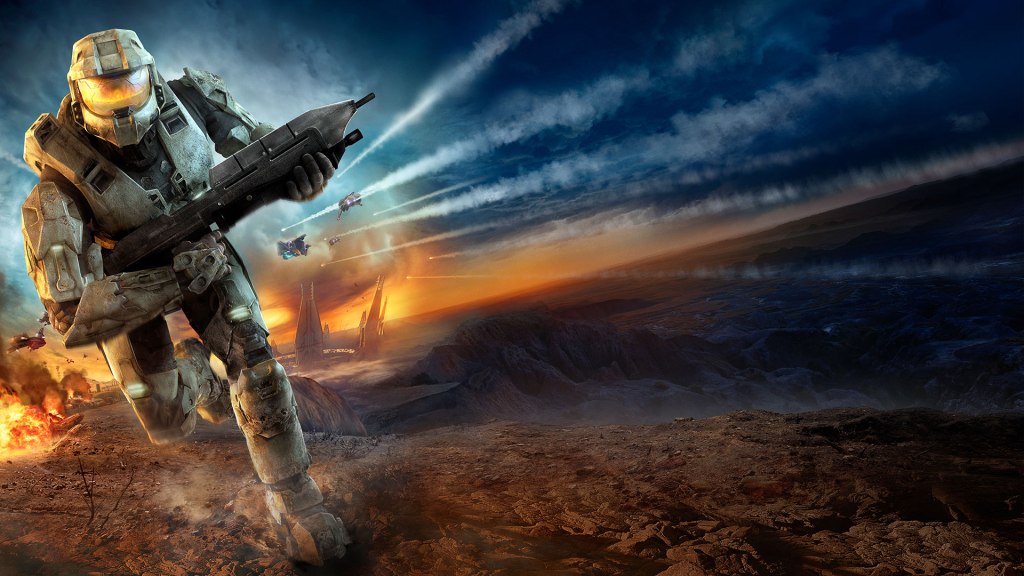
Halo 3

But let me not put all of that on fans. One of my frequent jokes is that I felt like I constantly knew what the Bungie devs were ordering for lunch during the development of Halo 3. Credit that to the marketing campaign around that game that was in excess of $40 million and the constant developer video documentaries that were dropping. That being said, I was sold on that title. In some cases, there are elements of a game that make it bulletproof for me.

Barring a major gaff in release, like being riddled with game-stopping bugs or things that destroy game saves, there are titles that come along that I am down with regardless of how marketing potentially screws the pooch. Often it has to do with faith in the developer, creative director, or the team’s vision. Sometimes that is something that the team or a public figure has done or said to gain my trust and undying faith; something real and tangible. Oft times it is something that I have entirely made up in my own mind. It cannot be attributed to anything that the team has done; they have not earned it by any particular act. Something in my brain just clicks and assumes a commitment posture to a game. I think this is a factor that gaming enthusiasts refuse to admit and believe. They become anchored to their fandom in a manner not unlike inexplicable religious fervor and fault others for not having an equally ascribed faith.

But the truth is, you cannot “will” a good game into existence. You can’t make it good by just talking about it at volume before and after release. There are so many cases of in recent gaming and tech trends that fandom tries to make a thing. 3D Televisions, VR, and dozens of games. Stating that gamers who dislike a title have something wrong with their tastes, that their perceptions are “broken”, or that you simply don’t get why they are “complaining” (or really just being critical) about an element of a game, doesn’t make the game’s goodness valid. In general, you cannot prove validity of a thing by invalidating the opinions of others. That’s just gate-keeping. And it does not “make” a game good and encourage others to buy it.

Ghostwire: Tokyo

There’s a lot of this done after a game’s release, but it also comes before launch. As early, in fact, as the showing of that first trailer at E3. And therefore, the cycle of show-tell-react is a very real dynamic surrounding games. Stuff happens in development cycles, and despite a team’s best hopes to reveal their game with a chance that it only has to be shown at E3 twice before release (3 times at E3 is the point where I start to slide off my interest), development will sometimes take longer. I do not know if there is a ton to be gained by trying to “control the message” with fans. Fans are going to do whatever they do. If the reactions are too negative, I think devs can but lean on that hope that something they have done or said or that “magic” makes their title resilient to any shade. Ghostwire: Tokyo was shown at E3 in 2019, and has been a title of discussion at three E3’s now that the release data has been pushed back to 2022. Whether it was the charm of Ikumi Nakamura (who has since left the studio), the support that I have for AA games that are something other than a thing from one of the industry’s marquis studios, a desire to see more games that are similar to what Arkane Studios does…who knows. Despite this title lingering a bit longer in development hover before starting its approach run than I would have preferred, I still have very high hopes for this title. Let’s hope that blind faith pays off. After the E3 2021 trailer, things seem a bit hazier. But I’m still rooting for it.

Strange Pairings: Does All Content Go with Any Given Genre?

Look. Peanut butter goes with jelly. I am not sure Luke Skywalker would have been that interesting if not for the presence of a Han Solo. Scotch goes with a cigar. And despite our world having a long-running tradition of seeking out and making great pairings, not all game development feels compelled to work within similar concepts. There are ideas that come along and poise either a pop-culture IP (a comic book property, movie, table-top wargame, or pen-and-paper RPG) or a previously established gaming franchise alongside a genre that is a sharply different or non-intuitive fit. Strange Pairings are what I call these things.

There are many examples of this, of course. There was the attempt to map the Warhammer games, historically rendered in some form of tactical genre, including RTS’ and turn-based strategy games, to a first-person model in Space Hulk: Deathwing. That game is not held in nearly as high regard as the series of RTS’ by Relic Entertainment. Nor is its kindred spirit, Warhammer 40,000: Space Marine. Of course, Starcraft also went down the FPS path, breaking mold from its RTS roots, with project Ares. A title that was eventually killed off by Blizzard because they couldn’t quite get it right. Equally questionable is when a pop-culture IP that would seem to lend itself to a particular genre is slated to be wrangled into a genre that, at best, seems like it would be an ill-fitting suit. No game in recent memory has made such a prominent example of when this notion is poorly executed as the XBox 360 version of Shadowrun.

Previously released as an RPG on the Sega Genesis system in 1994, BlueSky Software had developed that iteration around a genre that mapped very well to the IP’s original pen-and-paper RPG roots. For some reason, the short-lived FASA Studios, originated in 1994 and purchased by Microsoft and absorbed into Microsoft Game Studios in 1999, determined that the property would be used to produce a multi-player first-person shooter. The idea was a bit ahead of its time, as the likes of a totally multiplayer-focused Call of Duty had not even yet come into being, and only something like a Battlefield had really tread similar waters. It was a bold move. One that did not pan out. 4 months after the games’ release, the studio was shuttered, although the game itself would outlive its original developers by 2 or 3 years. While a key component to the failure of the title overall was the implementation of the game itself, this example and the others mentioned give me cause to believe that some properties just don’t lend themselves well to any genre.

Even when the game is executed well, I have my own problems associating certain properties with mismatched genres, and I suspect other gamers do, too. Star Trek is a property that lends itself to thoughts of starship combat. While we joke at great length about Red Shirts, and love the idea of Away Teams, the Elite Force series of games were problematic business ventures, despite being notionally good games. They failed to hit as commercial successes, the first game selling around 65k units when Activision had projected upwards of 700k. And while I was playing them, despite being a life-long Star Trek fan, I just did not associate my experience in those games with the Star Trek IP. I had always envisioned myself in a Star Fleet uniform on the bridge, at a given station, if not in the Captain’s or Exec’s chair.

And despite these potential consumer friction-pads of uptake, Sharkmob has gone down the path of implementing Vampire: the Masquerade, another IP borne in the cloak of pen-and-paper RPGs, as a free-to-play, battle royale. This is a leap and a stretch that causes me great amounts of questions. Vampire: the Masquerade the IP already has a very, very storied history as a game franchise. It’s first incarnation as a game was released in an almost unplayable state back in 2004. Its developer, Troika Games, would shutter its doors some six months later, with Bloodlines being the final game that they ever produced. A shame, as the mod community has turned that game into the masterpiece that it was originally intended to be, and I loved playing the game post-mod patch; not so much the original release version. Its successor, under development at Paradox Interactive, was announced in 2019, was due to release in 2020, and currently will be delayed at least 2 years before it ever sees the light of day. These are both games in the cRPG genre. Sales of Bloodlines were poor to start, but the game has experienced a commercial resurgence since being made available on Steam. But the IP has struggled within a genre that is perfectly suited to convey the experience originally designed for the IP. A F2P BR is not that. And I struggle to understand why anyone would think highly of its chances of commercial success when previous iterations in genres that would seem like a slam dunk have not been more than an air-ball.

The Masquerade is a bit of a niche pop-culture interest. I cannot say that it is followed by great multitudes within the geek community. I cannot imagine anyone popping into the F2P model and extracting any understanding of the lore outside of “Agggh! Vampires!” Maybe the faith comes in the wrapping in the F2P, micro-transactiony business model. But I certainly have greater projections and expectations of success of Arkane Studios’ Redfall, which offers a similar setting and window dressing, but decouples itself from any association with a previously existing IP. As in all games, I have the highest hopes for Bloodhunt. And perhaps I’ll be made to eat crow. Maybe its exactly because no one knows about the Masquerade that it will be fine as a game taken up by unexposed masses. For now, I am pretty convinced that not every IP will squeeze natively into any genre, when the concept causes me to look at it as an unnatural creative mixture. But then, vampires are inherently unnatural, and so maybe it just might work.

How Games Struggle to Win Fans Over Before They Are Even Released

Speaking recently to a group of friends, I intimated that I typically don’t get excited about games pre-release. My co-hosts on E2KG have too often heard me say “Developer, finish your game, and then I’ll take a look at your wares.” I am not too often inclined to be bothered with a beta, early release, developer preview, or any of the innumerous labels this recent age of digital publishing has yielded for “game that is not yet finished”. I imagine that it must be like a polar night in Alaska for a developer to endure the long period from trade-show announcement or press release through making a live demo of some sort available, possibly skirting through the aforementioned playable beta phases to actual release. An eternity during which their creative work is under the scrutiny of a microscope that measures it against the yardstick of “final product”. It may be that as a software engineer, I choose not to be anywhere near the hype-train out of compassion and empathy.

But the other reason is because that same slice of my psyche cannot be bothered. After several decades of gaming, I’ve come to perceive that the most gilded lily in pre-release can still arrive a mangled lump of clay. For the most part, I formulate my thoughts on a game after it has released, and after I’ve heard some initial word of mouth about it, and then make a decision to play it or not. I wish I had time to play all the games. But I don’t. I’ve spent my time as a game reviewer, and am still an early adopter when it comes to hardware. When it comes to games, I generally feel that, at $60 a pop, I do not need to be the first person in the pool. I still pump plenty of cash into the gaming industry on a yearly basis despite my snap-back tactical demeanor about releases.

Regardless, a game also has to be messaged well, and stick to that messaging. I don’t mind a small pivot on the approach to release. But big sways worry me about the company’s faith in the title, or that there was a misunderstanding by the marketing team about what the game was about. There also has to be synergy between the developers, the publishers, and in the case of a licensed property, with the owner of the IP.

10 years later, Doom co-creator John Romero has “apologised” to fans for a “terrible” Daikatana marketing campaign he “regrets” and “should have stopped”.
Famously, a poster for the game told fans that “John Romero’s about to make you his bitch”. – Eurogamer

I never really understood the messaging around Avengers. As a comic-book fan, I don’t think I ever dreamed about being Captain America. He is already an established character with his own background and set of experiences. The fantasy was about becoming my own hero, leaning on my own actual real-life experiences and being in the Marvel Universe and working alongside those heroes.

Being an Avenger makes total sense to me in a limited, 40-hour-ish campaign with a relatively definitive beginning, middle, and end (DLC and expansion packs notwithstanding). But the notion of being an Avenger inside a game-as-a-service? I never saw the thru-line in that. I’d rather be my own Guardian, or Tenno, or ship or spaceship captain, writing my own history against a blank, or minimally filled in, canvas. Not overlaying it on top of 80+ years of already written comic book history.In similar vein, I’m not entirely sure what the messaging around Marvel’s Midnight Suns is supposed to be. Admittedly, I never read the original comic. But I’m familiar with a bit of its history. Then game features a cast that is not in-line with the comic. And while I am not a fanatical “stick to the book” kind of gamer, it feels like a missed opportunity to not take the opportunity to bring Daimon Hellstrom and Morbius into the light of day. While I applaud the addition of Magik, given her integration into the X-Men storyline, I do not understand the addition of MCU heavy-hitters Captain’s America and Marvel, Iron Man, and alt-MCU flag-bearer Wolverine. These seem gratuitous fan platitudes that maneuver the title into the corner where I look at it as just a skinning of X-Com. This was much the same effect that Galactic Battlegrounds, a game developed by LucasArts (may the studio rest in peace), built on the Age of Empires / Age of Empires 2 “Genie” engine licensed from Ensemble Studios (may that studio also rest in peace) had for me back in the day; I was never convinced it was much more than an AoE2 palette-swap. It feels like there is marketing around this Midnight Suns and concerns of profitability that have crept their way into the game design and are smothering the messaging like Wuthrich butter.

Star Wars: Galactic Battlegrounds

Yes, there are a few proclivities I have that keep me outside the ring observing the chaos inside when a game is in its pre-release. And generally I wait until something lands and I have some time to see what others are saying about the game. Still, I have to decide amongst a myriad of games that are out at any one time what I may want to buy. And when a game with clear messaging is up against one that has buried the lede, I am more apt to choose the one whose messaging has been clear, and whose design I think appears to be in-sync with that messaging. The past is riddled with the corpses of games that were messaged differently than they played, or whose messages showed a clear invasion across the creative boundary by the marketing team and IP owners. My hopes that things turn out better for Midnight Suns. I’ll be waiting at the back of the club to see if anyone else hits this particular dance floor and comes away raving about the DJ.