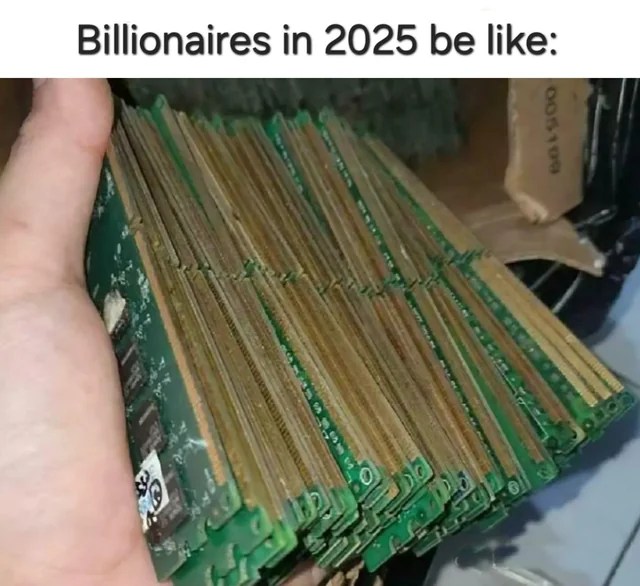
Consumer DIY ram prices peaked in 2018, and then fell to all-time lows, rising in 2020 and then stabilizing up to about 2022, remaining steady ever since. the current sticker shock in 2025/26 is more about feeling disrupted after a historical period of unprecedented value, but these prices, or rather the super-cycle of consumer DIY RAM kits, is not new.
While RAM prices have historically fluctuated, the current “sticker shock” in early 2026 represents a significant surge in comparison to the last 8 years or so; we had been lulled into sense of complacency and many younger builders who have not lived through and seen multiple cycles of the market are unaware and unprepared. No one ever said those budgetary lows would last forever. Although 2018 saw a notable peak, current prices for many consumer DDR4 and DDR5 kits have already doubled or tripled in just the last few months of 2025, with industry experts warning that these costs may reach record heights by mid-2026. Are you right to worry about how long this will last? Absolutely. Are you right to perceive that this is unprecedented? Absolutely not.
Contrary to the pricing bathtub the market has seen since 2022, the market is currently in a “memory crisis” or “super cycle”:
- The 2025 Explosion: After a period of relative value, in early 2025, prices began to skyrocket in the second half of the year. For example, 32GB DDR5-6000 kits that cost approximately $120 in May 2025 rose to nearly $410 by December 2025. These kits can be found for ~$350 – $360 now, and that is not outside the thumbrules of pricing that characterized the post-disaster era (more on that later).
- Current Sticker Shock: As of January 2026, prices for some high-end kits have increased by 100% to 169% in a matter of months. Entry-level 32GB DDR5 kits are frequently retailing for over $300. (Again, not outside historical pricing cycles).
- Legacy DDR4 Impact: Production of DDR4 is being scaled back, leading to scarcity-driven price hikes even for older platforms. Some 16GB DDR4-3200 kits have jumped from ~$50 in mid-2025 to ~$120 by early 2026. And a lot of this is us, further driving the cycle, exacerbating the impact, by panic-buying.
The current pricing is driven by structural shifts rather than simple inflation:
- AI Data Center Demand: Manufacturers are prioritizing production of High Bandwidth Memory (HBM) and server DRAM for AI, which has severely restricted the supply of standard consumer DDR5.
- Supply Crunch: Major manufacturers like Samsung have reportedly doubled contract prices recently due to “no stock” situations.
- Manufacturer Strategy: Some vendors have stopped selling standalone RAM to ward off scalpers or are offering pre-built systems without modules to manage costs.
- Anticipated Peak: Most analysts expect prices to continue rising at a rate of 30% to 50% per quarter through the first half of 2026.Ut AI data centers are not looking for 8GB, 16GB sticks, or even 32GB kits. Price watch those.
- Stabilization Timelines: Relief is not expected until at least late 2026 or 2027, as new fabrication facilities (like Samsung’s P4 and SK Hynix’s M15X) take time to reach mass production and wholesale channels.
So. Good background info. But this return to and exceeding of the 2018 peak and higher prices, are not unprecedented especially when we consider consumer RAM prices in the era of RAMBUS, the Taiwan earthquake & Tsunami, and the Japanese nuclear disaster era stretching from 1999 – 2002, all of which impacted industry output and scarcity and drove RAM prices to high levels (along with the California gas crisis of 1999 – 2000)
The memory industry has faced similar supply shocks throughout its history. While current 2026 prices for consumer RAM are at a multi-year high, they follow a pattern of “super cycles” triggered by external disasters or radical technological shifts.
Comparing the current 2025–2026 surge to those historical eras provides critical context:
Historical High-Price Eras vs. 2026
- The 1999 Taiwan Earthquake: This event remains one of the most drastic short-term spikes in memory history. Following the 7.6-magnitude quake in September 1999, spot prices for 64-Mbit DRAM modules jumped five times their July levels within months. A 128MB module that cost $150 at the start of the month doubled to $300.
- The Rambus (RDRAM) Era (1999–2002): Intel’s exclusive support for high-bandwidth RDRAM created a period of extreme “sticker shock”. Because RDRAM was significantly more expensive to manufacture than standard SDRAM, consumers in the early 2000s often paid a 3x to 4x premiumfor memory compared to just a year prior.
- The 2011 Triple Disaster: The earthquake, tsunami, and Fukushima nuclear disaster in Japan disrupted the global supply of silicon wafers and NAND flash. This led to a period of volatility that lasted through 2012, as manufacturers like Samsung and Hynix temporarily stopped providing spot market price quotes due to extreme scarcity.
- The 2026 “AI Super Cycle”: Current pricing is driven not by a single natural disaster, but by a structural shift where manufacturers are prioritizing High Bandwidth Memory (HBM) for AI data centers over consumer DDR5. This has caused DDR5 prices to surge by 171% year-over-year as of late 2025.
Is 2026 “Unprecedented”?
While the dollar amount per gigabyte is lower than in the early 2000s, the rate of increase in 2025–2026 is what many find unprecedented for the modern era:
- Price Normalization: Historically, RAM prices have fallen by approximately 33–36% per year. The 2025–2026 cycle has completely reversed this trend, with prices for common 32GB kits rising from ~$120 to over $400 in just seven months.
- The Scarcity Factor: Similar to the 1999 quake, 2026 has seen “panic buying” and lean inventory. Some vendors have even stopped selling standalone RAM to prioritize their own pre-built systems.
This isn’t new. And it is not driven buy disasters and acts of God. It is recoverable. And there is an equilibrium that the market will find. That it is currently seeking. People want to sell RAM to consumers. Maybe not the people who you have always been used to. But there is money to made in exchange for goods. And the market will find a way.
 Rounding Off Infinity