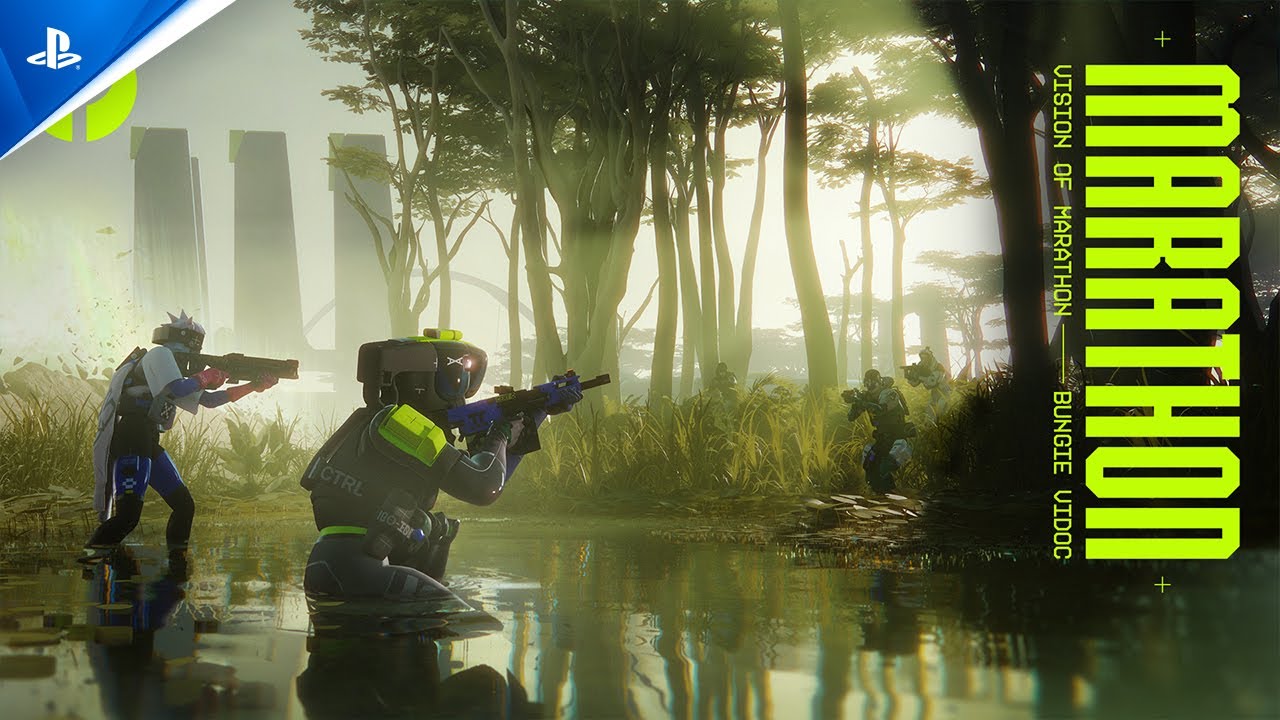
From the Windows Central article by Brendan Lowry:
“Given that Bungie‘s upcoming Xbox, PC, and PS5 sci-fi FPS Marathon is itself an extraction shooter, you’d be forgiven for thinking that its main source of inspiration came from established and popular entries in the genre like Escape from Tarkov or Hunt: Showdown. According to the game’s former director, however, this actually isn’t the case.
Ex-Bungie executive Christopher Barrett — a longtime developer at the studio that majorly contributed to Halo, Destiny, and Marathon before he was fired last year due to a dispute over complaints of inappropriate workplace behavior — has revealed that the original idea behind Marathon actually stemmed from an MMO my parents played 20 years ago: Dark Age of Camelot (DAoC).
I have fond memories of watching my family enjoy the acclaimed 2001 title when I was a kid, and even dabbled in it myself a bit when I grew older, but I haven’t heard it mentioned by anyone for years. Thus, to learn that it was primary inspiration for Marathon came as quite a surprise. After reading why, though, I immediately understood.
“The original inspiration was not Tarkov or extraction shooters. It was Dark Age of Camelot. A tense living world experience filled with co-op player stories and the potential danger of other players,” wrote Barrett in a post on social media. “Extraction was just a convenient mechanic leveraged to create a ~15 minute game loop where players in the same session have multiple opportunities to succeed or fail.””
In his Twitter post, Barrett goes on to then discuss other elements of his original design concept and there are several that elicit thoughts on the potential of Marathon, which may be things that we will see and some we may not, given the game’s divergence since he was fired from Bungie. Some of those also popped into my head because I am currently revisiting Destiny 2 with new characters and attempting to run the available legacy campaigns and catch up to present-day:
- “Living world: focus on emergent dynamic events, long tail aspirational content, and evolving player driven content.” => makes me think Public Events in Destiny 2, with some type of Alert System or map icon to advertise that there is a thing going on or about to happen that you can jump into if you hurry up and gear up fast enough; player-driven content could be available Strikes or Raid-like events that could be triggered by a squad or meta-squads working together and that could then also be joined by others.
- “Focus on player stories. PVE encounters, survival, teamwork, exploration, discoveries, and a unique experience every run.” => Potentially thematic seasons; small adventures of multiple missions strung together culminating in a climatic endgame with rewards?
- “Survival elements like broken limbs, leaking air tanks, mental paranoia – ensuring every run creates unique player stories and clever adaptation leading to success (or failure).” => in Arena Breakout: Infinite, one of the key prep dynamics is how you decide to mix-and-match the different kinds of heals. Larger kits allow you to address broken limbs, but take up more space, limiting your total available loot capacity. Smaller health packs give more space, but a broken limb leads to permanent debuffs if they can not be splinted; pain relievers help, as do first aid kits, but they don’t fully heal and worse, exerting yourself with a broken limb can lead to MORE damage over time. And the randomness of encounters and dealing with contingencies yields campfire-style stories in the tales to tell after.
- “A narrative rich PVP/competitive game featuring deep lore, corporations, and an evolving story with mysteries to discover. “ => this is probably the biggest “deep thought” trigger for me, because it relates to what I see going on in ARC Raiders right now; there is a very contentious push-pull between the community forces of those who wanted a Destiny 2-like PvE experience, vs those coming from a more EVE OnLine, seal-clubbing mentality. And, I don’t know, but that dynamic working itself out may be the thing that determines if the game will have staying power or if the fracturing of those forces will cause the game to break as a going concern. In EVE the solution to this became player-organized corporations; alliances, small companies, gangs, etc to a lesser extent. And those corporations have even given rise to wholesale cartels made up of multiple corporations banding together to lead an incursion, insurrection, offensive, or other player-led initiative. Some of this is in the very early, single-cell organism kind of uprise now in ARC Raiders. I am interested to see how much further it progresses.
- “Seasonal aspirations and resets built into the core game design.” => I don’t normally like the idea of resets in an online game, BUT, in a game like this where one group can become OP and can just never be caught, I am more inclined to give grace if this happens. And I often say that a key element for a GAAS game’s longevity when it is PvP or has a very heavy PvP element, is that it has to facilitate a means for inviting onboarding that does not immediately turn new players off. Resets is one way to do that.
- “Partnerships and collaborations built into core aesthetic and content strategy.” => I’m guessing this was intended to be a meta-verse play. Lots of things in this world and the gameplay context make sense. I could see a Running Man or even, get this way-back, a Logan’s Run content play. But please, the Schwarzenegger Running Man, not that Edgar Wright remake.
Now, it should be understood that I don’t pay close attention to games until they get closer to launch. I just don’t believe in expending a lot of my time and pinning hopes and dreams to a thing when delays and major changes are likely. We’re in a comfortable window now, and so I am actually willing to start reading about Marathon. To-date it has just been a line-item on my watchlist. So with that, let’s run down a basic fact-sheet of the game.
Marathon was a trilogy that existed on the Mac in the 1990’s. This reboot will be $40 at launch, which will be sometime in March of 2026. A month that 007 First Light just moved out of, into May, creating even more competitive space for Marathon. On pricing, Bungie says:
“Purchasing Marathon will give you full access to the game, including a roadmap of free gameplay updates as the year progresses,” Bungie said. “This will include new maps, new Runner shells, events, and more, starting with the exploration of UESC Marathon’s Cryo Archive in Season 1.” The developers have also confirmed that the game’s reward passes will not expire, meaning there won’t be any pressure to grind through them.”
…so taking a page from Halo Infinite’s book there. Imagine what an amazing world in GAAS games it would be if that became the norm?
The background of Marathon’s story is that humanity attempted to settle Tau Ceti IV, but that went sideways and the colonist population is gone; mysteriously disappeared. All that remains are Runners, which are cybernetic shells that human consciousnesses were transferred to. The Runners are mercenaries, picking over what remains of Tau Ceti IV’s resources and available plunder.
The game structure will be oriented around seasonal content, which will also expand on its narrative construct. There will be 4 maps at launch, with a 5th area accessible as some kind of Seasonal endgame. There will be 7 classes, and 3 factions to take your jobs and missions from. Bungie has promised an array of missions, and accommodation of different gameplay styles, meaning you won’t always be ratcheted into hardcore PvP in order to extract (see what I did there?) some level of enjoyment out of the game.
There is no question that the strong launch of ARC Raiders, and maybe to a lesser extent, the slippage of footing in Call of Duty, has led to a window of opportunity for extraction shooters, and more specifically Marathon, that I would not have predicted 6 months ago. But even I have been enticed to onboard to a few, including Delta Force, Arena Breakout: Infinite, ARC Raiders, and I need to check back into Escape from Tarkov, which I bought a license to in early access but never played. It’s an interesting time on the landscape of FPS’ and PvP and I’m excited to see how the wheel turns in 2026.
 Rounding Off Infinity