My Gaming Diary, Gamedate 78864.2
Nintendo’s live service strategy should not be confused with its more foundational need to get its provisioning of network services right. They have been making incremental, baby-step strides in this area for years, while they are admittedly still woefully incomplete. Yesterday, The Verge ran an opinion piece about how “Animal Crossing: New Horizons was a glimpse at Nintendo’s online future”. While connected, I don’t think these two things should be conflated into being the same. They are related, but one is foundational and the other is more aspirational.
Nintendo has an imperative to get its online strategy, its overall approach to network services, straight. It has forever been a muddled mess. It started with the provisioning of a digital store-front, or stores, plural, I should say. While digital, each instance of a digital store has been tightly coupled to the Nintendo hardware platform that it debuted alongside. Move to a different Hardware (generational, not SKU), and the answer you got was unpleasant, to say the least. You would not have access to the old digital store content without that original hardware. (Generation, not SKU, or serial #). New hardware, new store, buy it over again. Shift hardware platforms and you no longer had access to the same digital storefront.
Flash forward to Nintendo Switch and Switch 2 and we have, for maybe the first time, generationally, that Nintendo has retained, with zero gaps, continuity of a digital storefront from one generation to the next. Friend codes are still less friendly than a gamer tag. Having to use your phone for online voice comms was a nightmare.
And that is being addressed. But all of the new, Switch 2, social features bring a host of mild inconvenience and baggage with them as well. But, overall, these improvements are undoubtedly “better than”. Like I said, baby steps.
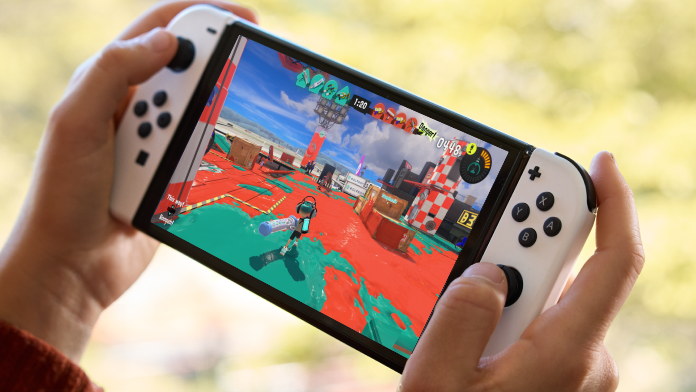
On the GAAS front, Nintendo is no better represented in its overall approach to that facet than in the Splatoon franchise. While certainly Smash Bros has been around before, it is almost equally or even more so driven by the fighting tournament scene than strictly its online presence. Whereas in Splatoon, any inroads it has made to building community have been entirely built online.
But these things in combination with whatever it has done to deliver additional content to Animal Crossing should cause no worry that Nintendo is coiling up to begin some GAAS initiative driven by heavy investment a la PlayStation. Nintendo today is still the closest to the three console competitors to being a pure, classical, console business model. While the other two, Xbox and PlayStation, dabble in GAAS, subscription services, putting games on PC, building out mobile components (Nintendo has recoiled from that avenue) of their businesses, Nintendo stays to the core. Minus its foray into licensing its IP for movies in new models that keep them close to supervising the production efforts of those IP, Nintendo continues to be razor focused on its core console business. Albeit, sometimes to their detriment when things that gamers consider part of the core product offering today, such as network services, feel like something out of a Fantastic Four retro movie. But Nintendo is getting better. By baby-steps. It’ll be a very long time before they coil up to come up with their own Call of Duty or Helldivers II, though.
 Rounding Off Infinity