I Like My games Skinny or Thicc, but nothing in-between.
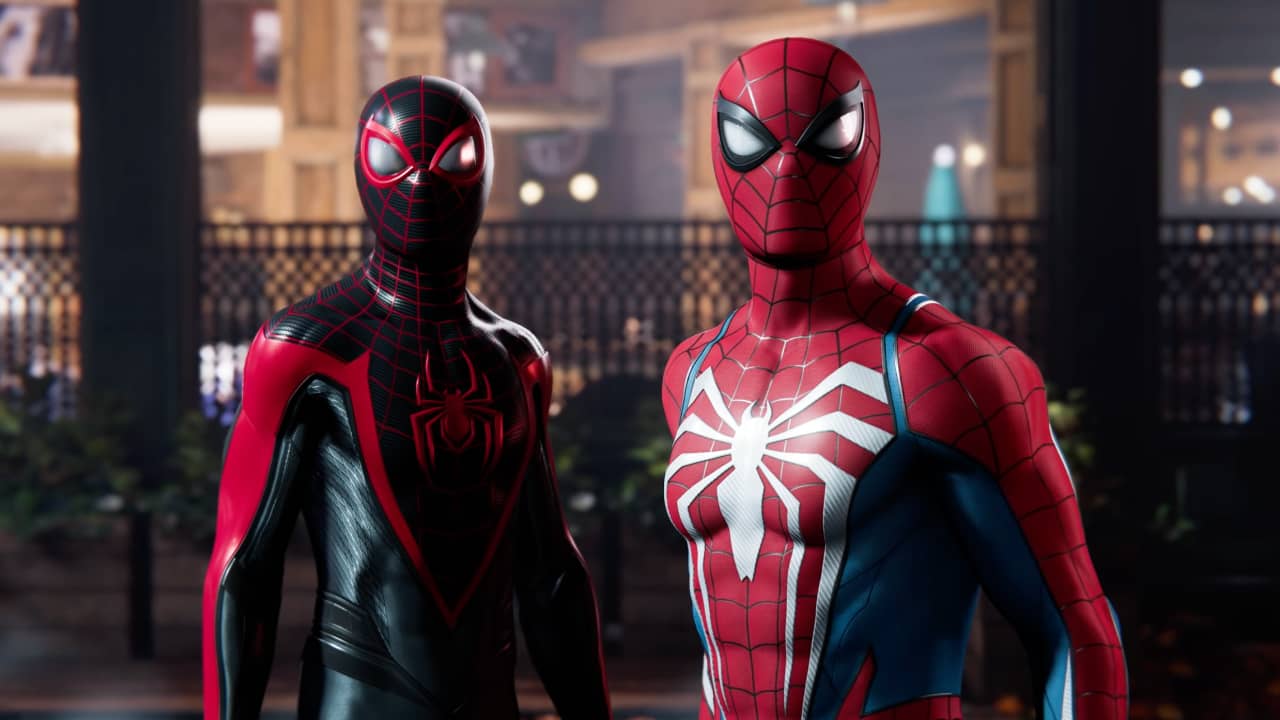
Spider-Man 2’s campaign is supposedly only 15 – 20 hours. And yet the traversable and playable city geographic area is almost twice the size of the first game’s map. And you can play as both Peter and Miles. What this translates to me is what must, mathematically, be less time spent in anything that is not directly contributory to chewing through meaty elements of the story. It sounds to me that almost all fatty tissue must have been excised; any notion of you wasting your time. Any lack of respect for the gamer’s other life-ly priorities.

How else could you explain 2x’s the characters and 2x’s the map size, populated by the exact same orchestration engine and event-triggers and random encounter branches that powered the first game? It would make no mathematical sense that the game would be emptier and more vapid than the first game. Anyone arriving at such a conclusion would reveal an individual’s lack of grasp of basic math. A poor ability to adapt geometric analogues to conceptual constructs.
Now that that foolishness is dealt with, the question is whether or not the sheer size of the game is a problem. Of course, this comes down to the individual tastes of the individual gamer. Of which I am only one. And so I can only offer a singular perspective.
I play a wide gamut of games that fit into a range of gameplay-time buckets. But even within that variance, there are some trends. Yes, I do tend to play some games that I wind up playing for years. Games that I wind up sinking in excess of 100 hours into. Multiplayer games. MMOs. Some long-play games, as I term them; sports games, driving/racing games, simulations…those types of games are almost never “done”. You play them until you are just tired of them. Or they are superseded by another version. Or, like Destiny 2, they just lose their hotness.
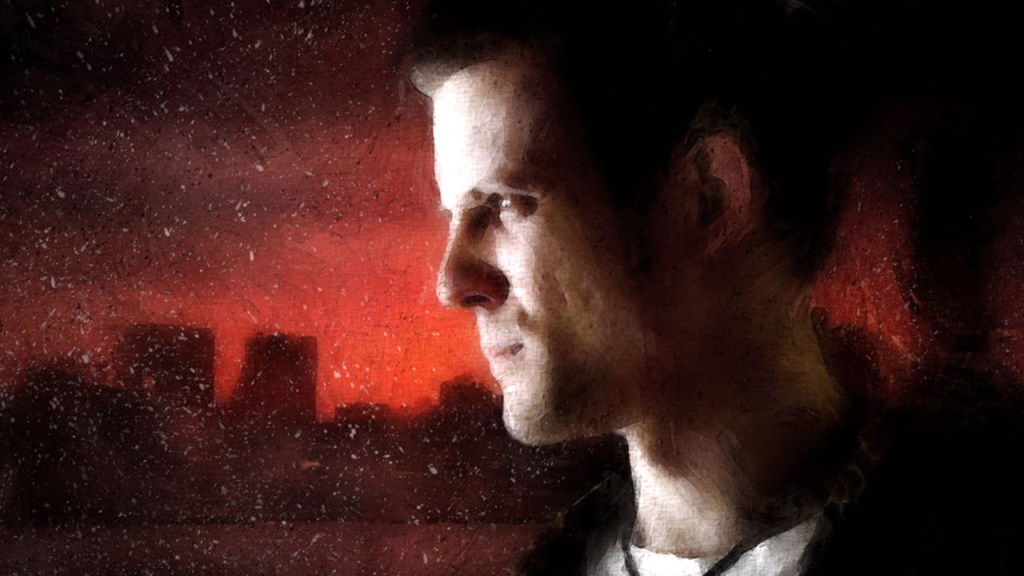
But on the opposite end of the spectrum, I like the short stuff. One of my favorite games of all time is Max Payne. A 6 to 8 hour experience at best. And I’ve spent time this year playing Shadow Warrior 3 and Trepang2. About the furthest I like going on a strictly single-player, story-driven, heavy narrative game, is 25 – 30 hours.
So Spider-Man 2 is right in my wheel house. It’s a game where I am going to spend hours grinding for suits without a care for how far I am progressing the story. Just like I did whatever I wanted to do in Starfield with no mind for the campaign. Until I was ready to care. When I chose to. Not when it was dictated to me. Spider-Man and Miles Morales allowed you this freedom; you could roam the city, intercept random crimes, and there was a warehouse full of challenges and mini-games and activities that made the currency available to grind for suits.
What I don’t like is games in the middle. There is just no way that I am paying any attention to a game with a 40+ hour story. In particular because I feel like those games in their design seem to be less rewarding for you straying off the beaten path. Give me Far Cry 5 or Diablo IV any day. I’ll take my games skinny, or thicc, but not this slim-thicc nonsense.

But seriously….with less sarcasm…I’m just not interested in games with a story that, given my play-style, I am unlikely to ever see the end of. I don’t mind side-content. I love it. I’ve spent close to 70 hours in The Division 2 and I’d do it again on a 2nd play-through. But I don’t want to sit through a story of similar length.
At the end of the day, anyone trying to make declarative statement on the quality of a game based on the length of its campaign is an idiot who tightly couples quality to the notion of quantity. But this is what you will get from people who value dining at an all-you-can eat buffet of cheap but plentiful food over a high-quality experience. The first thing you learn as any critic of any art medium is that you cannot equate price to quality, or volume to quality. Have we not spent a decade arguing about every movie not needing to be 150 minutes or more to be worthy of Oscar consideration or just to be considered a good movie.
There’s something to be said about a person who tried to view art through factors that allow the conversation around it to be reduced to the lowest common denominators. And the audience that such an individual is preaching to.
 Rounding Off Infinity