
Recent indications have come out that Microsoft knows full well that its Game Pass subscription service cannibalizes sales of new games. There are reasons why this is ok, and worrisome suspicions that gamers should have that it’s not. And reasons why the analysis of impact of this nature of business, now being admitted to by Microsoft, is consistent with things that I have said, and reasons why it may not. Neat, huh? How it is possible for two states of existence to be concurrently true? Let’s dive into both.
Conspiracy theory number 1: “OMG!!! This is proof that Microsoft is trying to drive the entire industry to a subscription model!”
I’m not ready to fall off the log and buy into that shark tale just yet. It does not sync up with the previous statements that Microsoft expects annual Game Pass revenue to be 10- 15% of its Gaming Division’s Content and Services revenue. “But GameLogIQ, that’s only if you accept that Microsoft is telling the truth and not lying.” Well, I do. Here, let’s draw a line between lying and being outright unethical, versus carefully couching a phrase to drive and influence the desired outcome that you are seeking. The latter to me is ok and is a natural and expected behavioral pattern in business. And so, while I believe Microsoft in the revenue proportion it has used in the past, I also accept that the caveat could be “…10-15%…for now”. Meaning it could shift over time, and that 5 – 10 years out, the balance may not be the same. And Microsoft may know, suspect, and be strategically planning around the resultant dynamic their subscription service will have on the market.

Why it’s ok: This movement may happen because consumers will see less and less differentiation in the value-added of buying a thing versus accessing a thing via a service. Older gaming consumers already see this added value. They think that it’s better to buy your games, and even that it is better to buy your games physically rather than digital.
This is relevant because there are more older gamers on the market than younger. That will, of course, shift over time. But more importantly than the sheer demographic number, that older consumer forms a block of buying power, where it has much greater disposable income, than the younger demographic. And is more willing to spend it, as we have statistical proof that the younger generation includes a block of consumers that just won’t pay for games or content. And so the older block cannot be ignored within the addressable market. Microsoft could have a plan to further differentiate the perceived value of buy-versus-subscribe, so that it feels like you are getting a better deal by buying, whereas today you are forced to ask “why buy, when the exact same thing is available via sub?”. And so the market differentiation would have to make it so that the thing in the sub is not the exact same thing.
Why it’s consistent with my caution for the XBox community to pump the brakes on “We’ll win if we put CoD in Game Pass, and we’ll immediately sign on 50 million new Game Pass subscribers”: First of all, it’s wrong because it’s not “we”. Microsoft gains market share and maybe earns some more shekels of silver. Not you. You don’t get one red cent. Bupkis. In fact, you are probably more set up for a price increase in Game Pass once Microsoft does gain market share through following loss-leader strategies. SMH. (I swear, the console war psychology is right up there with Scientology). Where I mentioned before…that the older generation perceives value in a way that still makes buying titles viable and has more disposable income? Some of those consumers…some of those in large number…are over on PlayStation. And won’t see the value-add in flipping over to subscription. Some of those consumers only buy one or two titles a year. While some armchair “analysts” may think of them as casual gamers who would not be wedded to a platform, their findings are incorrect on thus impact on incorrect. What they are wedded to are two things: sunk cost, and the absence of change.
Having already purchased a $500 plastic box this generation, they are not going to swap it out in large numbers for CoD. While the gaming market is marginally more tech savvy than the general consumer market (and let’s not take that and run with it; barely more tech savvy….there are many on Gamer Twitter that wouldn’t know the difference between a transistor and a vacuum tube, and yet will spend 8 hours in a Spaces trying to say how one platform’s VRR implementation is “better” than another’s), it still suffers from the exact same dynamic as other consumer product sub-markets.

My for example continues to be Android vs iOS. People tend to settle into one and stay. I may flip back-and-forth each year; let’s be honest, I typically buy one of each. But let’s say as far as one of those being my primary daily driver. But I’m not the norm. And most consumers don’t do the same. Vendor lock-in is a thing. Proof can be taken by how many of you rode that red ring of death through multiple occurrences in gen 7 and stayed on the XBox platform, despite this breach in supplier-consumer good faith and good will. So no, there will not be a huge jump in legacy gamers if and when the deal is consummated, even with the ones that are fence-riders and platform ambivalent. There will be a slight bump, and then maybe another in gen 10 as people buy new, but again that will only be with the small subset that is ok with change.
Why it is also consistent with my statements that old gamers should stop with the “market analysis” that everyone wants what they want: OK, so we hold true with these lines of reasoning for the older gamer. But note that I have not addressed the new gamers coming into the market every day. These gamers will invoke on the market the result of a shifting baseline syndrome. What they experience will become the market norm. Kids growing up today know and are comfortable with the streaming content model, for example. Not the legacy cable tv model. That genie is not being put back in the bottle. We’re not going back. Regardless of whatever perceived difficulty NetFlix and Disney+ is experiencing or whatever streaming service of the week puts out some bad news. Let’s stop getting carried away with the exaggeration and lack of consistency that whatever happens to those businesses will happen to Game Pass. Although as an experience in a PlayStation bukkake Spaces recently showed me, some of the Jim Ryan faithful lose their grip on the comprehension of English grammar when I try to speak to them about how exaggeration, hyperbole, hypocrisy, and consistency all part of one topical continuum, and so this part of the thread may be lost on those with brick brains versus bubble gum. But the younger generation of newly onboarding consumers into the gaming space will be normalized for the subscription lifestyle. And so, over time, these cannibalizations of game sales versus people directing money towards subscriptions, people who do not have an innate, cultural bias to the perceived value of buying being a better value proposition than subscribing, will start tilting the market demand.
Does Microsoft know this? Their own statements revealed in the recent CMA document indicates so. Would it be natural for a corporation to see an impending shift in the market, one that they themselves are driving, and shrug their shoulders and do nothing to prepare for it? Unlikely. Companies adjust for cannibalizations the same as they do for product obsolescence. Apple is a great case study in managing this dynamic. They have recently lowered production targets for the iPhone 14 Plus, as the iPhone 14 Pro is cannibalizing sales of that lower SKU. There isn’t enough product differentiation between the two for people to worry about the small price differential. So they step up. As a result, Apple will also likely do one of two things for the iPhone 15: kill the notion of an iPhone 15 Plus in the product lineup, or increase the perceived capability and value gap between the 15 Plus and the 15 Pro. Apple also killed the iPod Touch when demand for the iPhone made it an unnecessary product. In times past, it has let the Mac Mini languish when the low-end iMac offering and MacBook Air crowded out the reasons for a person to buy a Mac Mini. So it is a guarantee that if Microsoft admits to seeing the data that a large-game offered on Game Pass not only crowds out demand for purchasing that title on its own platform, but also on other platforms, AND knocks against other games coming out in the same launch window, it is assured that they are not complacent. That they see it, acknowledge it, and are planning for it. I’ll hold position though on what exactly that might be until we see more of the case and the ensuing market dynamics comes to fruition.
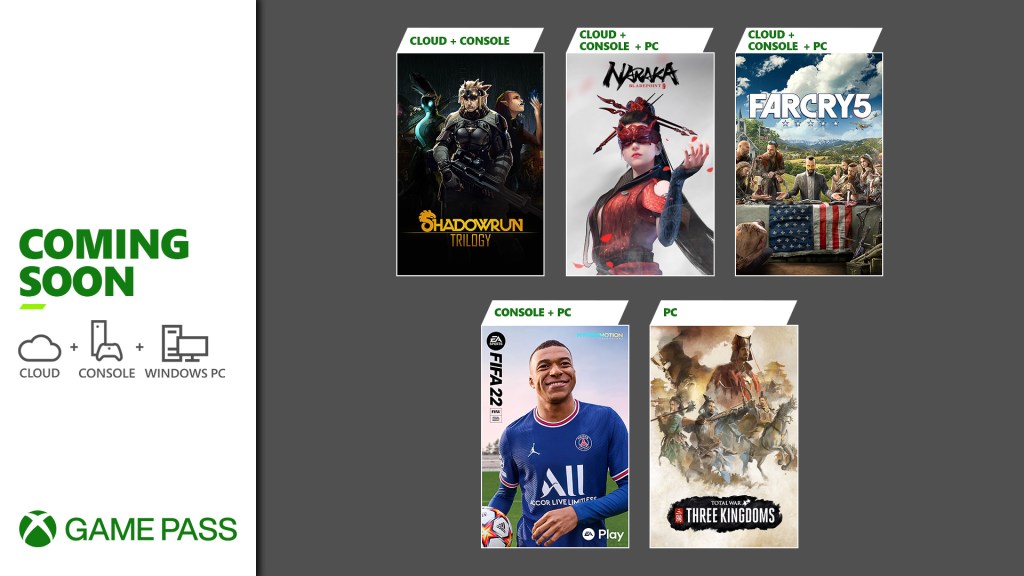
What the interpretation of Microsoft documents to the CMA says is that while Game Pass may be overall good for Microsoft, it is not good for individual games under specific release timing and market conditions, and therefore possibly other publishers writ-large on a case-by-case basis.
It says that your gamble to put your game in Game Pass may not play out well if you go into Game Pass the same month or week that a big title launches there and sucks all of the air out of the room. And that Game Pass, as a market force, has the potential to move a majority of the market to only wanting a game that launches in Game Pass, even if it is available cross-platform, to be bartered for access via the subscription model rather than the buy-to-play model, reducing the get for sales for that title overall, but also being a lure from playing that game on another platform where it has to be bought.
The recent CMA document can be found here.
 Rounding Off Infinity