There’s a contract that I make with games that I expect to be fulfilled. I expect games to introduce me to new worlds. To the worlds they have constructed. I expect to be taught rules about those new worlds. How things work. What things harm you. What things help. What things constitute sustenance. What things constitute tools. What things can be used for crafting. What things must be transformed before they can become useful. And then I expect them to keep those rules consistent. To not arbitrarily change them. And for them to remain in tune with the narrative, if there is one. I am unforgiving in this regard. Uncompromising. It is the contract that I make with games and their developers.
It is one of the reasons that I like flight sims and racing sims so much. They are physics based. Even when the fidelity of the physics model is not inherently 1:1 with the real world, by and large, except when there is a glitch or a bug, those rules remain consistent. There are things that make you faster, and things that will put you at a disadvantage. The only license they really take is within the framework of the rewards system. The only one they should take. And so I fall off a bit in the crevice that separates racing sims from just racing games, where, in the latter, there can be things like rubber banding. It’s not that those games are not fun, or that I refuse to play them, they just sit in a stack of things that will never be my favorite.
And so other genres are more so likely to forever be in my penalty box. Even if the world is sci-fi or fantasy, I expect there to be a certain set of rules that defines how the world works. I do not like to be taught how to use my powers, to become uber-powerful such that the common enemy trembles at my sight, only to be massively de-buffed at the sight of the next boss.
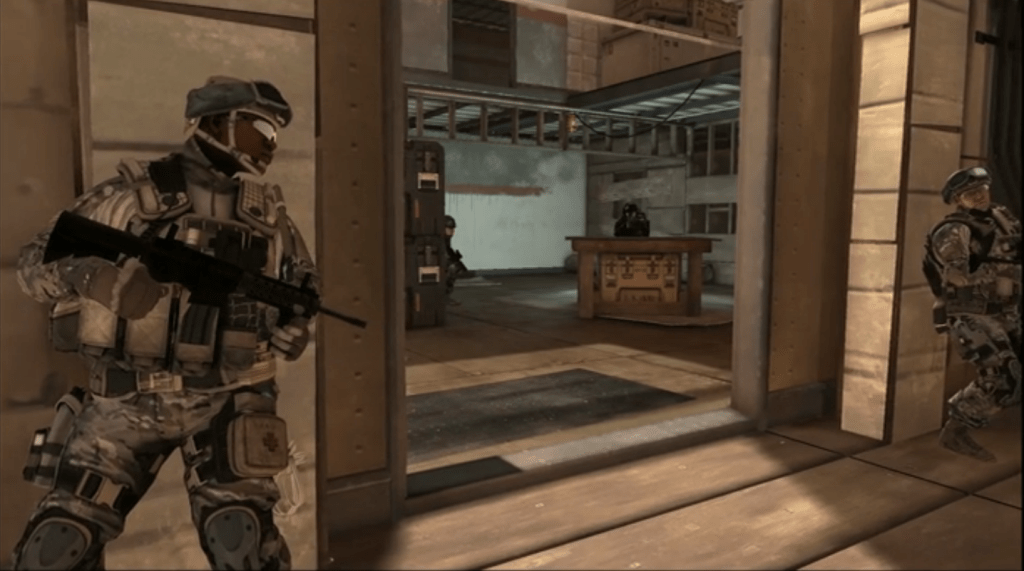
It is in fact, by and large, why I have historically hated the typical boss battle. It is why I tend more so towards military shooters, which tend not to change the laws of physics mid-stride, but just give you different tactical situations that place you at various disadvantages to think your way out of. It is also one of my principal detractors from Stray.
While a wonderful and whimsical title, I very much pushed back form the table at the arbitrary changing of physics as you went from puzzle-to-puzzle. The way you could clear vertical distances up or down in one puzzle but couldn’t in the next. The way you could jump to points on some walls but could not on others. And especially the way in which you could not walk on the tops of fences with flat horizontal surfaces until the final quarter of the game. Do those things make Stray bad? No. They just mean that it was not created with the design intent of appealing to gamers with my physics OCD. As bad as I am, there are gamers even further on the spectrum, who will nitpick every physics model to death, and slag a flight sim that does not reflect the specific tire pressure in an aircraft’s landing gear when the runway is at 4400 meters above sea level. I don’t think that is a fun way to live either.
There are games that meet this rubric and ones that don’t. It doesn’t make them bad. It just makes certain ones more suited to my preferences than others. But I don’t want every game tuned to my specific preferences. That would be an incredibly boring product landscape in the gaming art medium. And so while I have my preferences, I am glad to partake in the titles that try to meet them, as well as the ones that boldly choose to say “Eff you and your preferences; this is my creation. Imbibe and be merry. Or don’t”

 Rounding Off Infinity