
If you’ve seen any of my iconography, you know that the tagline “For the Love of Game” often features prominently. Knowing who you are as a gamer is a lot about figuring out your id. Much in the same vein as it is difficult to figure out whether you are an introvert or an extrovert until you focus on and nail down which types of activities you derive energy from and which ones drain you, it’s hard to figure out what kind of gamer you are when you externalize all of your observations. How do people see me as a gamer, what do people think about me, do people think my skillz are good enough? A lot of this is rubbish from my perspective. But I try to empathize with what angle others’ perspectives come from before I cut so quickly to being judgmental. My heart often yearns for other gamers to be the same.
One of the principal reasons I left Twitter (and the list is long, I assure you), is that Twitter gamers are some of the most judgmental people on the planet. More so than many religious fanatics I know. Dialogue goes from 1st-contact exchange of ideas almost immediately to the twist of why your opinion isn’t good enough and is somehow proof of what a “trash” gamer you are. Having been, for a short time, a member of the streaming community, this externalization of view is prevalent there also from people starting out to the most experienced veteran with the largest following. How do you insulate yourself from the impact of people having a poor opinion of you? To keep from having a poor opinion of yourself? Pretty simple. You stop caring. Not just about people’s opinions, but about allowing external systems to be your rubric of success.
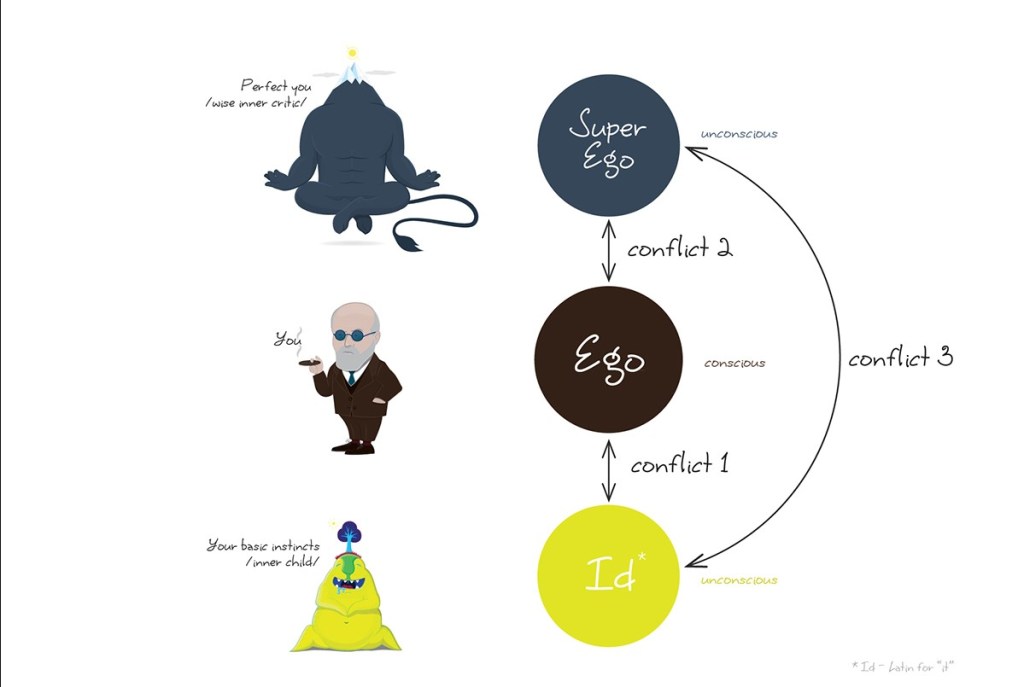
Everyone has to find and/or establish their id. Lots of people allow external systems and frameworks to be the yardstick by which they measure themselves. Then the next stage of evolution many creep to is selecting the system by which they are going to measure themselves. They find the break-away from being measured as successful by corporate America, or Church, or family.
This middle-evolutionary group often pats themselves on the back for detaching from societal norms of success definition and ride loftier egos for a time. But I think what many of that group do not understand is that they have just ascribed to a different success framework. Maybe it is decentralized. Maybe it is grass roots. Maybe it is blue-collar, depowering to the white-collar overlords that they perceive run the world. I think however, and this is where many streamers land and live, they then just slip and slide sideways to the same anxieties, (often worse ones) that shade their own perception of whether they are successful or not. As streamers, they worry about followers, concurrent viewers, and as gamers, they worry about their K/D, whether they are diamond or legend.
I made a good run during the year that I stayed on Call of Duty: Black OPS – Cold War. I didn’t become great by any means, but I was respectable. I got invites to run with other crews who were looking for solid players. That fullback that gets you the 3 to 5 yards per play, and who, every once in a while, busts a surprise scamper and becomes a hero for five minutes. This gave me a healthy enough flow of dopamine, but at the end of the day, my ego is not anchored to my performance in games, my gamer score, or trophies. My main goal in life is to be able to do the things I want to do, buy the things I want to buy without much impediment, to not be overly inconvenienced except by my own goals, and to walk away from this whole flesh-bag deal having made a friend or two. Oh yeah, and I like to consume multiple gaming experiences. That’s pretty much my bucket-list. I don’t know that any of those is driven by having a high K/D, being on the leader board in Halo multiplayer, or having tons of followers on any social media channel.
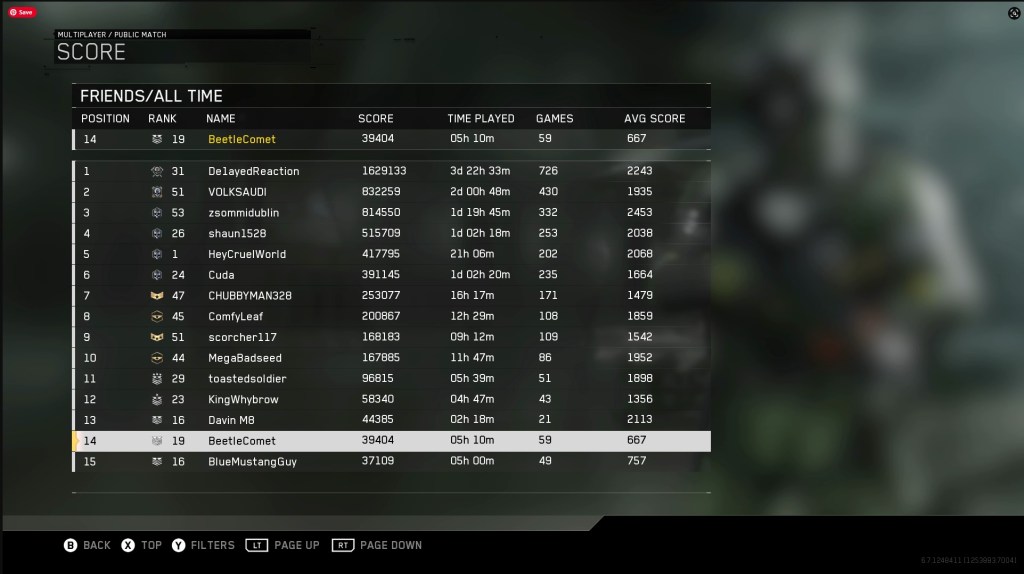
I always talk about the danger of anchoring your ego to something that can be taken away from you, and that is generated by the energy of others. A lot of this feeds into my feeling on whether or not you have to be “good” at games in order to enjoy them; an unfortunate id barrier that I think keeps people out of the hobby because I think they are concerned about how others perceive them. I love games too much to be impeded from playing certain games or enjoying some experiences because of a fear about how others will perceive that consumption. Putting a game on baby-ass-baby mode is sometimes necessary to push through a story if what you really love is the narrative.
And tying ego to the stats of PvP games would lead me to only playing certain games and types. As much as I’ve come to love that exhilaration of playing a PvP game well, I’m not willing to give up and bypass all of the great single-player experiences that are out there. That’s too high a price to pay. And while it is hard figuring out how to fit both in, and it’s admittedly difficult to be derping it up on stream struggling to get through a Tomb Raider game, Soulsborne, or figuring out the latest space or flight sim, it’s worth it for the internalized rubric that I have chosen to ascribe to. That yardstick is not measured by a lot of things that are in vogue in the social sweet-spot today.

For those who are hoeing that row and finding success as they see it, I have for them the utmost of praise. That’s a tough life, and that’s a math formula that eventually slopes to zero. If it doesn’t slope gracefully, the landing could be experienced in a fragile, temperamental state. My hope is that they find their own internal resilience along the way. Self-care as both a gamer and a streamer needs to be about self. And finding yourself and knowing yourself is a tough thing to do in a crowded room unless you focus on cancelling out all of the noise and establishing your own yardstick. For me, it’s Love of Game. And that does not require anyone else’s input, approval, or sanction. But I am forever grateful for the friends alongside me who are on similar journeys.
 Rounding Off Infinity